



Rating and value of Sèvres porcelain vases

Key takeaways
- Sèvres porcelain vases sell for between €35 and €125,000, depending on their period, style, and condition.
- The royal porcelain manufactory, founded in Vincennes under Louis XV, moved to Sèvres in 1756 and began producing hard-paste porcelain in 1773.
- Sèvres blue, produced using cobalt oxide, is particularly sought after at auctions and can fetch estimates of up to €62,000 for signature blue pieces.
If you own a vase from the Manufacture de Sèvres, or after, and would like to know its value, our state-approved experts and auctioneers will offer you their appraisal services. Our specialists will carry out a free appraisal of your piece, and provide you with a precise estimate of its value on today's market. Thereafter, if you wish to sell your work, we will guide you towards the best possible arrangement to obtain the optimum price.
Rating and value of Sèvres porcelain
Sèvres porcelain is known and appreciated throughout Europe. It was one of the first royal factories, founded by Louis XV in Vincennes. Today, the price of certain pieces continues to rise under the auctioneer's hammer. Sèvres porcelain vases are highly prized, particularly by French buyers, and the price at which they sell on the art market ranges from €35 to €125,000, a considerable delta but one that speaks volumes about the value that can be attributed to Sèvres vases. In 2011, a pair of " Bacheliers " vases (royal provenance), with painted enamels and gilding, sold for €125,000, while they were estimated at between €120,000 and €150,000.
Ranging in value from simple porcelain to the most prestigious
Vase type | Result |
|---|---|
Vase XIXth | From €50 to €34,000 |
Blue vase from Sèvres | From €40 to €62,000 |
Vase XXth | From 35 to 64 000€ |
Vase XVIIIth | From 140 to 125 000€ |
Estimate in less than 24h
Style and technique of Sèvres porcelain
Sèvres porcelain developed hard porcelain, but originally produced soft porcelain, invented by Louis-François Ier Gravant. After the discovery of French kaolin, Sèvres porcelain became hard and was marketed from 1773. The factory produces vases, services and cookies.
History of the Sèvres factory
The history of the royal Meissen factory began in 1740 thanks to the Marquise de Pompadour, mistress of Louis XV, with the aim of having a royal production able to compete with the Meissen factory, which already possessed the hard porcelain formula as well as various kaolin deposits.
It was initially based in Vincennes, but moved to Sèvres in 1756, hence its name for several centuries. In the same year, Louis XV became the owner of all the shares, and thus had total control over the factory. It was bought out four years later by the Domaine de la Couronne (which today corresponds to the State's public domain).
Bertin, Louis XV's minister, became commissionaire for the Sèvres manufactory and set out to find the formula for creating hard porcelain.
Based on models acquired from the German factory in Frankenthal, the Sèvres chemists tried to find the formula, which was finally given to them by Pierre-Antoine Hannong with the help of a notary.
However, even with the formula, France lacked the kaolin deposits to use it. The first kaolin deposit was discovered in 1765.
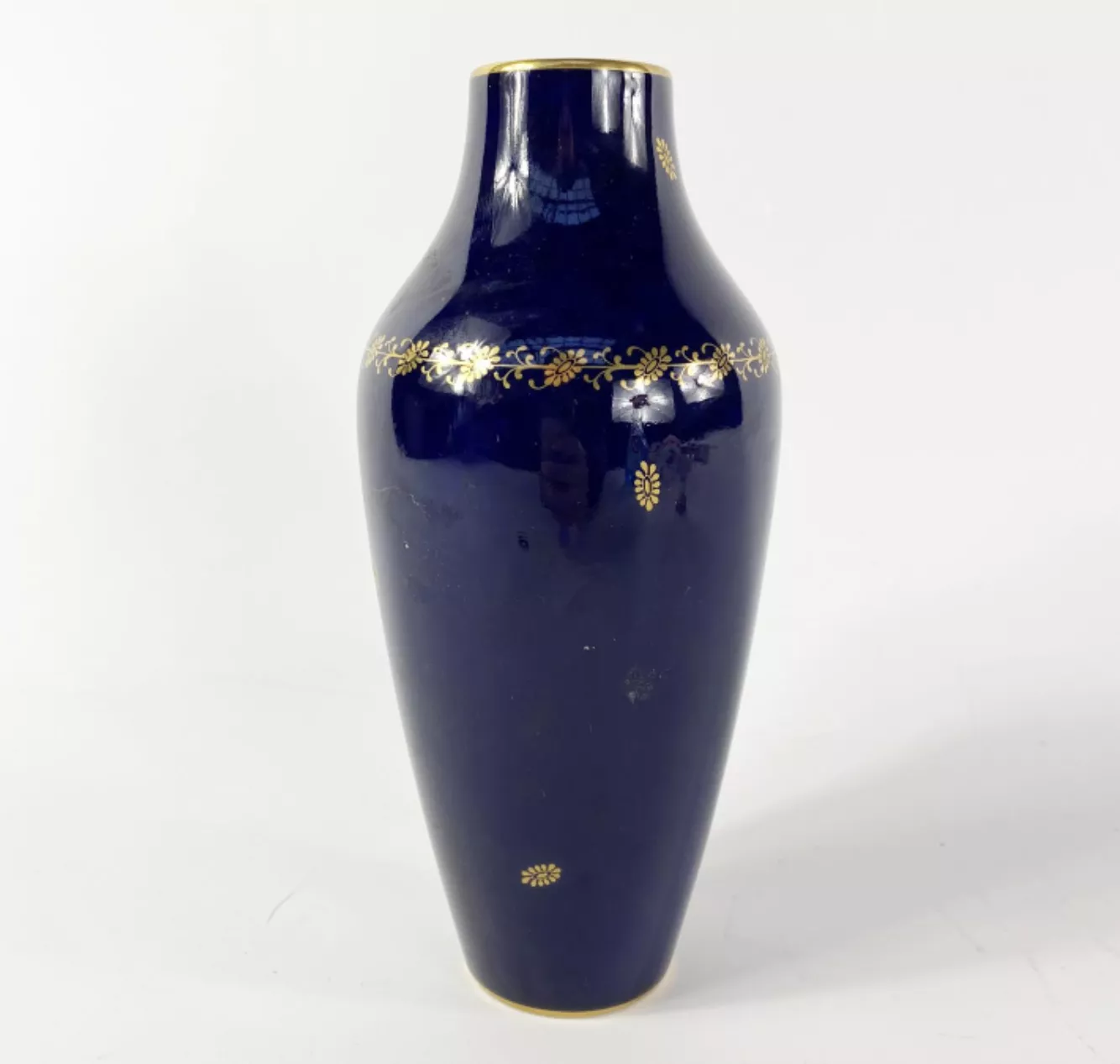
The Manufacture de Sèvres set itself apart with the creation of a pigment: Sèvres blue, obtained by incorporating cobalt oxide into the paste.
In the 19th century, ceramist Ambroise Millet modernized the porcelain firing process and had new kilns installed.
Prior to 2009, the Manufacture Nationale de Sèvres was a department with national competence. On that date, it became a public establishment by decree.
The auction market value of Sèvres porcelain vases
Sèvres porcelain is highly prized at auction. It sells more or less well, depending on its state of preservation, the age of the piece and the artist who may have signed it. Vases are particularly popular. Vases in Sèvres blue are particularly sought-after, as are those in the antique style.
Recognizing a piece from the Sèvres manufactory
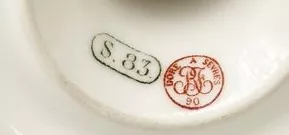
Pieces produced by the Sèvres manufactory are generally signed and hallmarked. The signature may have varied over the centuries. Here's an example:
Knowing the value of a work
If you happen to own a piece of Sèvres or Sèvres porcelain, don't hesitate to request a free appraisal using the form on our website. A member of our team of experts and certified auctioneers will contact you promptly to provide you with an estimate of the market value of your work, as well as any relevant information about it. If you are considering selling your work, you will also be accompanied by our specialists in order to benefit from alternatives for selling it at the best possible price, taking into account the inclinations of the market.
Estimate in less than 24h
Discover in the same theme

Have your Asian art appraised free of charge: paintings, bro...
Asian art is a fascinating field, with a wide variety of objects bearing witness to the history and culture of Asian civilizations.
Learn more >

Rating and value of marine paintings
Marine paintings are relatively unknown to the general public, yet are highly prized at auction. Many collectors seek them out.
Learn more >

Rating and value of antiquarian books, illuminations and fir...
Antiquarian books, illuminations and first editions are very popular items on the auction market.
Learn more >
Similar works sold at auction

Estimated 500 € - 600 €
SEVRES, 18th century, circa 1970, porcelain teacup and saucer.

Estimated 800 € - 1 200 €
MANUFACTURE NATIONALE DE SEVRES Rare porcelain cookie obelisk.

Estimated 2.000 - 3.000 €
Sèvres porcelain plate from the "agronomique" service

Estimated 800 - 1.200 €
SÈVRES, Teapot in the service of King Louis-Philippe at Château D'Eu.

Estimated 2.000 - 3.000
SÈVRES, Pair of square compotiers in soft porcelain

Secure site, anonymity preserved

Auctioneer approved by the State

Free and certified estimates
Frequently asked questions
-
What is Sèvres porcelain, and what is its history?Sèvres porcelain is produced by the royal porcelain manufactory founded by Louis XV in Vincennes in 1740 and later relocated to Sèvres in 1756. The manufactory distinguished itself through the invention of Sèvres blue—a pigment derived from cobalt oxide—and through the production of hard-paste porcelain, which was first marketed in 1773 following the discovery of French kaolin. It remains one of the most prestigious porcelain manufacturers in Europe and continues to produce porcelain today as a public institution.
-
What is the price range for Sèvres porcelain vases at auction?Sèvres porcelain vases sell for between €35 and €125,000, depending on their period, condition, and artistic characteristics. The most prestigious 18th-century vases command the highest prices (€140 to €125,000), while 19th- and 20th-century vases range from 50 to 34,000 € and from 35 to 64,000 €, respectively. Sèvres blue vases, which are particularly sought after, range from 40 to 62,000 €.
-
How can you authenticate a piece of Sèvres porcelain?Pieces produced by the Sèvres factory are generally signed and stamped, with the signature having varied over the centuries. To verify the authenticity of a piece, we recommend requesting a free appraisal from Auctie’s: our state-certified experts and auctioneers will examine your piece and provide you with a detailed, no-obligation assessment.
-
How does the appraisal of Sèvres porcelain work at Auctie's?The appraisal is free and non-binding. Simply fill out a form on our website or contact us directly. A member of our team of experts and licensed auctioneers will contact you promptly to examine your item and provide you with an accurate estimate of its market value within 48 hours.
-
Is this a good time to sell a piece of Sèvres porcelain?Yes, now is a good time to sell Sèvres porcelain. Demand remains strong, particularly among French and European buyers, and the prices of many pieces continue to rise at auction. Vases, in particular, are highly sought after. Auctie's will guide you from the appraisal to the final sale to help you achieve the best possible price based on current market conditions.
