



Rating and value of jewelry, necklaces and rings by Pierre Sterlé

Key takeaways
- Pierre Sterlé jewelry sells for between €100 and €48,000 depending on the type and rarity, with a gold set selling for €48,000 in 2011.
- Pierre Sterlé (1913–1978) was a leading 20th-century French jeweler known for his organic designs in 18-karat gold set with precious stones.
- Necklaces and earrings constitute the premium segments, while pieces from the 1950s and 1960s often command a premium on the market.
If you own a piece of Pierre Sterlé jewelry, and would like to know its value, our state-approved experts and auctioneers will offer you their appraisal services.
Our specialists will carry out a free appraisal of your jewel, and will provide you with an accurate estimate of its value on the current market.
Then, if you wish to sell your jewel, we will direct you to the best possible arrangement to obtain the optimum price. The price of a piece of jewelry can vary depending on the year, the artist behind its creation, and the material from which it was fashioned.
Rating and value of a Pierre Sterlé
Jewels are iconic Pierre Sterlé pieces, and must-haves of the women's wardrobe ; their success is no longer to be boasted. The price at which they sell on the art and auction markets ranges from €100 to €48,000, a considerable delta but one that speaks volumes about the value that can be attributed to your jewelry.
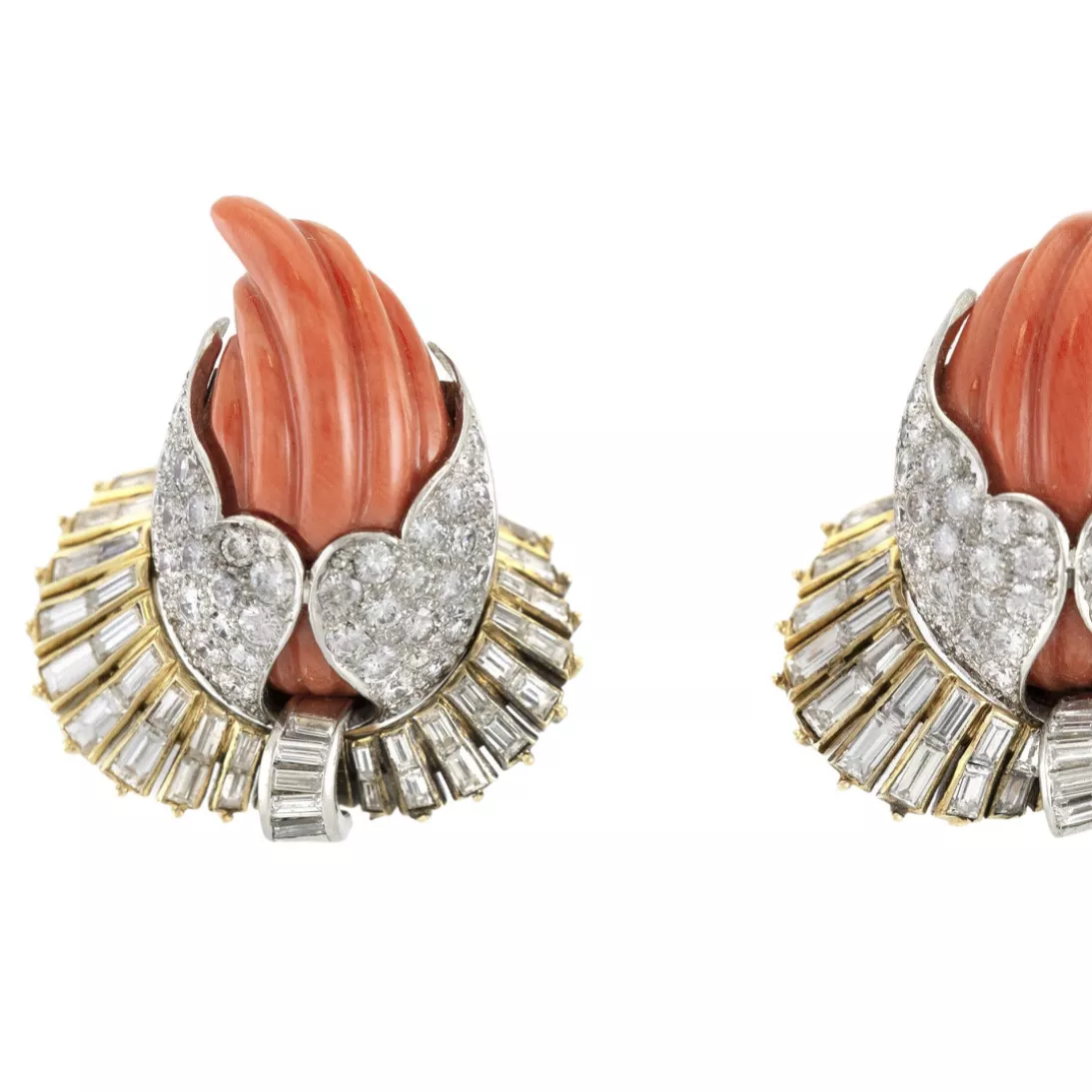
In 2011, a yellow gold set comprising a corsage clip and a pair of ear pendants sold for €48,000, while it was estimated at €40,000 to €50,000.
Order of value ranging from a classic piece of jewelry to the rarest and most sought-after
Technique used | Result |
|---|---|
Flacon | From 100 to 200€ |
Cufflinks | From 750 to 1,050€ |
Brooch | From 500 to 21 000€ |
Ring | From 500 to 31 000€ |
Collar | From €17,000 to €30,000 |
Bracelet | From €3,000 to €35,000 |
Earrings | From €800 to €48,000 |
Estimate in less than 24h
Pierre Sterlé's style and technique
Pierre Sterlé (1913 - 1978) was a major French jeweler of the 20th century, and a central figure in post-war Parisian jewelry. His aesthetic is situated between the classical heritage of the Place Vendôme and organic, naturalistic modernity.
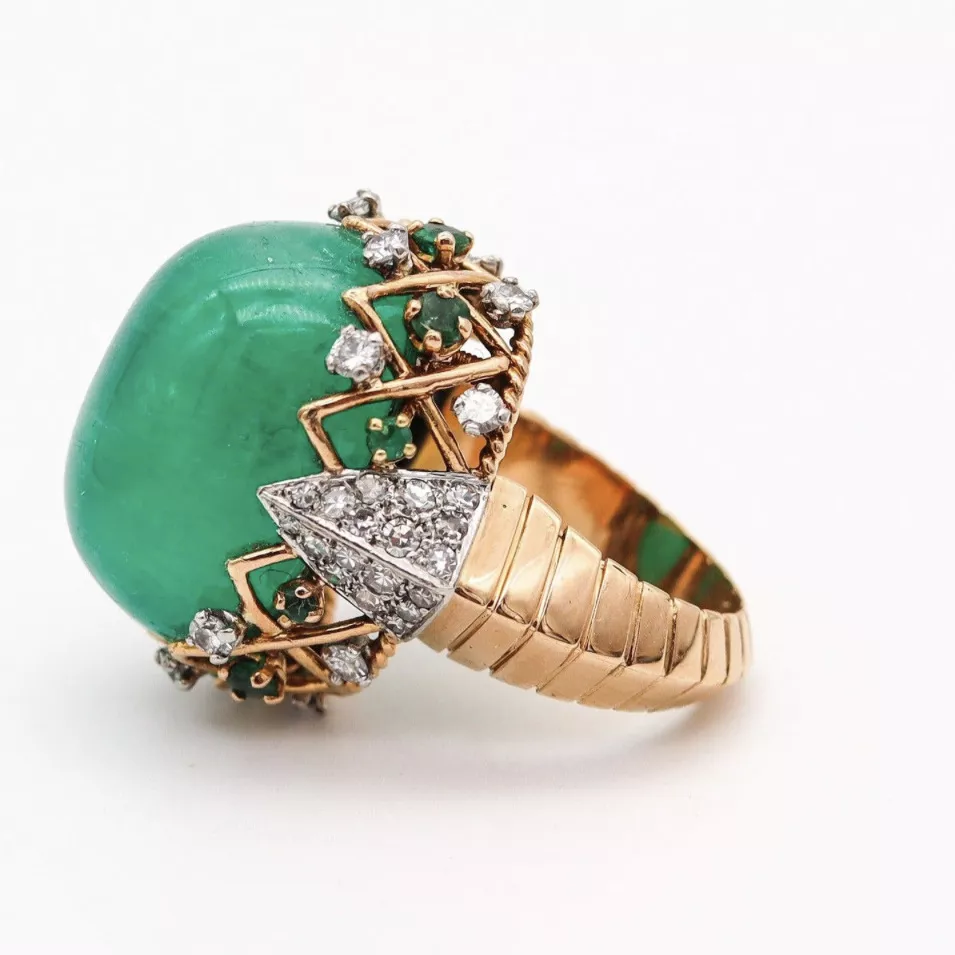
His jewelry is conceived as an art of movement and volume, not as mere adornment. He draws his main inspiration from nature, with foliage, feathers, flowers, insects and stylized plant forms in his creations. Nature, however, is interpreted and never described, with a tendency towards organic abstraction.
His compositions are dynamic and asymmetrical, with a rejection of frontal rigidity. Jewelry is thought of in three dimensions, often seen in rotation on the body. The jewelry is designed to embrace movement with flexibility, suppleness and invisible articulation.
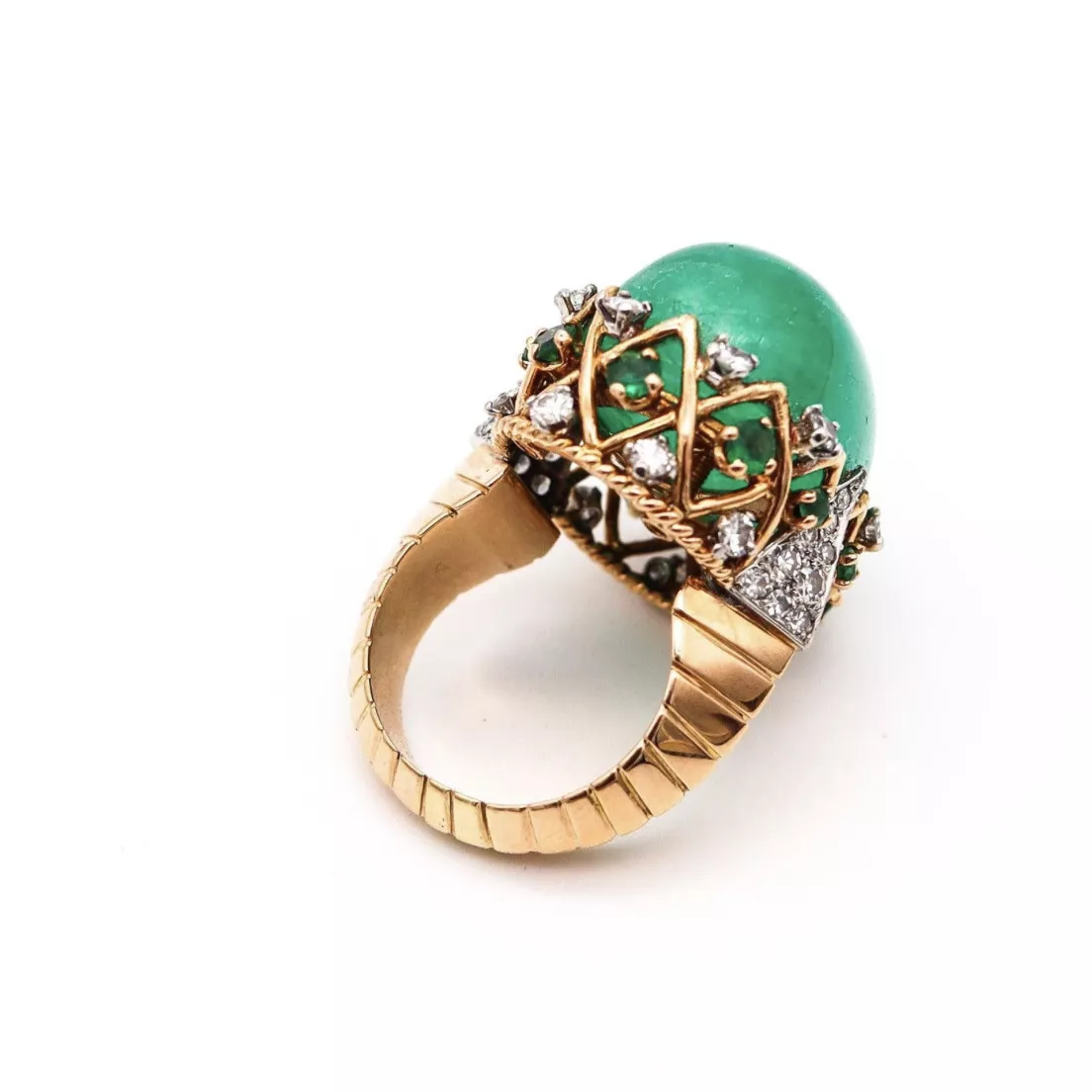
Pierre Sterlé seeks a natural, almost textile wear, using mainly 18-carat gold, often white or yellow. He makes frequent and virtuoso use of precious stones (diamonds, rubies, sapphires, emeralds). The stones serve the structure, not the other way around.
The articulation of the jewels is complex, with invisible systems and integrated moving elements. The settings are flexible, cascading, with stones used to accentuate movement. Metal is worked like a living material, with undulating, ribbed and pleated volumes. It deliberately erases technical structure in favor of visual fluidity. The setting is rarely ostentatious, with stones suspended, floating and integrated into the overall design.
The jewelry is transformable or modular in some cases. Brooches can become necklaces or multiple ornaments. Jewelry is thought of as an object in transformation.
His aesthetic intention is to make technical constraints disappear behind the obviousness of gesture, and create jewelry where virtuosity is never demonstrative.
The life of Pierre Sterlé
Pierre Sterlé was born in Paris in 1913. He came from a background with no direct jewellery tradition, but was soon attracted to fine craftsmanship and technical precision. He initially trained in Parisian jewelry workshops, rigorously learning the classical skills of jewelry design, volume setting, goldsmithing and setting.
His training was essentially practical, based on the workshop rather than the institution. He began his career before the Second World War, working as a designer and creator for several jewelry houses. He quickly made a name for himself with his extraordinary formal inventiveness.
He collaborated with major Place Vendôme houses, including Boucheron, Chaumet, Mauboussin and Cartier. He designed exceptional pieces, often without visible signatures, according to the custom of the time.
He founded his own company, Pierre Sterlé, in the 1950s, and set up his workshop in Paris. He immediately positioned himself as a designer of haute joaillerie, without industrial production.
The 1950s and 1960s were his period of maximum maturity and recognition. He attracted a prestigious clientele and built a reputation on his technical virtuosity, formal audacity and mastery of movement.
Pierre Sterlé defines himself as a craftsman-creator, and designs his models himself. He has tight control over his workmanship in the workshop, and places great importance on the dialogue between design, metal and stone.
Although he keeps a low profile in the media, he is recognized by his peers as a benchmark jeweler. He continued his demanding production until the 1970s, and died in 1978 in Paris. He was rediscovered in the 2000s by jewelry historians, auction houses and specialized collectors.
Market segmentation and Pierre Sterlé's rating
The secondary market is international, positioned on post-war French haute joaillerie and the " signed jewels " category. The offer is regular at public sales, with a core of recurring lots.
Collars (pieces of fine jewelry, often diamonds, platinum and gold) constitute the most premium segment, strongly driven by the complexity of construction and rarity of documented pieces.
Bracelets belong to a higher segment, where value depends on flexibility, design and diamonds. Brooches (birds, naturalistic motifs, clips) are a structuring segment of the Sterlé identity, with a strong price dispersion depending on stones, cut and period.
Earrings are also part of the top segment, when it comes to " feather /leaf " diamond models, often dating from the 1950s.
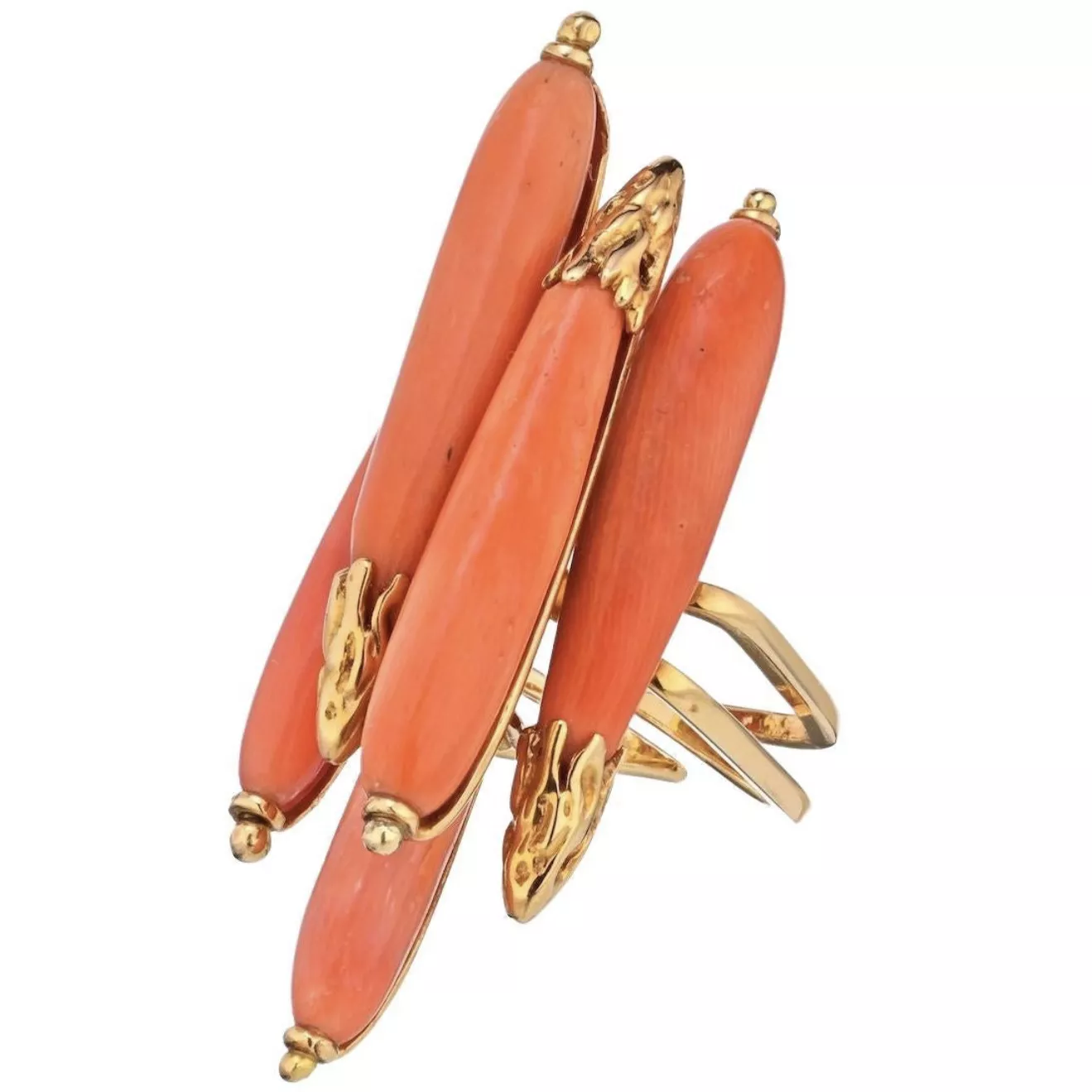
Rings form an intermediate segment, more valued as a product with points on particular stones. Diamonds and platinum or gold constitute a top segment associated with Place Vendôme and haute joaillerie.
18k gold alone or colored stones are part of an intermediate to high segment, depending on the inventiveness of the setting and the bibliography.
Creations from the 1950s - 1960s have a frequent premium, as they are the height of research into suppleness, feathers and birds). For later periods, the market is active but more dependent on materials and pattern strength.
Recognizing a Pierre Sterlé creation
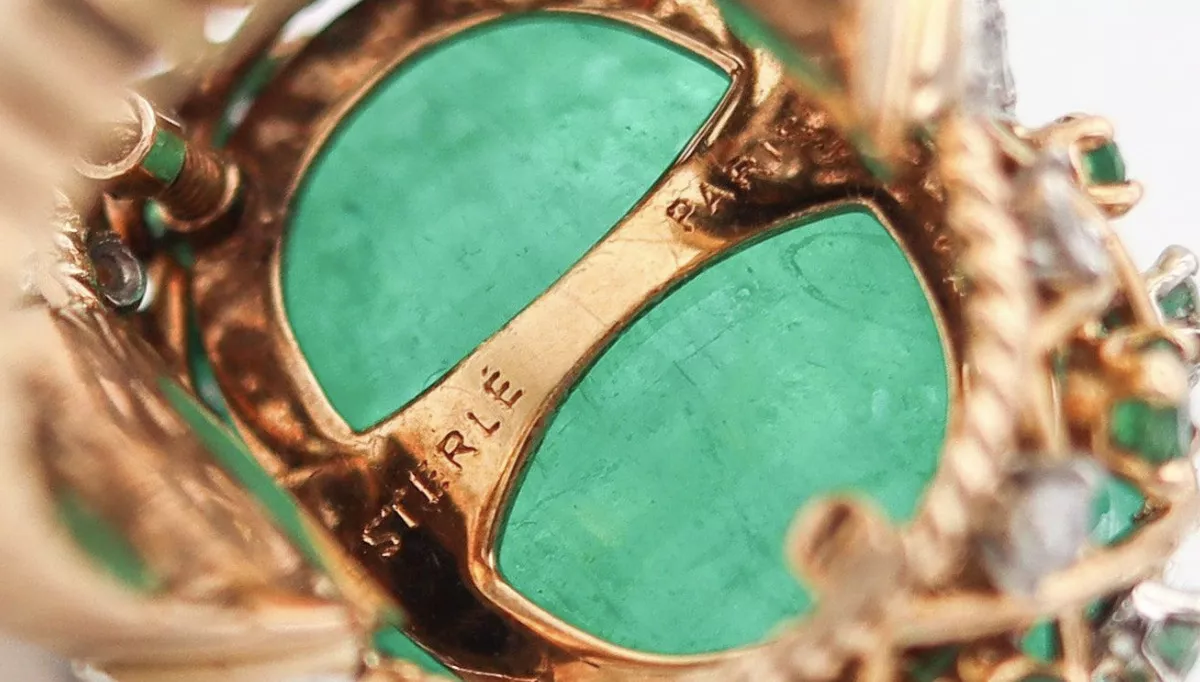
Pierre Sterlé jewelry is signed, and hallmarked according to the metal. However, there are many copies, which is why the expertise of your jewel remains very important.
Know the certain value of your jewelry
If you happen to own a Pierre Sterlé piece of jewelry or think you might, don't hesitate to request a free appraisal using our form on our website.
A member of our team of experts and licensed auctioneers will contact you promptly to provide you with an estimate of the market value of your jewel, as well as any relevant information about it.
If you wish to sell your property, you will also be accompanied by our specialists in order to benefit from alternatives for selling it at the best possible price, taking into account the inclinations of the market.
.Estimate in less than 24h
Discover in the same theme

Rating and value of Van Cleef & Arpels jewels, brooches and...
Van Cleef & Arpels Van Cleef & Arpels was founded in 1906. Get the value of your Van Cleef & Arpels jewelry for free.
Learn more >

Rating and value of Lacloche jewelry
Less well known to the general public than Boucheron and Cartier, Lacloche was nevertheless one of the most prestigious jewelry manufacturers in the w...
Learn more >

Appraise and estimate the value of your Boucheron jewelry
Boucheron jewels are exceptional pieces. How to authenticate and what is the value of Boucheron jewelry?
Learn more >
D'autres pièces de haute joaillerie vendues aux enchères

Estimated 10.000 - 15.000 €
BOUCHERON - "Ava" - White gold necklace set with a brilliant-cut diamond (1.56 cts)

Estimated 2.000 - 4.000
CARTIER, 18K (750 e) gold opening bangle bracelet

Estimated 1.500 - 3.000
CARTIER PARIS, Trinity, 2-tone 18k (750e) gold clip brooch

Estimated 3.000 - 5.000
CARTIER, Love, Wedding band in 18k white gold (750e)

Estimated 2.000 - 4.000
CARTIER Love model Pendant necklace in 18K (750e) white gold

Estimated 1.500 - 2.000
CHAUMET, Ring in platinum (850th), set with an oval faceted ruby

Secure site, anonymity preserved

Auctioneer approved by the State

Free and certified estimates
Frequently asked questions
-
Who is Pierre Sterlé, and what is his jewelry style?Pierre Sterlé (1913–1978) was a leading French jeweler of the 20th century and a central figure in postwar Parisian jewelry design. His aesthetic blends the classical heritage of the Place Vendôme with organic modernity, drawing on naturalistic inspiration (foliage, feathers, flowers, insects) reinterpreted in an abstract manner. His jewelry is designed in three dimensions with fluid, flexible movement, featuring undulating forms in 18-karat gold, often set with diamonds and precious stones.
-
What is the price range for Pierre Sterlé jewelry?The value of Pierre Sterlé jewelry varies considerably depending on the type and materials used: from €100 to €48,000. High-end necklaces and bracelets range from €17,000 to €35,000, rings from €500 to €31,000, while simpler pieces (perfume bottles, cufflinks) can be worth between €100 and €1,050. Designs from the 1950s and 1960s featuring diamonds and white gold or platinum generally command the highest prices.
-
How can you authenticate a piece of Pierre Sterlé jewelry and determine its exact value?Pierre Sterlé jewelry is signed and hallmarked according to the metal, but counterfeits do exist. To authenticate your piece and obtain an accurate estimate, we recommend requesting a free appraisal from Auctie's via our online form. A certified expert or auctioneer will contact you to provide a market valuation and detailed information about your piece, with no obligation.
-
Is this the right time to sell a piece of Pierre Sterlé jewelry?Yes, now is a good time to sell a piece of Pierre Sterlé jewelry. The international secondary market is steady and active, driven by growing recognition of the jeweler since the 2000s among historians, auction houses, and specialized collectors. Authentic pieces of fine jewelry, particularly those from the 1950s and 1960s, are in strong demand in the market for postwar French fine jewelry.
-
How does the sale of a Pierre Sterlé jewelry piece work at Auctie's?Auctie's supports you every step of the way: a free, no-obligation appraisal by a certified expert; an accurate estimate of market value within 48 hours; and guidance on the best options for getting the highest possible price. Our jewelry specialists will advise you on the sales strategy best suited to your piece, taking into account market trends and its provenance.
