



Rating and value of chairs and furniture by Carlo Pagani

Key takeaways
- Carlo Pagani (1913–1999), an Italian modernist designer, created furniture and lighting fixtures valued between €200 and €33,300, depending on the type and rarity.
- Chairs and armchairs make up the dominant segment of the market, with prices ranging from €200 to €11,500, while desks command the highest prices.
- Pieces produced by Arflex that are named and cataloged command a significant market premium thanks to their certified provenance and documentation.
If you own a work by or based on the work of artist Carlo Pagani and would like to know its value, our state-approved experts and auctioneers will guide you.
Our specialists will carry out a free appraisal of your work, and provide you with an accurate estimate of its value on the current market.
Then, should you wish to sell your work, we will direct you to the best possible arrangement to obtain the optimum price.
Designer's rating and value
Twentieth-century designer Carlo Pagani created numerous pieces of furniture, in particular several collections of chairs, which earned him worldwide artistic recognition. In line with his reputation, the artist is highly rated on the auction market.
Carlo Pagani is a sure bet on the art market, and a piece bearing his signature can fetch tens of thousands of euros in the auction room. Witness one of his desks drawn for a private commission in Milan, which fetched over €33,000 in London in 2018.
Order of value from the most basic to the most prestigious
Technique used | Result |
|---|---|
Chairs | From €200 to €8,500 |
Archairs | From €60 to €11,500 € |
Low tables | From €170 to €13,800 |
Bed | From €10,000 to €19,500 |
Offices | From €5,500 to €33,300 |
Estimate in less than 24h
Artist's style and technique
Carlo Pagani (1913 - 1999) was an Italian designer who was part of the post-war modernist movement between functional design and sculptural research. His work is representative of the transition from the Italian rationalism of the 1950s to a more expressive approach in the 1960s and 1970s.
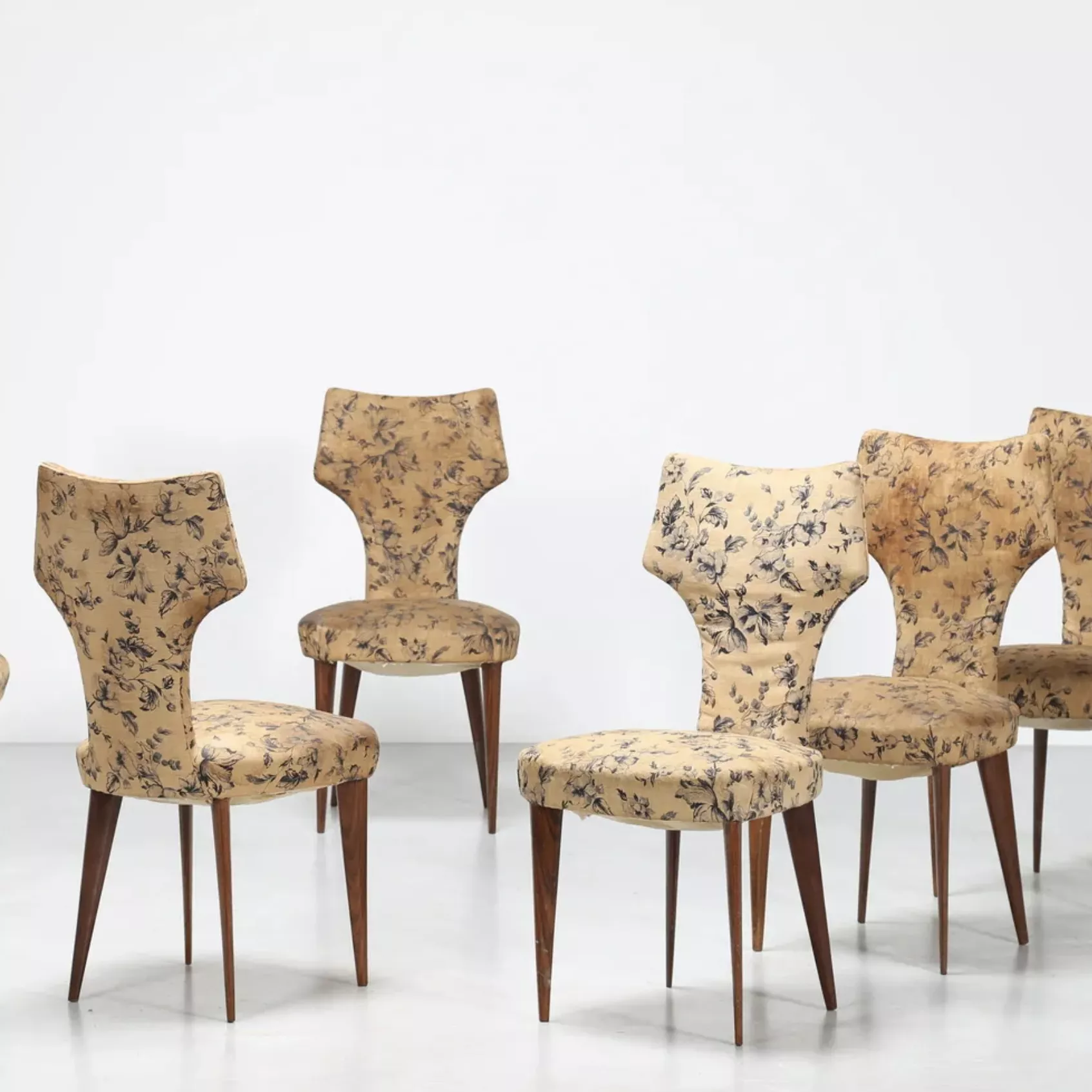
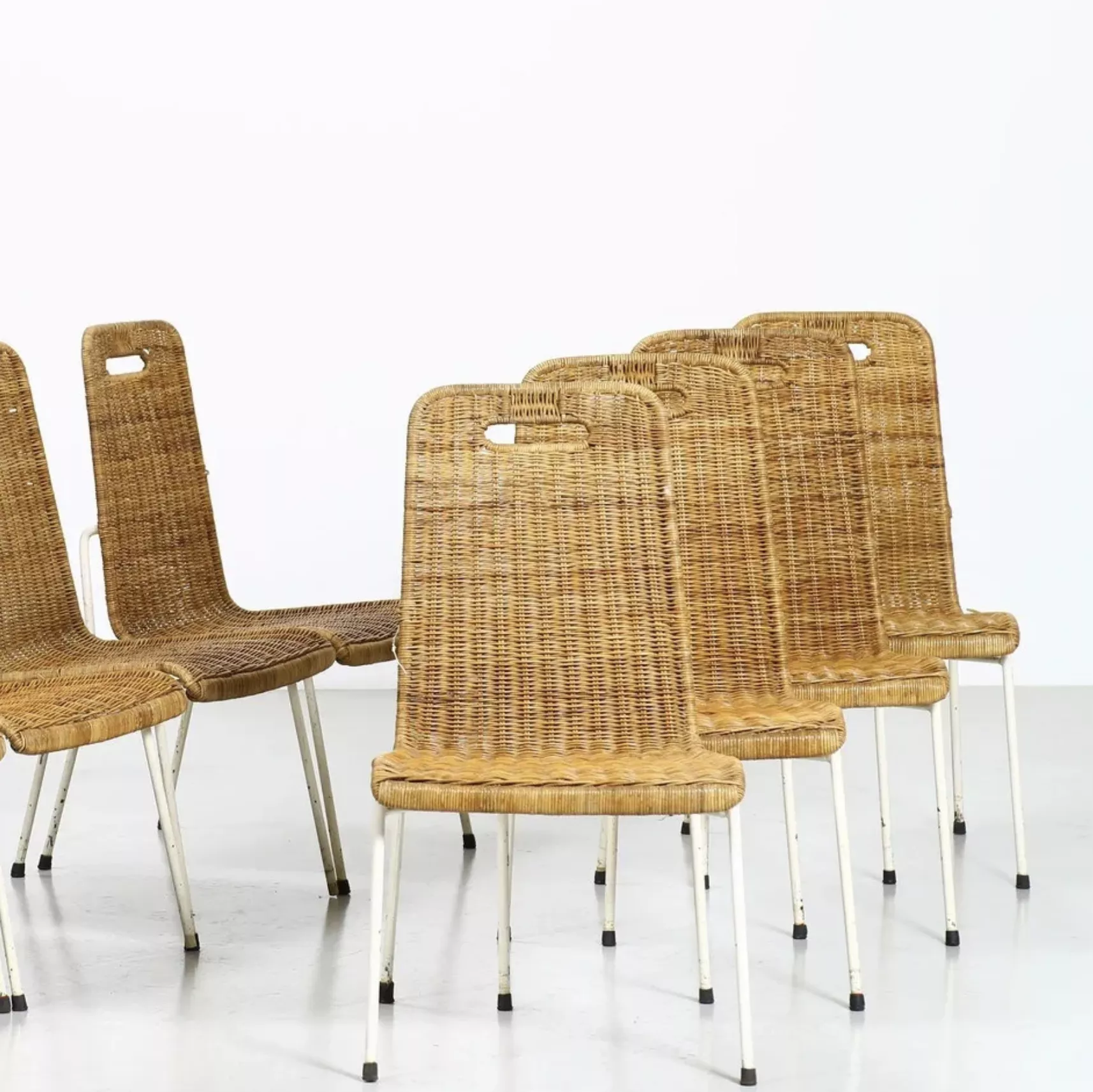
His production is mainly focused on furniture and lighting. He creates table lamps, floor lamps and pendant lamps, as well as coffee tables, consoles and functional decorative elements. Best known for his chairs, his pieces are designed for modern interiors, often in limited production.
The shapes are clean, legible, geometric and sometimes softened by curves. Volumes are simple yet expressive, emphasizing structural clarity. There are no superfluous ornaments; priority is given to form and function.
The approach is modernist : function determines form. Technical elements (structure, fastening and light diffusion) are integrated into the overall design. The design does not conceal the construction but makes it intelligible.
The main materials are metal (core material, sometimes polished, sometimes with a patina), glass (opal, diffusing glass) and wood. He combines industrial materials with a meticulous finish.
The manufacture of his furniture is based on mastered industrial processes (cutting, assembly, welding). The proportions and balance of his work are precise. His production is compatible with limited editions, without being strictly artisanal.
He seeks diffused, functional, non-decorative light, with an emphasis on visual comfort. His palette is fairly sober (black, white, metallic tones, sometimes neutral colors). Finishes are matte or satin, with a deliberately timeless aesthetic.
Pagani is influenced by rationalist Italian design (Ponti, Albini, Sottsass, Zanuso, Pistoletto, with a European and international modernist movement. He is also close to the Milanese design research of the 1950s and 1960s. His aesthetic intention is to design durable, legible and functional objects.
He wants to avoid gratuitous decorative effect in favor of formal coherence, and to inscribe the object in everyday use, without breaking with the architectural space. He is a secondary but representative figure of Italian modernist design. Today, he is appreciated for his sobriety, the quality of his materials and the rigor of his composition.
His work is mainly valued in the field of twentieth-century design, notably in specialized sales.
.
The life of Carlo Pagani
Carlo Pagani (1913 - 1999) was an Italian designer active mainly between the 1950s and 1970s, a key period in the revival of post-war Italian design. His work took place in the context of European reconstruction and the rise of modern industrial design in Italy.
He evolved in an environment marked by the search for a balance between functionality, aesthetics and controlled production. His training is probably linked to the applied arts, architecture or design, according to the Italian models of the time.
He is part of an intellectual environment influenced by Italian rationalism and debates on standardization, the modern habitat and the social role of design. He belongs to a generation of designers trained in the wake of the great Milanese figures.
He began his career in the 1950s, a period of formal and technical experimentation. He soon turned his attention to furniture and lighting, two rapidly expanding sectors. His early work is characterized by formal sobriety and a rigorous attention to proportion.
He developed a body of work centered on functional objects (lamps, tables, furniture elements), working with industrial materials compatible with mass or small-scale production. His production is in line with a logic of controlled commercial distribution, usually via Italian publishers or manufacturers.
It is in the continuity of Italian modernism, without seeking a radical break with it. He favors clarity of design, structural legibility and durability of form. His work reflects a rejection of gratuitous ornamentation, in favor of a functional aesthetic. His recognition is mainly professional and commercial rather than institutional.
His activity seems to decline from the 1970s onwards, as tastes evolve towards more radical or postmodern forms. Collectors' interest is growing in the secondary but consistent figures of post-war Italian design.
Market segmentation and artist rating
The dominant categories at public sale are seating, which is the most identified segment (documented models, design bibliography, high desirability), desks and large tables, which are a rarer segment but qualified as " statement piece ".
Other furniture (consoles, more occasional coffee tables) is dependent on allocation and condition. The absence of floor lamps on artprice suggests that this segment is not structuring for the artist's rating at auction and should not be used as a main axis of segmentation.
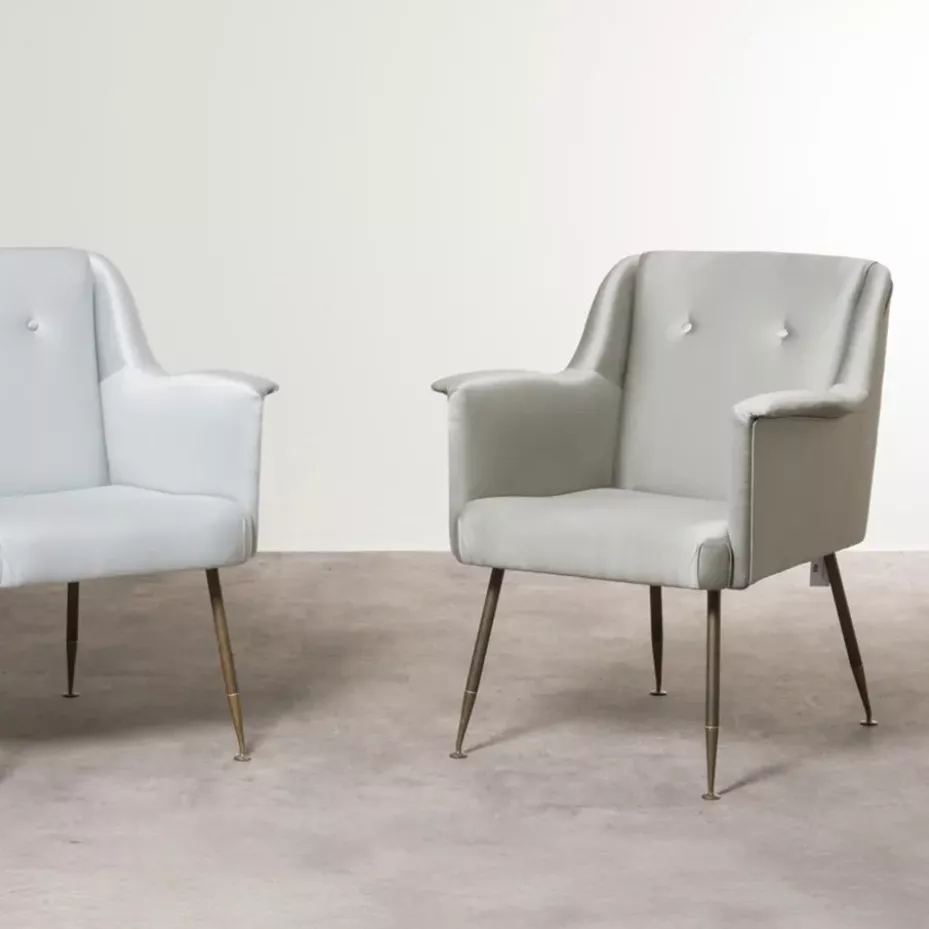
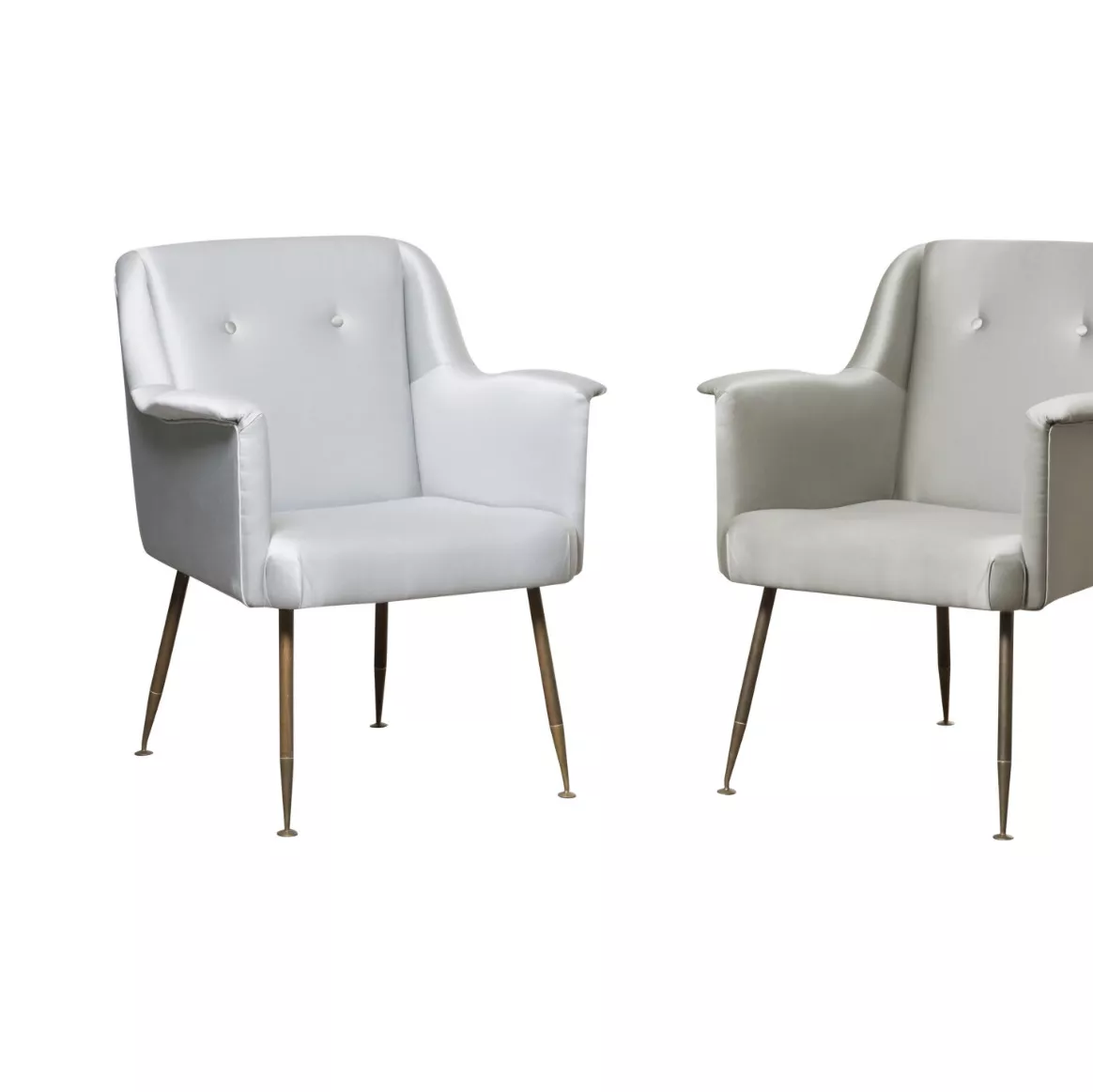
Models named, published and unambiguously attributed (Camelia, Campanula) have a market premium because the object is indexed by literature and by comparable sales. Pieces produced by Arflex are more attractive (identified publisher, canonical Italian design logic).
Large pieces of furniture (desks, large tables) are part of a narrower market, but potentially very valuable if provenance and attribution are solid.
Carlo Pagani's value is structurally driven by Arflex chairs (named, bibliographed models), while furniture (desks/tables) is part of a rarer, more selective market.
Expertise your property
If you happen to own a work by Carlo Pagani or after the artist, don't hesitate to request a free appraisal by filling in our form on our website.
A member of our team of experts and certified auctioneers will contact you promptly to provide you with an estimate of the value of your work, and will ensure that you receive ad hoc information about it.
If you're thinking of selling your work, our specialists will also help you find alternatives to sell it at the best possible price, taking into account the inclinations of the market and its specific features.
Estimate in less than 24h
Discover in the same theme

Rating and value of the Berger and Méribel stools by Charlot...
Charlotte Perriand's Berger and Méribel stools are very popular items, with high auction prices. Estimated in 24h.
Learn more >

Rating and value of Art Deco furniture, tables and lamps
In recent years, Art Deco furniture has become increasingly popular at auction. It is highly prized by collectors.
Learn more >

Marco Zanuso's armchairs quote and value
Marco Zanuso is an Italian designer who has produced armchairs that are highly rated and valued at auction. Estimated in 24h.
Learn more >
D'autres oeuvres de mobilier design vendu aux enchères

Estimated 15.000 - 20.000 €
Charlotte PERRIAND (1903-1999) - Suite of 6 "berger" stools.

Estimated 2.500 - 5.000
Percival LAFER (b. 1936) Three-seater sofa model MP 211, circa 1975

Estimated 3.000 - 5.000
Eleanora PEDUZZI-RIVA (born 1939) Ueli BERGER (1937-2008) Klaus VOGT (born 1938) HEINZ ULRICH (20th) DE SEDE (publisher) Modular sofa model DS-600

Estimated Between €4,000 and €6,000
Pierre Chapo (1927-1987) solid elm table

Estimated Between €2,000 and €3,000
Pierre GUARICHE (1926-1995) Suite of 6 4-sided chairs

Estimated 4.000 - 6.000
Roger CAPRON (1922-2006) Soleil rectangular coffee table, circa 1965

Secure site, anonymity preserved

Auctioneer approved by the State

Free and certified estimates
Frequently asked questions
-
Who is Carlo Pagani, and what is his historical context?Carlo Pagani (1913–1999) was a leading Italian designer of the postwar modernist movement, active primarily between 1950 and 1970. He was part of the revival of rationalist Italian design, characterized by a balance between functionality, minimalist aesthetics, and masterful industrial production. His work, characterized by clear geometric forms and the absence of superfluous ornamentation, represents the transition from the rationalism of the 1950s to the more expressive approach of the 1960s and 1970s.
-
What is the price range for Carlo Pagani's chairs and furniture?Carlo Pagani's chairs generally sell for between €200 and €8,500, while his armchairs range from €60 to €11,500. Desks, which are considered more prestigious pieces, command higher prices, ranging from €5,500 to €33,300 (for example, a desk designed for a private client in Milan sold for over €33,000 at auction in London in 2018). Coffee tables and beds range from €170 to €19,500 depending on the model and condition.
-
How do I have a chair or piece of furniture by Carlo Pagani authenticated and appraised?To authenticate and appraise your Carlo Pagani artwork, we offer a free, no-obligation appraisal through our online form. A certified expert or auctioneer from our team will contact you promptly to examine your item and provide you with an accurate estimate of its current market value, usually within 48 hours.
-
Is this the right time to sell a piece of furniture by Carlo Pagani?Yes, now is a good time to sell. Collectors’ interest in lesser-known but significant figures in postwar Italian design continues to grow. Carlo Pagani has established himself as a sure bet on the art market, particularly for his named and documented chairs, as well as for his desks and large tables, which are sought-after “statement pieces.”
-
How does the sale of a work by Carlo Pagani at Auctie's work?Auctie's guides you from the appraisal to the auction. Following a free, no-obligation appraisal, our specialists will offer you the best options for selling your item at the best price, taking into account current market trends and the specific characteristics of your piece (provenance, condition, documented model, etc.).
