



Rating and value of 17th century hunting harquebuses

Key takeaways
- 17th-century hunting arquebuses sell for between €1,200 and €45,000, depending on their type and condition.
- Wheel-lock models command the highest prices (up to €45,000), while flintlock models are more affordable (€1,200 to €19,000).
- Pieces adorned with mother-of-pearl and ivory see the greatest appreciation in value: an arquebus estimated at €12,000–15,000 sold for €28,160 in 2022.
If you own a hunting harquebus, and would like to know its value, and if you don't know, the period and model of your weapon, our state-approved experts and auctioneers will offer you their appraisal services. Our specialists will carry out a free appraisal of your work, and provide you with a precise estimate of its value on today's market. Thereafter, if you wish to sell your work, we will guide you towards the best possible device to obtain an optimal price.
Rating and value of XVII
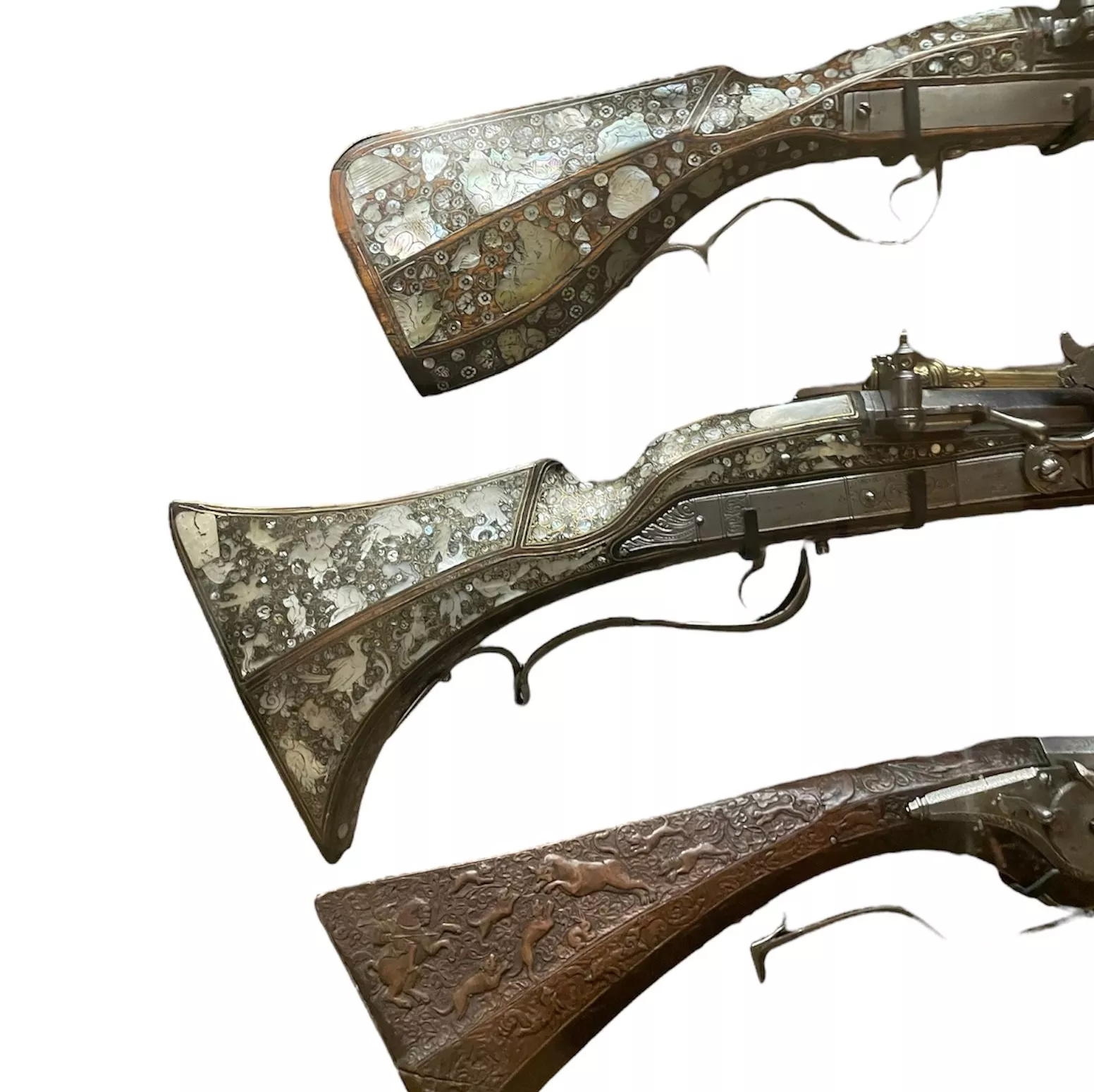
Hunting harquebuses are sought-after objects by collectors. However, price differences can be considerable, depending on order, state of preservation, who owned it, and other criteria. Nowadays, prices for these objects can rise considerably under the auctioneer's hammer. Buyers from all over the world are interested in the sale of certain rare pieces. The price at which they are sold on the art market ranges from €1,200 to €45,000, at the moment - a considerable difference, but one that says a lot about the value that can be attributed to these weapons. In 2022, an arquebus inlaid with mother-of-pearl and decorated with small bronze sculptures sold for €28,160, while it was estimated at between €12,000 and €15,000.
Order of value ranging from a simple order to the most prestigious
Type of hunting harquebus | Result |
|---|---|
Flint hunting harquebus | From €1,200 to €19,000 |
Hunting harquebus with inlays (mother-of-pearl, ivory, pearls) | From €1,600 to €28,160 |
Wheel hunting harquebus | From €1,500 to €45,000 |
Estimate in less than 24h
Returning to the history of the spinning-wheel hunting harquebus
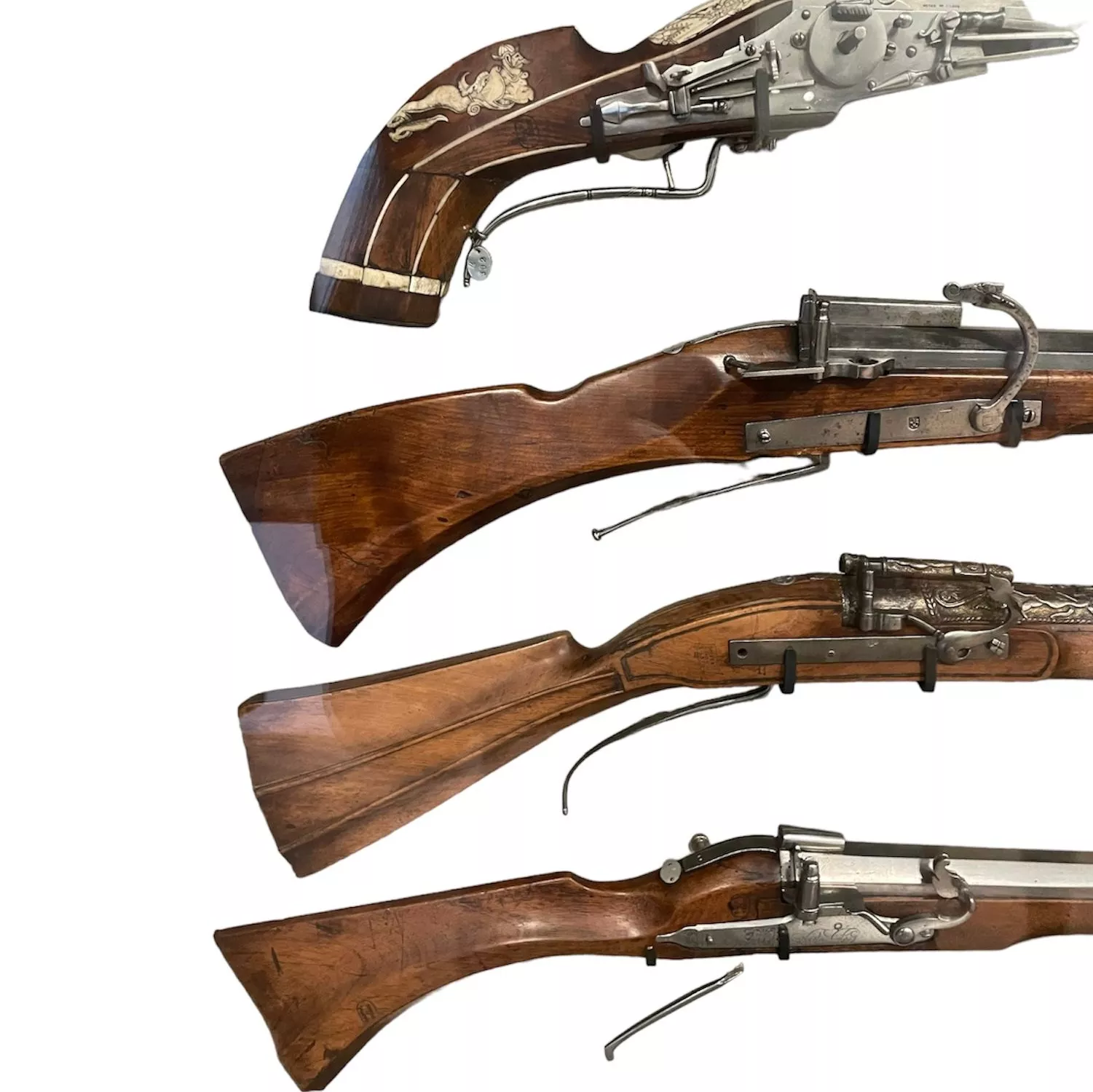
During the Renaissance, Leonardo da Vinci became interested in the spinning-wheel mechanism, which he theorized and schematized. The spinning wheel is a steel part in the form of a wheel, toothed or notched. It is used to rub the firing plate to trigger the shot. Once the hammer is engaged, the springs kick in, creating a spark to ignite the priming powder.
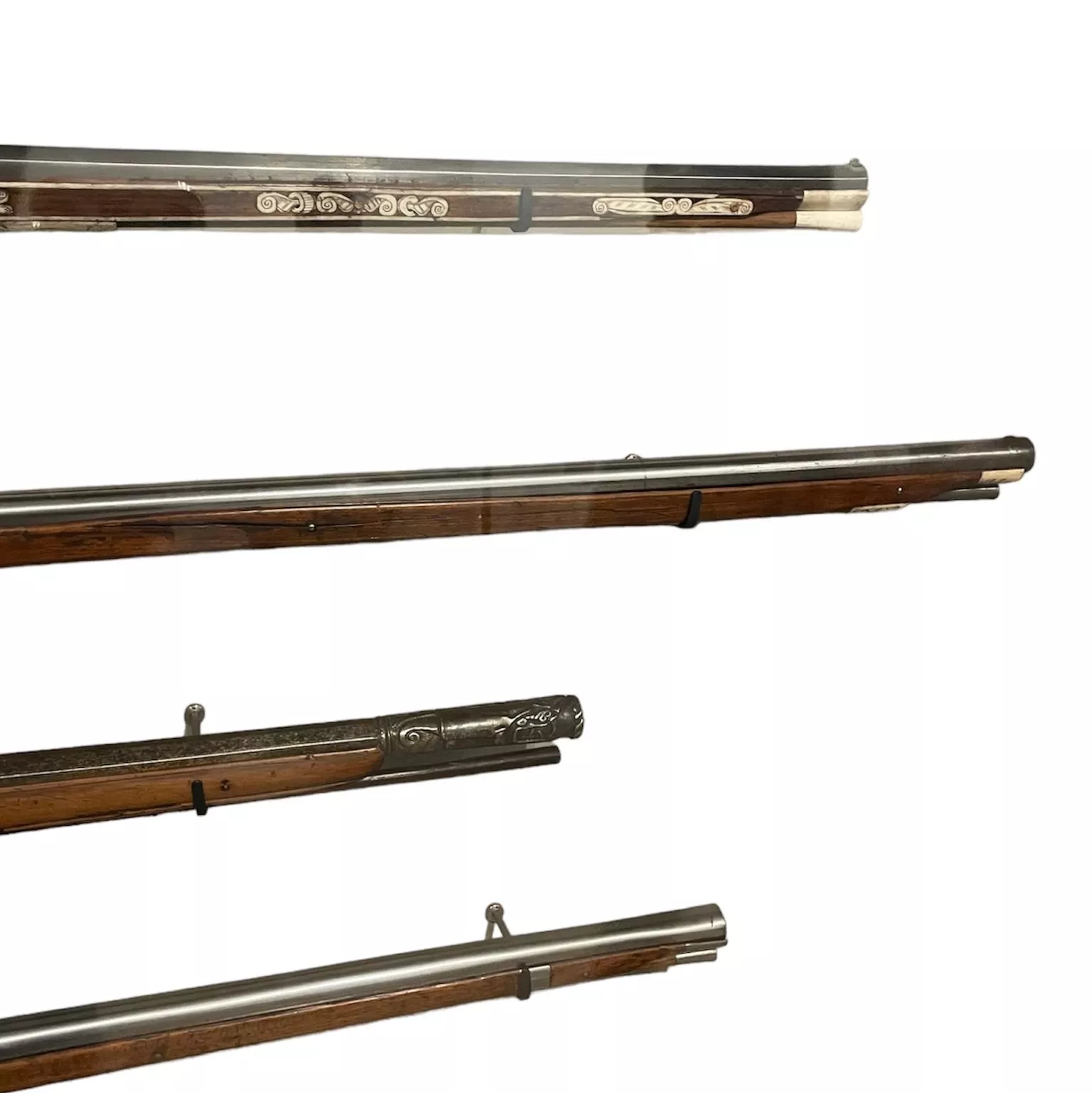
However, despite Leonardo's writings in the Codex Atlanticus, the first spinning-wheel mechanisms are thought to have originated in Northern Germany. The Netherlands, close to this area, quickly developed the same mechanism. The first spinning-wheel harquebuses appeared in these regions in the 15th century, and were to develop with the Italian wars in the following century, as firearms took on a greater role in combat. The spinning-wheel harquebus, however, appears impractical, as does the Italian spinning-wheel pistol. On the battlefield, flintlock weapons quickly gained the upper hand. Nevertheless, spinning-wheel harquebuses remain in use for hunting, which requires less precision than combat, and allows for more patience.
This is why in the 17th century, these weapons are also developed for decorative purposes, using materials such as ivory or mother-of-pearl.
The flintlock hunting harquebus, a major innovation
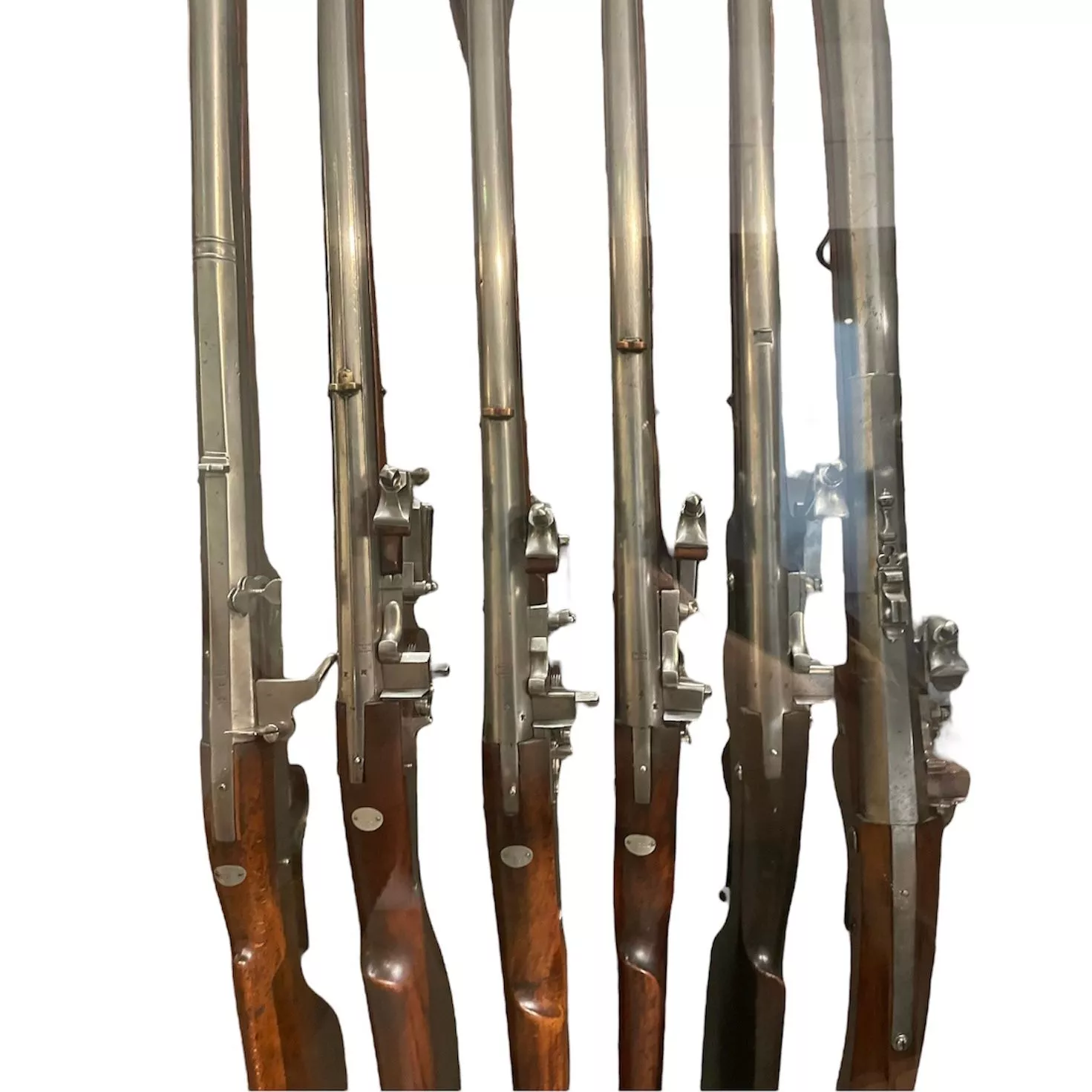
The spinning-wheel harquebus presented some technical difficulties, so flintlock weapons were invented very quickly after the spinning-wheel harquebus.
The weapons were to differ because of their patina : Martin Bourgeois combined the chenapan patina system and the miquelet patina system. This system lasted for two centuries, until percussion systems were introduced. The spark is no longer created with the spinning wheel, but with the flint: a small piece of the stone in question is attached to the hammer. The trigger is triggered and the flint touches the pan where the gunpowder is housed: the spark is created.
This invention is used for hunting harquebuses, proving to be practical and quicker to fire. Flintlock technology reached its apogee during the Napoleonic Wars, with the fusils of the 1st Empire.
Reasons to sell a hunting harquebus at auction
If you own a hunting harquebus, and don't know how to sell it, auctions are one solution. Indeed, collectors use this medium to find models that correspond to a particular battle or that belonged to their ancestors. Prices can reach unprecedented heights. Some spinning-wheel harquebuses can fetch thousands of euros at auction.
These objects are not just weapons, but a historical witness to the scientific evolution of French weapon design.
Knowing the value of a hunting harquebus
If you happen to own a harquebus, from any period, and would like to know its value, don't hesitate to request a free appraisal using our form on our website. A member of our team of experts and certified auctioneers will contact you promptly to provide you with an estimate of the market value of your piece, as well as any relevant information about it. If you wish to sell your property, you will also be accompanied by our specialists in order to benefit from alternatives for selling it at the best possible price, taking into account market inclinations.
Estimate in less than 24h
More vintage weapons at auction

Estimated 3000 € - 5000 €
Flintlock general's or admiral's pistol, Vendémiaire an XII model

Estimated 300 - 500 €
Luxurious Russian bear hunting knife. Green nephrite handle.

Estimated 600 - 800 €
Russian Shashka saber. Mounted in nielloed silver with chased plant decoration and strings of pearls.

Estimated 20.000 - 30.000 €
Present or ceremonial sword of the Cinquedea type. Northern Italy circa 1490-1510.
Discover in the same theme

Rating and value of Napoleonic sabres (From the Consulate to...
French swords from the Consulate to the Second Empire are collectors' items that can be worth a lot of money. Their value is stable and they are in de...
Learn more >

Rating and value of 1892 Saint Étienne revolvers (French Arm...
The Saint Étienne revolver was the standard sidearm of the French Army. It is sought-after at auction, and its value is stable.
Learn more >

Rating and value of crossbows
Crossbows are sought-after antique weapons at auction, and can fetch high prices. Their value is fairly stable. Estimate in 24h
Learn more >

Secure site, anonymity preserved

Auctioneer approved by the State

Free and certified estimates
Frequently asked questions
-
What is a 17th-century hunting arquebus, and what are the main types?The 17th-century hunting arquebus is a firearm characterized by its firing mechanism: either a wheel lock (a toothed steel mechanism dating back to the Renaissance) or a flintlock (a flint striking the pan to create a spark). These weapons, developed in Northern Germany and the Netherlands, were gradually adorned with precious materials such as ivory and mother-of-pearl, becoming sophisticated hunting tools and testaments to technological advancement.
-
What is the price range for hunting arquebuses at auction?Hunting arquebuses sell for between €1,200 and €45,000, depending on their type and condition. Simple flintlock models range from €1,200 to €19,000, while wheel-lock arquebuses with inlays (mother-of-pearl, ivory, pearls) can reach €28,160 or more. These price differences reflect the influence of the item’s condition, origin, rarity, and decoration.
-
How do I have a hunting arquebus authenticated and appraised?At Auctie's, you can request a free, no-obligation appraisal by filling out a form on our website. A state-certified expert or auctioneer will contact you shortly to examine your arquebus, determine its era and model, and provide you with an accurate estimate of its market value within 48 hours.
-
Is this a good time to sell a hunting arquebus?Yes, now is a good time to sell. 17th-century hunting arquebuses are highly sought after by collectors around the world, and auction prices can far exceed initial estimates, as recent sales have shown. The market remains strong for these historic and decorative pieces.
-
How does the sale of an arquebus work at Auctie's?After a free appraisal conducted by our experts and certified auctioneers, we guide you through the entire auction process. Our specialists analyze the market and offer you the best options for selling your item at the best possible price, taking into account current trends and the profiles of interested collectors.
