



Market Value and Price of Étienne Doirat Chests of Drawers

Key takeaways
- A 17th-century French cabinetmaker (1651–1722), Étienne Doirat has established himself as a sure bet on the international market, with his value steadily rising.
- Doirat’s stamped chests of drawers and cabinets fetch millions of euros: a marquetry chest of drawers sold for 105,600 euros at Christie’s in 2020.
- His creations are characterized by the Boulle style, featuring brass and copper inlays and intricate marquetry; prices range from 1,200 to 63,800 euros depending on the type of piece.
If you own a work by or based on the work of artist Étienne Doirat and would like to know its value, our state-approved experts and auctioneers will guide you. Our specialists will carry out a free appraisal of your work, and provide you with a precise estimate of its value on the current market. Thereafter, if you wish to sell your work, we will direct you to the best possible arrangement to obtain the optimum price.
Artist's rating and value
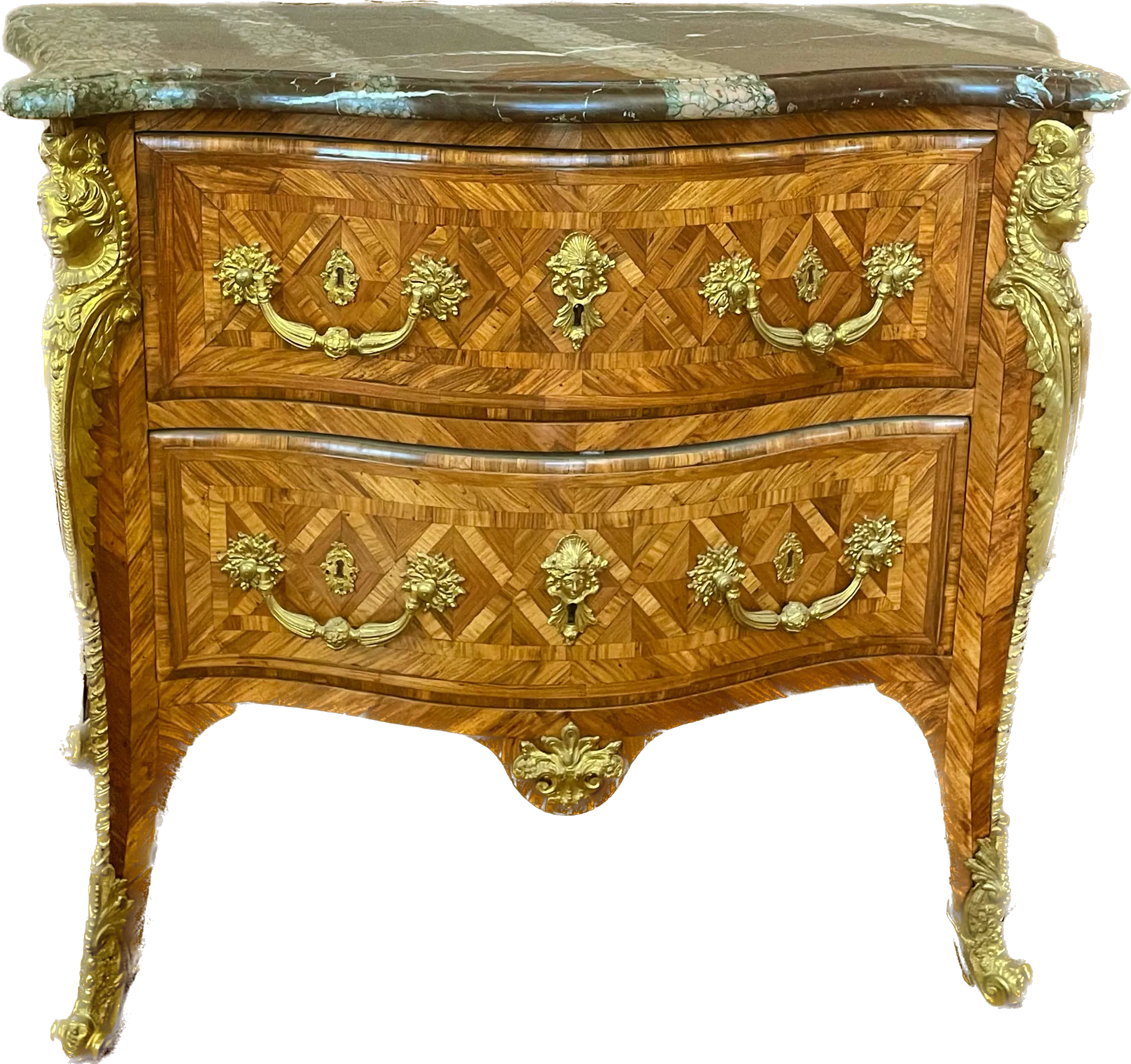
During the Regency period, Étienne Doirat established himself as one of the most talented cabinetmakers of his time. Since then, his value has risen steadily. As a result, he has become a firm fixture on the international art market. Highly prized by collectors, his chests of drawers and armoires are the most popular on the market, especially the rare stamped models. Thus, a piece of Doirat furniture can fetch millions of euros at auction, as evidenced by the wooden chest of drawers with flower and gilding inlay, adjudged 105,600 euros at Christie's in 2020.
Order of value from the most basic to the most prestigious
Technique used | Result |
|---|---|
Wood veneer coving | From €1,250 to €1,600 |
Wooden desk | From €6,180 to €36,980 |
Inlaid desk | About €42,000 |
Regency period chest of drawers in wood | From €1,200 to €63,800 |
Estimate in less than 24h
The life of Étienne Doirat
Étienne Doirat (1651-1722) was a 17th-century French cabinetmaker, renowned for his exceptional work in the field of cabinetmaking. He is most famous for his contribution to the artistic style known as "Boulle", named after master cabinetmaker André-Charles Boulle.
Doirat was one of the most renowned cabinetmakers of his time, and his work influenced the development of French cabinetmaking. He is often associated with the creation of luxurious, ornate furniture, characterized by the use of precious materials such as ebony, brass, copper and marquetry inlays. His creations were renowned for their elegance, refinement and exceptional quality.
Although some of his pieces have survived the centuries, information about his personal and professional life can be relatively limited. Nevertheless, his legacy as a talented and innovative cabinetmaker continues to be appreciated and studied in the context of French art and furniture history.
The artist's creations and style
Étienne Doirat is best known for his work in the artistic "Boulle" style. This style takes its name from cabinetmaker André-Charles Boulle, who was also a contemporary of Doirat's and a recognized master cabinetmaker.
The Boulle style is characterized by the use of precious materials such as ebony, tortoiseshell, brass, copper and other metals to create intricate inlays and marquetry. Furniture and objects created in the Boulle style are often adorned with floral motifs, foliage, architectural elements and mythological scenes. Metal inlays are used to create striking visual contrasts and to accentuate the details of the motifs.
Doirat was a master in the art of brass and copper marquetry and inlays, which enabled him to create pieces of furniture of great elegance. His furniture was often adorned with intricate marquetry, geometric shapes and ornamental motifs.
In summary, Étienne Doirat's artistic style is part of the Boulle style movement, characterized by the use of precious materials and artistic inlays to create luxurious furniture and objects.
Importance and definition of the stamp in antique furniture appraisal
A stamp is a mark or stamp affixed to an object, usually a piece of furniture or an objet d'art, by the maker or craftsman who created it. This mark is often used to identify the origin or provenance of the object, as well as to authenticate its authenticity and quality. Stamps can take the form of a stamp, engraving or label, and can contain information such as the name of the craftsman, the date of manufacture, the place of production or the workshop logo. In the context of cabinetmaking and antique furniture, stamps are important for dating and attributing a piece to a particular craftsman or maker, which can have a significant impact on its value and historical significance.
Expertise your property
If you own a work by Étienne Doirat, don't hesitate to request a free appraisal by filling in our online form. A member of our team of experts and licensed auctioneers will contact you to provide an estimate of the market value of your work.
If you are considering selling your work, our specialists will also guide you through the various alternatives available to obtain the best possible price, taking into account market trends and the specific features of each piece.
Estimate in less than 24h
Period and antique furniture sold at auction


Discover in the same theme

Free appraisal of your furniture and objets d'art
Furniture, whether antique, designer or contemporary, can be very valuable. Here are a few details about the different eras, so get them appraised!
Learn more >

Rating and value of Louis XV furniture (chests of drawers, a...
Louis XV furniture is highly prized on the auction market. Elegant and inspired by nature, it is a hit at auction. Estimate in less than 24h
Learn more >

Rating and value of clocks and cartels
Antique clocks and cartels are very popular items on the auction market. They still have value. Estimates in less than 24h.
Learn more >

Secure site, anonymity preserved

Auctioneer approved by the State

Free and certified estimates
Frequently asked questions
-
Who was Étienne Doirat, and what is his artistic style?Étienne Doirat (1651–1722) was a 17th-century French cabinetmaker, recognized as one of the masters of the Boulle style. He made a name for himself during the Regency period for his exceptional work in marquetry and inlays of precious metals (brass, copper, ebony), creating luxurious furniture adorned with highly elegant floral and geometric motifs.
-
What is the current value of Étienne Doirat's dressers and other furniture?The value varies considerably depending on the type and rarity: a wood-veneered corner cabinet ranges from €1,250 to €1,600, a wooden desk between €6,180 and €36,980, a marquetry clock around €42,000, and a Regency-era chest of drawers between €1,200 and €63,800. Pieces classified as rare and intricate can fetch several hundred thousand euros at auction.
-
How can you authenticate a work by Étienne Doirat?Authenticating a Doirat work requires an in-depth professional appraisal. At Auctie's, our state-certified auctioneers and experts provide a free, no-obligation appraisal, examining in particular the stamp, the quality of the marquetry, the materials used, and the piece’s condition.
-
What is a hallmark, and why is it important for Doirat furniture?A maker's mark is a mark or stamp affixed to a piece of furniture by the cabinetmaker to identify its creator and guarantee its authenticity. For Étienne Doirat, the presence of a maker’s mark is a key factor in authentication and attribution, which significantly increases the piece’s value and historical significance.
-
How do I have an Étienne Doirat artwork appraised and sold at Auctie's?Simply fill out our online form to request a free estimate. An expert or auctioneer from our team will contact you within 48 hours to appraise your furniture and suggest the best sales options—from consultation to auction—to help you get the best possible price based on current market trends.
