



Rating and value of works, sculptures, paintings by Louis Cane

Key takeaways
- Louis Cane’s paintings fetch up to €64,500 at auction, with monumental works from the 1970s selling for between €20,000 and €60,000.
- A leading artist of the Supports/Surfaces movement, Louis Cane has distinguished himself since 1968 through his deconstruction of traditional painting and his exploration of the materiality of the support.
- Works from the 1970s (his formative period) command values 1.5 to 2 times higher than his later figurative works, a key factor in valuation.
If you own a work by artist Louis Cane or based on his work and would like to know its value, our state-approved experts and auctioneers will guide you. Our specialists will carry out a free appraisal of your work, and provide you with a precise estimate of its value on the current market. Thereafter, if you wish to sell your work, we will direct you to the best possible arrangement to obtain the optimum price.
Artist's rating and value
French contemporary artist Louis Cane is known for his significant contribution to the art history of his time, notably as a member of the Narrative Figuration movement.
On the auction market, Louis Cane's creations are uncommon. Nevertheless appreciated by collectors, their quotation is stable. A work signed by Louis Cane can fetch tens of thousands of euros. Witness his painting Toile Sol/Mur, which sold for €64,500 in 2019.
Order of value from the most basic to the most prestigious
Technique used | Result |
|---|---|
Estamp - multiple | From €20 to €1,600 |
Miscellaneous items | From €1,200 to €12,000 |
Drawing - watercolor | From €50 to €24,000 |
Sculpture - volume | From €180 to €45,000 |
Luminaire | From €466 to €45,000 |
Furniture | From €199 to €48,000 |
Paintings | From €30 to €64,500 |
Estimate in less than 24h
The artist's works and style
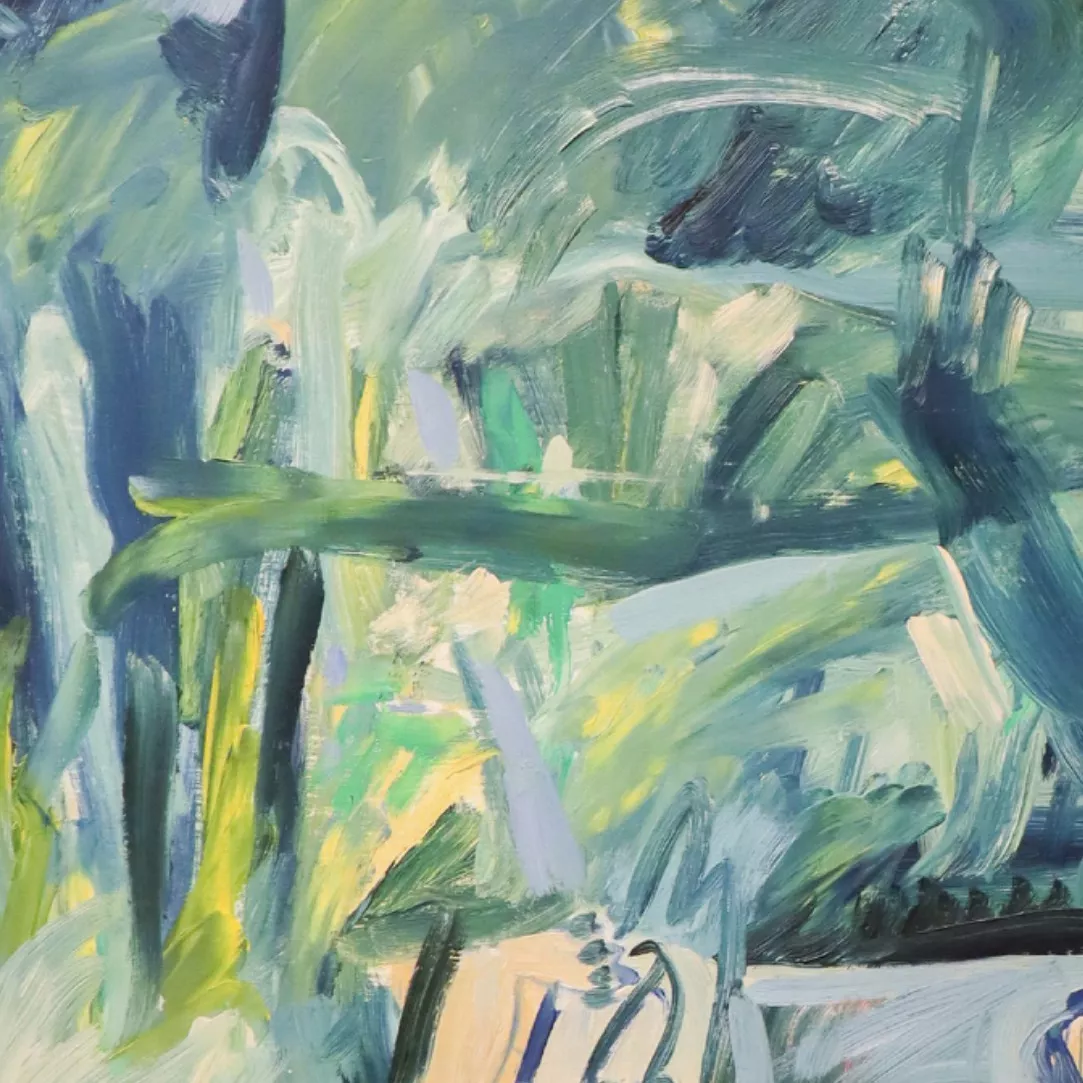
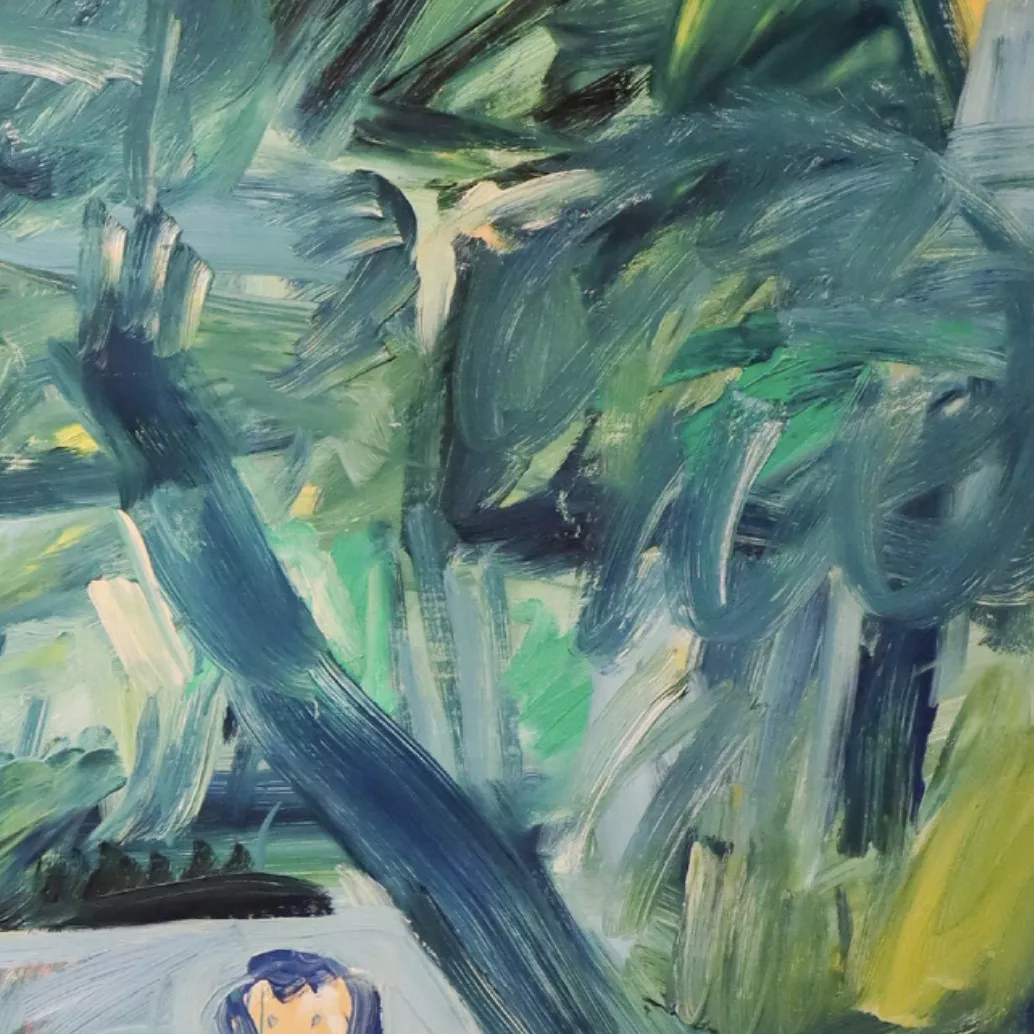
Known for his figurative paintings, inspired by art history and popular culture, Louis Cane creates complex narrative compositions by combining realistic and imaginary elements.
Characterized by a skillful use of color, the artist's style is rooted in the Figuration narrative movement. Often imbued with humor and irony, Louis Cane's compositions blend cultural and historical references, classical and contemporary figures.
In addition to painting, Louis Cane experiments with other techniques such as sculpture, collage and ceramics, recognizable by the artist's distinctive style.
Louis Cane's life
Louis Cane was born in 1943 in Beaulieu sur Mer, in the Alpes Maritimes. Fascinated by the arts from an early age, he studied at the École des Arts Décoratifs in Nice, then at the École des Arts Décoratifs in Paris. It wasn't until 1968, after graduating as an interior architect, that Louis Cane turned to abstract painting.
Inspired by the events of May 68, the young architect took part in the revolt and created his first posters. His compositions stand out for their repeated use of stamps printed on paper, as well as assemblies of thin strips glued to kraft.
A year later, Louis Cane has his first solo exhibition. Quickly appreciated, the young artist frequented several artists' groups of his time, including Supports-Surfaces, which he left a few years later.
In the 70s, Louis Cane traveled throughout Europe to study the works of the great old masters. As a result, his style evolved towards semi-abstract painting, with frequent references to Rafale and Velázquez.
In 1978, the artist returned to a form of figuration, while continuing to reinterpret the classics, and then turned to sculpture. Female nudes then became one of his favorite subjects.
Today, Louis Cane continues to be active on the art scene. Still highly regarded, the artist has developed his art and now produces decorative art elements such as furniture and objects. In this way, his many artistic investigations leave a significant mark on the history of contemporary art.
His signature
Not all of Louis Cane's works are signed.
Although there are variations, here is a first example of his signature:

The Artist's Techniques
Style
Known for his figurative paintings, inspired by art history and popular culture, Louis Cane creates complex narrative compositions by combining realistic and imaginary elements.
Characterized by a skillful use of color, the artist’s style is rooted in the Narrative Figuration movement. Often imbued with humor and irony, Louis Cane’s compositions blend cultural and historical references with classical and contemporary figures.
In addition to painting, Louis Cane experiments with other techniques such as sculpture, collage, and ceramics, all of which bear the artist’s distinctive style.
Spotlight on a Key Work
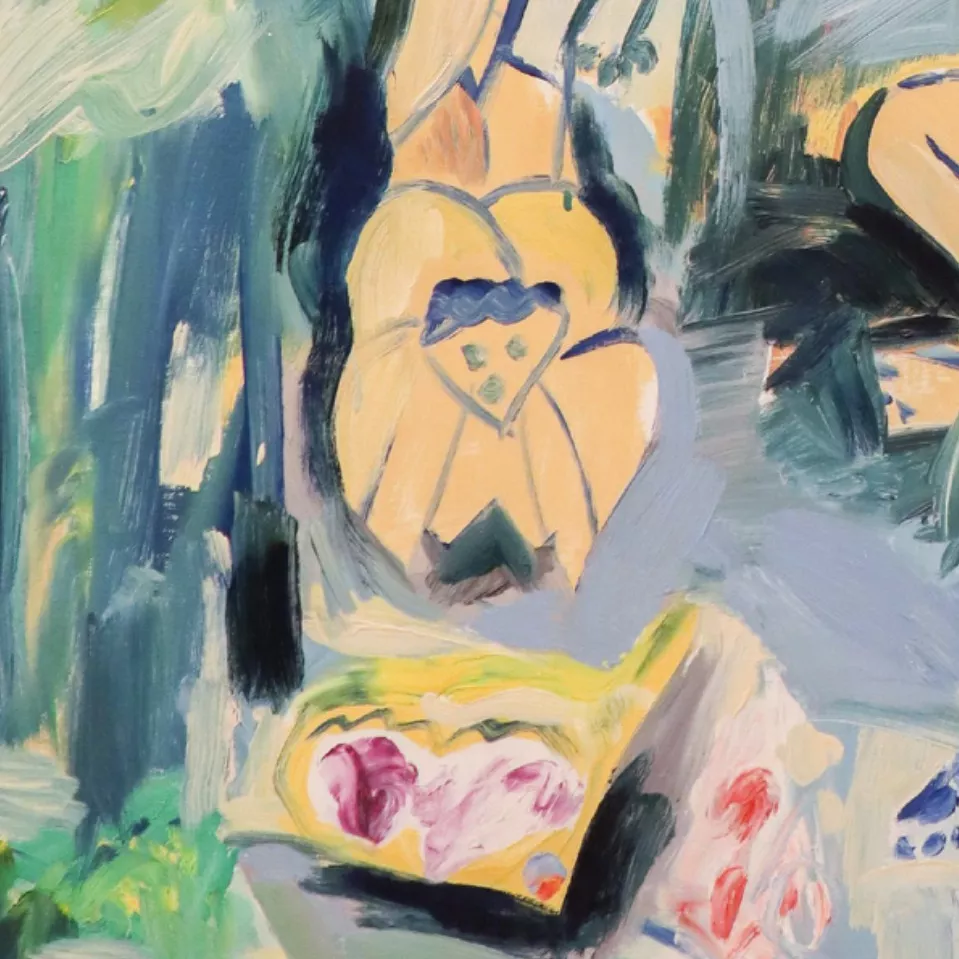
Sol/Mur, ca. 1970
This work is conceived as a spatial installation, breaking with the traditional conception of the painting as an autonomous vertical surface. It highlights the textile support and the materiality of the paint—constituent elements that are usually concealed.
Repetitive motifs organize the surface according to a serial rather than a narrative logic. There is no figurative representation; the work focuses on the material conditions of painting.
This work interacts directly with the exhibition space, incorporating the wall and floor into the viewing experience. This example is emblematic of the explorations of the Supports/Surfaces movement, in which painting becomes a field of theoretical and material experimentation.

FAQ – How do you appraise a work by Louis Cane?
1) What stylistic criteria specific to Louis Cane are key?
For Louis Cane, the analysis focuses on the structure of the pictorial surface, the use of repetitive motifs, the materiality of the paint, and reflections on the status of the painting—characteristics of his engagement with the theoretical and artistic explorations associated with the Supports/Surfaces movement.
2) How important is the period of creation in the valuation?
Particular attention is paid to works from the 1970s, a formative period during which the artist actively participated in the group’s radical experiments; some later works demonstrate distinct stylistic developments.
3) How does the art market influence the valuation?
The estimate is based on a comparative analysis of auction results for works associated with the Supports/Surfaces movement, taking into account the rarity of historic pieces, their significance in the history of contemporary art, and demand from collectors and institutions.
Market Segmentation
Artwork Prices
Louis Cane occupies a mid-range segment of the French contemporary art market, characterized by solid institutional recognition—similar to that of other artists of the same era (such as Robert Combas, Hervé Di Rosa, and Rémi Blanchard)—but with a market value that remains lower than that of certain international contemporaries.
His monumental paintings and historical series from the 1970s generally sell for between €20,000 and €60,000, depending on provenance and their significance in the artist’s career. His later paintings and decorative compositions constitute a core segment of the market, fetching prices ranging from €8,000 to €40,000.
Drawings and works on paper are part of a more accessible market ranging from €1,000 to €8,000.
Factors Affecting Value
Canvases that incorporate the principles of the Supports/Surfaces movement (deconstruction of the stretcher, repetitive patterns, exploration of the materiality of the support) command higher prices.
Conceptual and analytical works from the late 1960s and 1970s can fetch prices 1.5 to 2 times higher than later figurative or decorative works.
The market is relatively active in sales of French contemporary art, with a regular presence in France and Europe. Liquidity depends heavily on the quality and period of the work.
Provenance, participation in institutional exhibitions, inclusion in a historically significant series, and coverage in art criticism are the main factors determining a work’s value.
His Signature
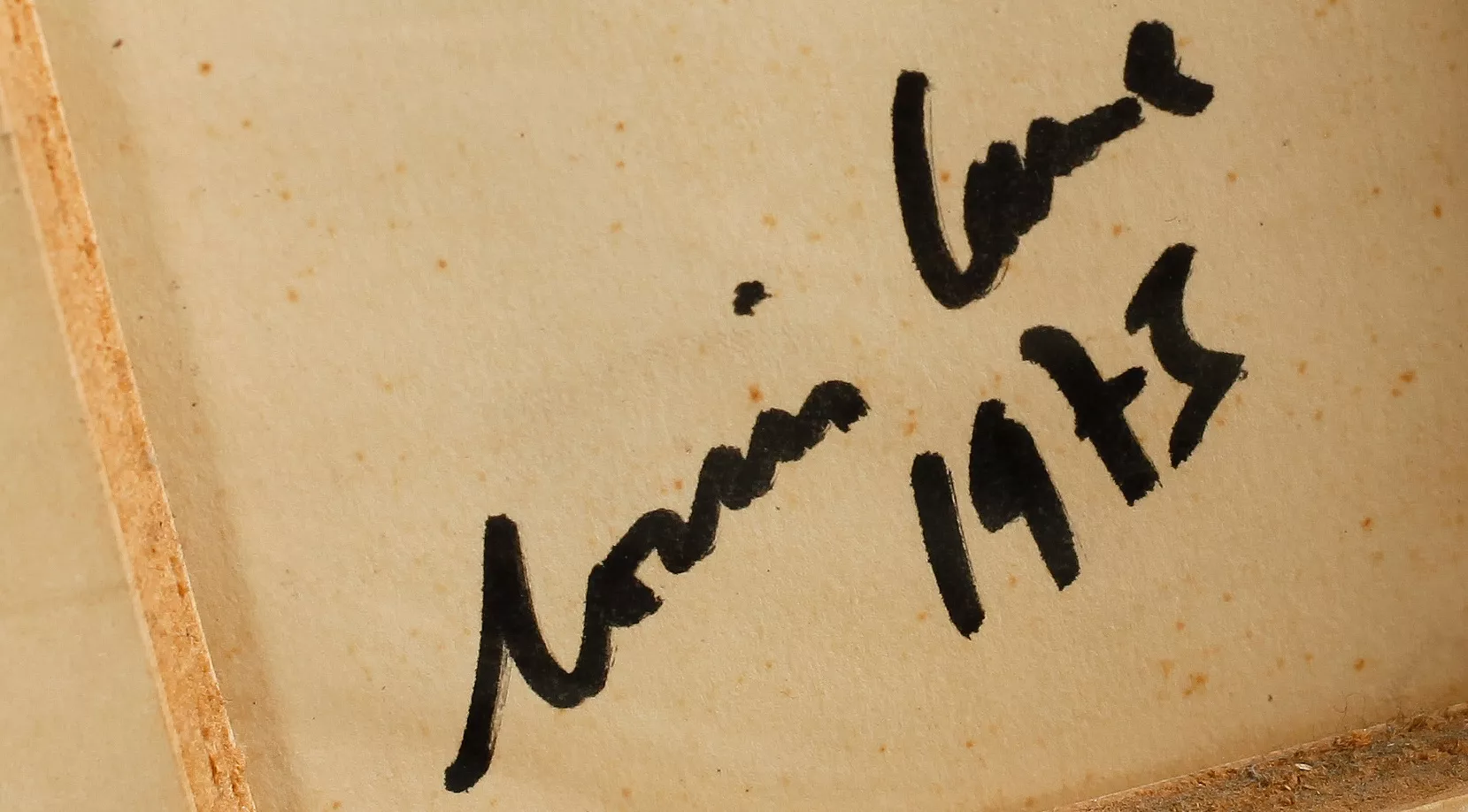
Not all of Louis Cane’s works are signed.
Although there are variations, here is a typical example of his signature:
Expertise your property
If you own a Louis Cane work, don't hesitate to request a free appraisal by filling in our online form. A member of our team of experts and licensed auctioneers will contact you to provide an estimate of the market value of your Louis Cane work.
If you are considering selling your work, our specialists will also guide you through the various alternatives available to obtain the best possible price, taking into account market trends and the specific features of each object.
Estimate in less than 24h
Discover in the same theme

Cote and value of works, drawings, paintings by Alfred Manes...
Alfred Manessier is an artist and painter of expressive abstraction who has produced paintings, drawings and other works listed at auction.
Learn more >

Rating and value of statues, bronzes and marbles by Pierre T...
Pierre Travers is a 20th-century sculptor who has produced works in marble and bronze that are sought-after and quoted on the auction market.
Learn more >

Market Value and Price of Jules Laurens' Paintings
Jules Laurens was a realist and Orientalist painter who produced paintings that are highly valued at auction. Estimate in 24
Learn more >
Works from the same period sold at auction


Secure site, anonymity preserved

Auctioneer approved by the State

Free and certified estimates
Frequently asked questions
-
Who is Louis Cane, and what is his significance in art history?Louis Cane is a French contemporary artist born in 1943, known for his major contribution to the Supports/Surfaces movement beginning in the late 1960s. This movement sought to deconstruct the constituent elements of painting (canvas, stretcher, color) and to challenge the traditional painting. His work spans the late 20th and early 21st centuries, marked initially by conceptual and analytical painting, then by a return to a more figurative and free approach.
-
What are the price ranges for a work by Louis Cane at auction?Louis Cane’s works fetch a wide range of prices at auction, depending on the medium and the period. Paintings fetch between €30 and €64,500, sculptures between €180 and €45,000, and drawings and watercolors between €50 and €24,000. Historical paintings from the 1970s (the founding period of the Supports/Surfaces movement) generally range from €20,000 to €60,000, while his later decorative compositions range from €8,000 to €40,000.
-
How can you authenticate a work by Louis Cane and determine its exact value?To authenticate a work by Louis Cane and determine its exact value, we recommend that you request a free appraisal from our state-certified auctioneers. The appraisal will assess the work’s authenticity, the period in which it was created, its provenance, its condition, and recent market trends. You will receive a reliable estimate within 48 hours, with no obligation.
-
What factors influence the value of a work by Louis Cane?Several factors determine the value of a work by Louis Cane: the period in which it was created (works from the 1970s associated with the Supports/Surfaces movement are particularly highly valued), the application of the movement’s principles (deconstruction of the stretcher, repetitive patterns, exploration of materiality), documented provenance, participation in institutional exhibitions, and coverage in critical literature. Conceptual and analytical works can fetch prices 1.5 to 2 times higher than his later figurative works.
-
Is this the right time to sell a work by Louis Cane?Yes, now is a good time to sell a work by Louis Cane. The market for his work is relatively active in France and Europe, and he enjoys strong institutional recognition as a major figure in French contemporary art. Demand from collectors and institutions remains steady for his early works, particularly those associated with the Supports/Surfaces movement, while the scarcity of his early works supports their values.
