



Islamic Art Appraisal: Valuation and Auction

Iznik ceramics, calligraphy, and inlaid metalwork: the value of Islamic art varies greatly depending on the period, region, and provenance.
Below you’ll find all our valuation guides dedicated to Islamic art—ceramics, manuscripts, metalwork, textiles, and book arts. Each guide details the price ranges observed at auction and the factors that determine a work’s value before it is entrusted to our state-certified auctioneers.
Guides on this art movement
See all guides >Understanding the Value of Islamic Art
What Is Market Value in the Islamic Art Market?
The market value of a work of Islamic art refers to the benchmark value assigned to it by the secondary market at a given moment, based on the object’s category, its specific geographic origin, the period in which it was created, the quality of its craftsmanship, its state of preservation, and the strength of the supporting documentation.
Islamic art encompasses a body of work of exceptional richness and geographic scope, spanning from the 7th to the 19th century, from the early Umayyad and Abbasid dynasties to the great Ottoman, Safavid, and Mughal empires, each of which developed artistic schools of remarkable technical sophistication.
This market took on an international structure as early as the 19th century, when Western interest in these civilizations spurred the formation of major collections, many of which now form the foundation of specialized departments in the world’s leading museums, with the Louvre in Paris having inaugurated a Department of Islamic Art in 2012, marking an important milestone in the institutional recognition of this body of work.
Since the 2000s, the market has experienced renewed vigor, driven by collectors from the Muslim world—particularly the Gulf region—alongside traditional Western collectors and institutions.
Why Islamic Art Attracts Collectors and Museums
Islamic art is appealing because of the technical sophistication of its works and the central role played by geometric, floral, and calligraphic ornamentation—a legacy of a tradition that has largely favored decorative abstraction over figurative representation in a religious context.
Arabic calligraphy—elevated to the status of a major art form due to its direct link to the transmission of the Quranic text—and the art of the book as a whole, including manuscripts, miniatures, and bookbindings, represent technical masterpieces recognized internationally by the most discerning museum institutions.
The diversity of the periods and regions involved— classical Islamic art of the Umayyads and Abbasids, Ottoman sophistication, Persian Safavid refinement, and Mughal splendor in India, has given rise to schools with distinct aesthetics yet linked by constant exchanges that flowed along the trade and cultural routes connecting these regions.
This richness explains the sustained interest of museums and collectors in a market that offers a variety of categories—ceramics, glass, manuscripts, metalwork, and carpets—enabling a wide range of collecting approaches.
Type of Object | Period | Origin | Market demand level |
Ceramics and earthenware (notably Iznik) | 15th–17th centuries | Ottoman Empire | Very strong, international |
Manuscripts and Quranic calligraphy | 7th–19th centuries | Arab world, entire Muslim world | Very active, specialized collectors |
Persian and Mughal miniatures | 15th–18th centuries | Safavid Empire, Mughal Empire | Exceptional, high auction prices |
Bronze and metalwork | 13th–16th centuries | Syria, Mamluk Egypt, Iran | Steady, growing demand |
Oriental rugs and textiles | 16th–19th centuries | Persia, Ottoman Empire, Caucasus | Very strong, active global market |
Enameled glass | 13th–14th centuries | Syria and Mamluk Egypt | Active, major pieces are extremely rare |
Estimate in less than 24h
The Criteria That Determine the Value of an Islamic Artwork
The market value of a work of Islamic art is determined by a hierarchy of criteria that the auctioneer weighs according to the category in question. For ceramics, the quality and rarity of the decoration—particularly the tomato-red hue characteristic of the most sought-after Iznik ceramics—are decisive factors.
For manuscripts, the quality of the calligraphy, the richness of the illumination, and the integrity of the original binding strongly influence the valuation. For carpets, the fineness of the knotting and the quality of the natural dyes are essential.
The price ranges observed on the secondary market illustrate this diversity. A common Ottoman ceramic piece, without exceptional decorative quality, can range from 500 to 5,000 euros.
A single illuminated manuscript page sells for between 2,000 and 50,000 euros, depending on the quality of the illumination and whether it is attributed to an identified workshop. A high-quality Mamluk copperware piece inlaid with silver and gold ranges from 10,000 to 300,000 euros.
Complete manuscripts of exceptional quality, as well as Mughal miniatures from the most prestigious imperial workshops, can exceed several hundred thousand euros, with some museum-quality pieces having fetched several million at Sotheby’s or at public auctions in Paris.
Ceramics, Earthenware, and Glass in Islamic Art
Iznik earthenware and ceramics with decorative motifs
Iznik ceramics, produced in this Anatolian city beginning in the 15th century and eventually becoming one of the most refined crafts of the Ottoman Empire, are characterized by a siliceous clay body of remarkable whiteness and by underglaze painted decorations of great chromatic richness—cobalt blue, green, and the famous raised tomato red, which is the most sought-after hallmark of this production.
Plates, architectural tiles, and shaped pieces are among the most prized items among collectors specializing in Ottoman art.
Enameled Glass and Display Pieces
Syrian and Egyptian enameled glass from the Mamluk period—particularly mosque lamps decorated with calligraphic and floral motifs painted in enamel and gold—represents one of the technical pinnacles of Islamic metalwork and glass art; and its material fragility explains the extreme rarity of pieces that have survived to the present day in good condition.
When these objects appear on the market with a solid provenance, they command very high prices; their rarity, combined with their technical sophistication, makes them objects of the utmost prestige for the most discerning institutional and private collections.
Category | Characteristics | Indicative Price Range | Market Demand |
Iznik ceramic dish or shaped piece (exceptional quality) | Tomato red, intricate floral design, in good condition | 30,000 — 300,000 € | Very strong, international |
Common Ottoman ceramics or regional earthenware | Simpler decoration, late production | €500 — 10,000 | Widespread, affordable |
Identified architectural wall tile | From a historic building | €5,000–80,000 | Well-preserved, high documentary value |
Enameled glass mosque lamp (Mamluk period) | Calligraphic and floral decoration, enamel and gold | €50,000 — several million € | Institutional, very rare |
Enameled glass object of ordinary quality | Later or fragmentary production | €5,000 — €50,000 | Active, specialized collectors |
Estimate in less than 24h
Manuscripts, Miniatures, and Calligraphy
Pages from the Quran and Calligraphy
Ancient Qur’anic manuscripts represent one of the pinnacles of Islamic art due to the quality of their calligraphy and illumination, the creation of which required the finest calligraphers and illuminators of their time because of the sacred connection between the text and its transcription.
Ancient pages, whose Kufic or Naskh calligraphy attests to exceptional technical and spiritual mastery, are among the most sought-after items in this category, particularly when they can be linked to a specific workshop or historical period.
Persian, Ottoman, and Mughal Miniatures
Persian miniatures from the Safavid period, which document with remarkable finesse court scenes, literary episodes, and epic narratives from the Persian tradition, and Mughal miniatures, which illustrate with striking precision court life, hunting, and portraits of Indian emperors and their entourages, represent another highlight of this market, their pictorial quality rivaling the greatest traditions of Eastern court painting.
Object | Origin | Period | Estimated Price Range |
Ancient page from the Quran, Kufic calligraphy | Arab world, Abbasid | 8th–10th century | €10,000–150,000 |
Persian miniature (identified court workshop) | Safavid Iran | 16th–17th centuries | €10,000 — €300,000 |
Mughal miniature (imperial workshop) | Mughal India | 16th–18th century | €15,000 — €400,000 |
Single calligraphic page (renowned master) | Ottoman Empire | 16th–19th century | €5,000 — €100,000 |
Complete manuscript of exceptional quality | Arab-Persian world | All periods | €50,000 — several million € |
Metal, Weapons, and Oriental Rugs
Brasswork, Copper, and Metalwork
Islamic copperwork—whether Syrian, Mamluk Egyptian, or Persian—is one of the most accomplished decorative arts of this civilization, with brass or bronze basins, ewers, and boxes inlaid with silver and gold showcasing a technical repertoire of remarkable virtuosity.
The quality of the inlay, the richness of the calligraphic and figurative decoration, and the condition of the metal surface—often oxidized or weathered by time—are key criteria for appraising this type of object.
Antique Weapons and Collectibles
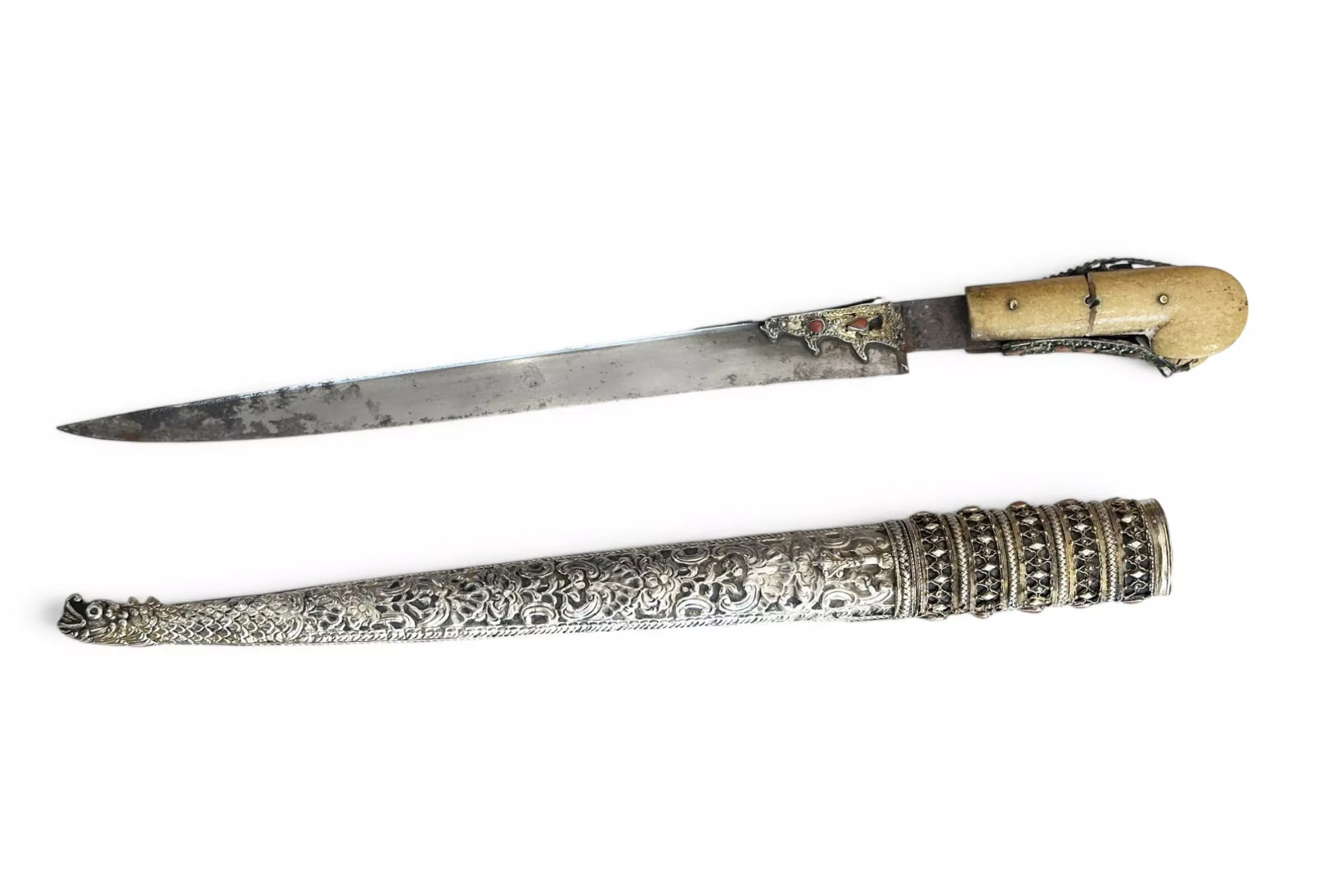
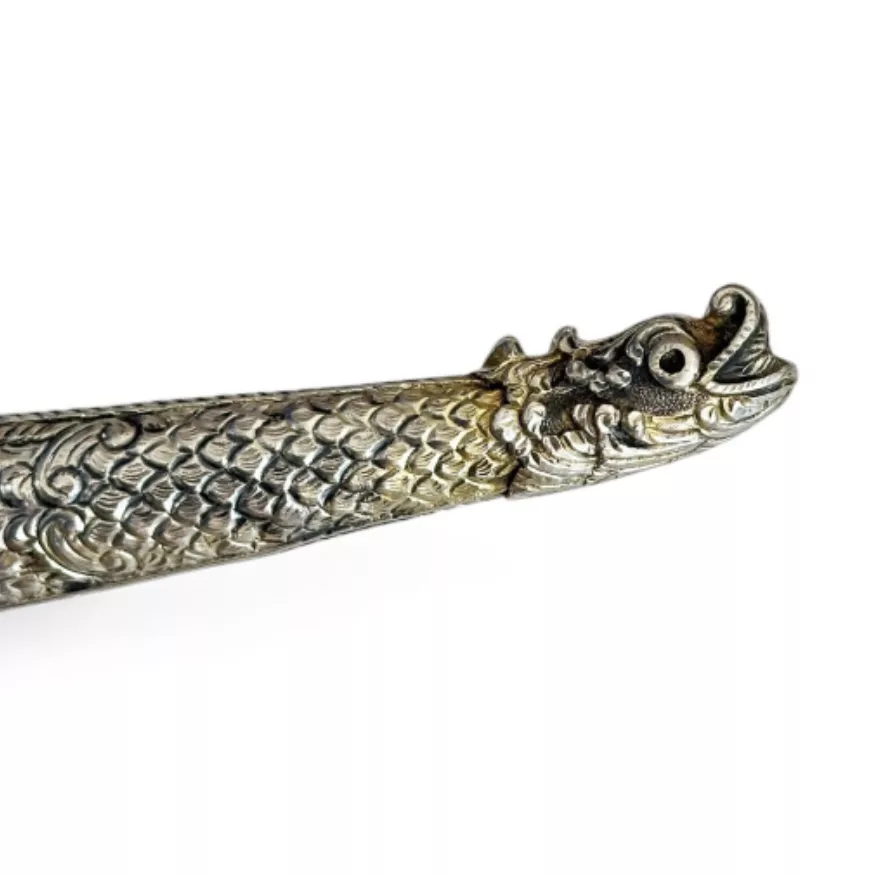
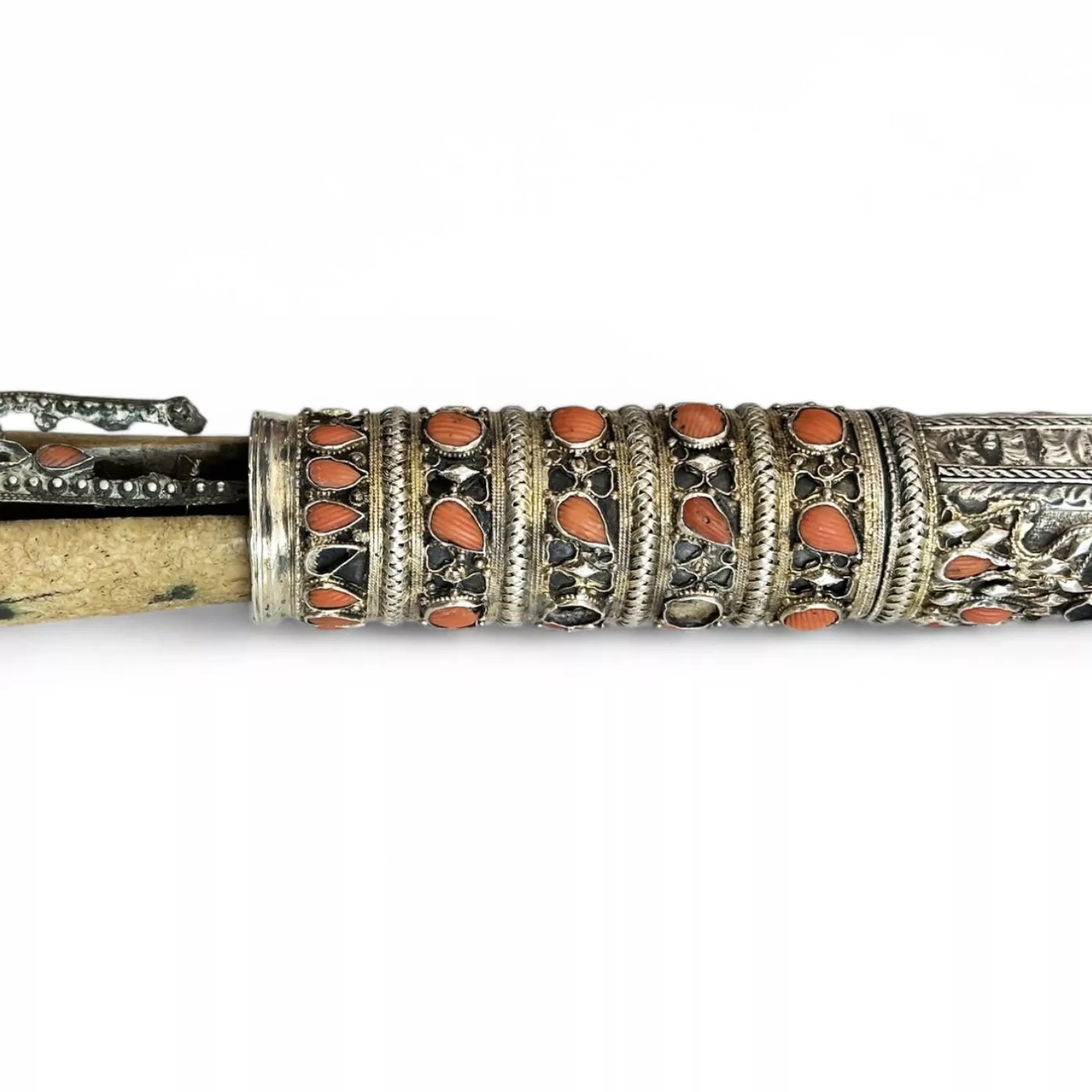
Antique weapons from the Islamic world—swords, daggers, and armor, some of which are prestigious pieces adorned with precious stones and exquisitely engraved decorations—constitute a specialized category sought after by collectors who are often passionate about military history and Eastern forging techniques.
Their value depends heavily on the quality of the blade, the origin of the forge, and the richness of the guard and scabbard when they are original.
Oriental Rugs and Textiles
Antique Oriental rugs, particularly those from Persia, Caucasian, and Ottoman, constitute one of the most internationally recognized categories of Islamic art; their technical quality, the fineness and uniformity of their knotting, and the quality of their natural dyes have been the subject of constant admiration since their introduction to European markets.
The major historical production centers have developed identifiable regional aesthetics that experts can recognize, a key factor in the attribution and, therefore, the valuation of each piece.
Get a Free Appraisal of Your Islamic Art
A certified appraisal by a licensed auctioneer in less than 24 hours
Appraising a work of Islamic art requires a broad understanding of very different categories—including ceramics, manuscripts, metalwork, and carpets—as well as the various historical periods that make up this market, from the Umayyads to the Ottoman, Safavid, and Mughal empires.
This technical and chronological diversity, combined with the presence of numerous copies and modern reproductions on the market, requires rigorous expertise from a professional trained in the specificities of this complex field.
Auctie’s possesses this multidisciplinary expertise and offers a free appraisal, with a certified response within 24 hours.
Whether you have inherited an Islamic carpet or ceramic, wish to have a miniature or manuscript appraised, or are considering compiling an inventory of an Islamic art collection, the process is the same: submit your piece to a trained eye capable of accurately assessing its value.
What you need to provide for an online appraisal
For ceramics or metal objects, please provide clear photographs of the entire piece and close-ups of the decoration, as well as the reverse side and the base, where workshop marks may be present.
For a manuscript or miniature, photographs of each relevant page—front and back—as well as of the binding (if original) are essential. For a rug, photographs of the entire piece, the borders, and a close-up of the knot are required.
Any information regarding provenance—such as an old purchase invoice, a mention in an auction catalog, or a reference in a specialized publication—must be provided. If there is any doubt regarding the authenticity or age of an item, a physical examination will be offered before any steps are taken to list it for sale.
Origin, period, and provenance: the pillars of cataloging
Authentication and Dating of an Islamic Artwork
The authentication of an Islamic work of art relies on a careful examination of the materials, techniques, and decorative styles specific to each period and geographic region.
For ceramics, analysis of the clay body and pigments helps distinguish older pieces from later copies. For manuscripts and miniatures, paleographic analysis of the script and stylistic study of the illumination allow for dating and attribution to a specific workshop or regional school.
For the best-documented artists and workshops, major museum collections—particularly those of the Louvre and major international institutions—as well as scholarly catalogs dedicated to each category constitute the documentary sources that the auctioneer systematically draws upon in his or her attribution work.
Level of Documentation | Impact on the appraisal value |
Piece attributed to an identified imperial or royal workshop | Maximum assurance; very significant premium on value |
Piece listed in a museum catalog or scholarly publication | Strong scholarly backing; significant increase in value |
Piece accompanied by a written appraisal from a recognized specialist in Islamic art | Good guarantee; provides security for the buyer and facilitates the sale |
Piece with documented provenance from an historic collection | High value; rare and sought-after traceability |
Piece consistent with its style, without additional documentation | Appraisal based on material and stylistic quality |
Piece suspected of being a copy or a modern reproduction | Significant depreciation; thorough verification required |
Provenance, condition, and rarity
The provenance of an Islamic work of art is a key factor in building trust in this market, which is particularly sensitive to the circulation of pieces whose origin and legality of export may be called into question, especially for the oldest objects.
A piece whose early history of ownership can be traced—prior to the international conventions governing the circulation of cultural property—or whose passage through a major, well-documented historical collection can be verified, enjoys a legitimacy and legal certainty that buyers value highly.
The condition of an item requires specific attention depending on the category: ceramics are examined for cracks and restorations; manuscripts and miniatures are sensitive to humidity and light; and carpets are examined for their overall state of wear and the integrity of their borders.
Finally, rarity varies considerably by category, as certain types of objects have been subject to widespread destruction over the centuries, which makes surviving examples in good condition all the more valuable.
From the 7th to the 19th Century: The Major Periods of Islamic Art
From the Umayyads to the Abbasids: Classical Islamic Art
The classical period of Islamic art, spanning from the rise of the Umayyad dynasty in the 7th century to the decline of the Abbasid Caliphate, laid the aesthetic and technical foundations for all subsequent artistic production: the development of calligraphy as a major art form; the emergence of major ceramic production centers in Mesopotamia and Iran; and the first flourishing of monumental religious architecture, whose ornamental decorations are now essential sources of study for art historians.
The Ottoman, Safavid, and Mughal Empires
The three great empires of the modern period—the Ottoman Empire in Anatolia and the Balkans, the Safavid Empire in Persia, and the Mughal Empire in India—each developed, between the 15th and 18th centuries, artistic schools of remarkable technical sophistication, rivaling one another in splendor and refinement in the court arts, illuminated manuscripts, ceramics, textiles, and goldsmithing.
This creative competition among rival courts explains the richness and diversity of the body of work available on the market today, as each empire left behind a distinct artistic legacy that is recognizable to specialists.
Selling Islamic Art at Auction with Auctie's
From the reserve price to the hammer price: how the price is determined
Auctions are the most advantageous method of sale for high-quality Islamic artworks in a market where international demand—particularly strong from the Gulf and South Asia—can generate fierce competition for the rarest and best-documented pieces.
The reserve price, set in consultation with the seller, must be determined with particular attention to the specific category of the object and its precise period of creation.
For major pieces, particularly those attributed to an imperial workshop or boasting a prestigious provenance, the dynamics of the auction can lead to final prices far exceeding initial estimates, as evidenced by the records regularly set at major specialized auctions organized by international auction houses such as Sotheby’s.
The auctioneer plays a vital role in driving the auction, engaging collectors and institutions specializing in Islamic art.
Hôtel Drouot and Major Auctions: Reaching the Right Bidders
Auctie’s holds its auctions at Hôtel Drouot, the leading auction venue in continental Europe, founded in 1852 and which regularly features sales dedicated to Islamic art.
For a work of Islamic art, Drouot offers visibility among French and European specialists in this market, as well as to an international clientele that closely follows Parisian auctions dedicated to this body of work, alongside major international auction houses such as Sotheby’s, which hold dedicated sales in London.
A collector from the Gulf looking to expand their collection of Islamic art, a European museum seeking a piece to complement its collection, or an Indian art lover searching for a Mughal miniature can bid from their home country.
For Islamic art, for which the strongest demand today comes from a truly global audience, this international dimension has become absolutely crucial to achieving the best price.
Estimate in less than 24h
Estate Planning, Inheritance: Valuing Inherited Islamic Art
Inventory and Distribution of an Estate
Islamic artworks frequently appear in the estates of families who built collections through travel, diplomatic missions, or purchases from specialized dealers during the 19th and 20th centuries.
These pieces, sometimes passed down through generations without their current owners knowing their precise value or exact origin, can represent a significant asset in an estate, particularly in the case of the rarest manuscripts and carpets on the market.
Auctie’s regularly collaborates with notaries to compile comprehensive estate inventories that include works of Islamic art.
Each item is appraised individually, with particular attention paid to issues of attribution and provenance, which are often complex for this collection. The resulting report is an official, legally binding document that can be included in the estate file without reservation.
Confidentiality of the process and preservation of anonymity
The circumstances that lead to having inherited Islamic art appraised are often personal: discovery within a family inheritance, reorganization of a collection, or a decision to sell after a long period of ownership.
Auctie’s handles each case with absolute discretion. The owner’s identity is never disclosed to third parties without their explicit consent, and items may be offered for sale under complete anonymity if the consignor so desires.
This confidentiality is a core commitment of Auctie’s, valid at every stage of the relationship, from the initial contact through to the receipt of the proceeds from the sale.
Entrust the appraisal of your Islamic art to Auctie’s
A work of Islamic art deserves an appraisal that reflects the richness and diversity of this market.
The distinction between the valuation criteria specific to ceramics, manuscripts, metalwork, and carpets; the decisive importance of attributing a piece to a specific workshop or period; and the strength of a demand that is now truly international: these are all factors that only a licensed auctioneer, well-versed in the specificities of Islamic art, can assess with the rigor they require.
Auctie’s guides you from the initial appraisal through to the final auction, with the expertise of a state-certified appraiser and the discretion your financial decisions deserve. The appraisal is free, confidential, and non-binding, and you’ll receive a response within 24 hours.
Estimate in less than 24h
Frequently asked questions
-
Quelles sont les fourchettes de prix pour l'art islamique selon le type d'objet ?Les prix varient considérablement selon la catégorie. Une céramique ottomane courante se situe entre 500 et 10 000 euros, tandis qu'une pièce d'Iznik de qualité exceptionnelle peut atteindre 30 000 à 300 000 euros. Les miniatures mogholes de qualité se négocient entre 15 000 et 400 000 euros, et les pièces exceptionnelles comme les lampes de mosquée en verre émaillé ou les manuscrits complets peuvent dépasser plusieurs millions d'euros.
-
Comment faire authentifier une œuvre d'art islamique ?La meilleure approche est de soumettre votre pièce à une estimation gratuite chez Auctie's, où un commissaire-priseur agréé par l'État, disposant d'une expertise transversale en art islamique, examinera votre objet. Cette expertise rigoureuse est essentielle pour distinguer les véritables pièces des copies et reproductions modernes qui circulent sur le marché. Auctie's vous fournira une réponse certifiée en moins de 24 heures.
-
Quels sont les critères qui déterminent la valeur d'une œuvre d'art islamique ?La valeur dépend de plusieurs critères : la catégorie de l'objet, son origine géographique, son époque de création, la qualité d'exécution et l'état de conservation. Pour la céramique, le décor et la rareté sont déterminants (notamment le rouge tomate d'Iznik). Pour les manuscrits, la qualité de la calligraphie, de l'enluminure et l'intégrité de la reliure sont essentielles. Pour les tapis, la finesse du nouage et la qualité des teintures naturelles jouent un rôle majeur.
-
Est-ce le bon moment pour vendre une œuvre d'art islamique ?Oui, le marché de l'art islamique connaît depuis les années 2000 une vigueur renouvelée, portée par une demande internationale croissante de collectionneurs du monde musulman, du Golfe notamment, aux côtés des institutions et collectionneurs occidentaux. Cette demande soutenue, combinée à la rareté de nombreuses pièces authentiques, crée un contexte favorable à la vente.
-
Comment se déroule l'estimation et la vente chez Auctie's ?L'estimation est gratuite et sans engagement : vous soumettez des photographies de votre pièce, un expert certifié l'examine et vous fournit une évaluation en moins de 24 heures. Si vous souhaitez vendre, Auctie's, en tant que maison de ventes aux enchères, vous accompagne ensuite de l'estimation à l'adjudication, en gérant l'ensemble du processus de mise en vente publique.
