



Rolex: Appraisal and Auction of Your Watches

Key takeaways
- Rolex, founded in 1905 in London, became the world's leading watch brand thanks to major innovations such as the waterproof Oyster case in 1926.
- The value of Rolex watches varies greatly depending on the model: a recent steel Submariner ranges from 15,000 to 35,000 euros, while a gold Daytona can reach 25,000 to 80,000 euros.
- Authentication is based on the five-pronged crown, the serial number engraved between the lugs, and the consistency between the case, movement, and original dial.
Submariner, Daytona, and global watchmaking renown since 1905: the value of Rolex watches varies significantly depending on the model, movement, and provenance.
Below, you’ll find all our valuation guides dedicated to Rolex—collectible watches and iconic Rolex models. Each guide details the price ranges observed at auction and the factors that determine a piece’s value before you entrust it to our state-certified auctioneers.
Guides on this brand
See all guides >Rolex, the brand that popularized the precision wristwatch
1905, London: Hans Wilsdorf and Alfred Davis founded Wilsdorf & Davis
In 1905, Hans Wilsdorf and his brother-in-law Alfred Davis founded the company Wilsdorf & Davis in London, specializing in the import and distribution of Swiss-made wristwatches. This founding in London—a city then at the heart of global trade—immediately positioned the company with an international outlook that would remain constant throughout its development.
1908: A Short Name Designed to Be Read and Pronounced Around the World
In 1908, Hans Wilsdorf registered the name Rolex, a short and memorable term he had carefully chosen for its ability to be read and pronounced without difficulty in all the world’s languages. This focus on international accessibility demonstrated a remarkably far-sighted business vision for the time.
1919: Relocation to Geneva and the Shift Toward In-House Manufacturing
In 1919, Hans Wilsdorf moved the company’s headquarters to Geneva, the world capital of luxury watchmaking, and began the transition to in-house manufacturing. This fundamental strategic decision would enable Rolex to gradually take full control of its entire production chain and establish the quality standards that today define its global reputation.
Date | Key Event |
1905 | Founding of Wilsdorf & Davis in London |
1908 | Registration of the Rolex name |
1919 | Moved to Geneva |
1926 | Creation of the waterproof Oyster case |
1931 | Invention of the Perpetual rotor |
1953 | Launch of the Submariner |
1963 | Launch of the Cosmograph Daytona |
Today | The world’s leading watch brand in terms of prestige and recognition |
Estimate in less than 24h
Hans Wilsdorf, the visionary who made the wristwatch reliable
1910: The First Certified Wristwatch Chronometer in History
In 1910, Rolex obtained the first chronometer certification for a wristwatch, issued by the Biel School of Watchmaking.
This distinction, attesting to a level of accuracy comparable to that of the finest pocket watches, served as a decisive selling point at a time when wristwatches were still often viewed with skepticism by connoisseurs.
Mercedes Gleitze and the Channel Swim: The First Testimonee Campaign (1927)
In 1927, Hans Wilsdorf orchestrated one of the first major marketing campaigns in the history of luxury: Mercedes Gleitze swam across the English Channel while wearing a Rolex Oyster on her wrist. The watch, which remained fully functional after the crossing, strikingly demonstrated the water resistance of the Oyster case and laid the groundwork for a marketing strategy centered on feats of achievement that would become Rolex’s trademark.
The Hans Wilsdorf Foundation, owner of the brand and guarantor of its independence
To ensure the company’s perpetual independence, Hans Wilsdorf bequeathed the entire capital of Rolex upon his death in 1960 to the Hans Wilsdorf Foundation, a Geneva-based public-benefit foundation that remains the brand’s sole owner to this day.
This unique legal structure ensures that Rolex will never be acquired by an industrial conglomerate, thereby preserving the manufacturer’s strategic and commercial independence.
Rolex's Expertise: From the Waterproof Oyster to the Perpetual Rotor
1926, the Oyster: the world’s first waterproof watch case
In 1926, Rolex filed a patent for the Oyster case, the first watch case made water-resistant thanks to a hermetically sealed screw-down system for the bezel, case back, and crown. This invention revolutionized the durability of the wristwatch—which had previously been highly vulnerable to moisture—and laid one of the technical foundations for Rolex’s reputation for robustness.
1931, the Perpetual rotor: the birth of automatic winding
In 1931, Rolex perfected the automatic winding system by inventing the Perpetual rotor, a freely rotating oscillating weight that winds the mainspring in both directions of rotation. This device, which permanently frees the wearer from the hassle of daily manual winding, has since become the universal standard for automatic winding.
Oystersteel, Everose gold, and the Cerachrom bezel: materials cast in-house
Rolex manufactures its own metal alloys in-house, including Oystersteel, a stainless steel of superior quality and corrosion resistance compared to industry standards, and Everose gold, a rose gold alloy developed specifically by the manufacture to resist color changes over time. This mastery of materials constitutes a major competitive advantage.
Innovation | Year | Watchmaking Innovation |
Oyster Case | 1926 | The world’s first waterproof watch case |
Perpetual Rotor | 1931 | 360-degree automatic winding |
Oystersteel | 20th century | High-quality stainless steel |
Cerachrom bezel | 21st century | Virtually scratch-resistant ceramic for diving bezels |
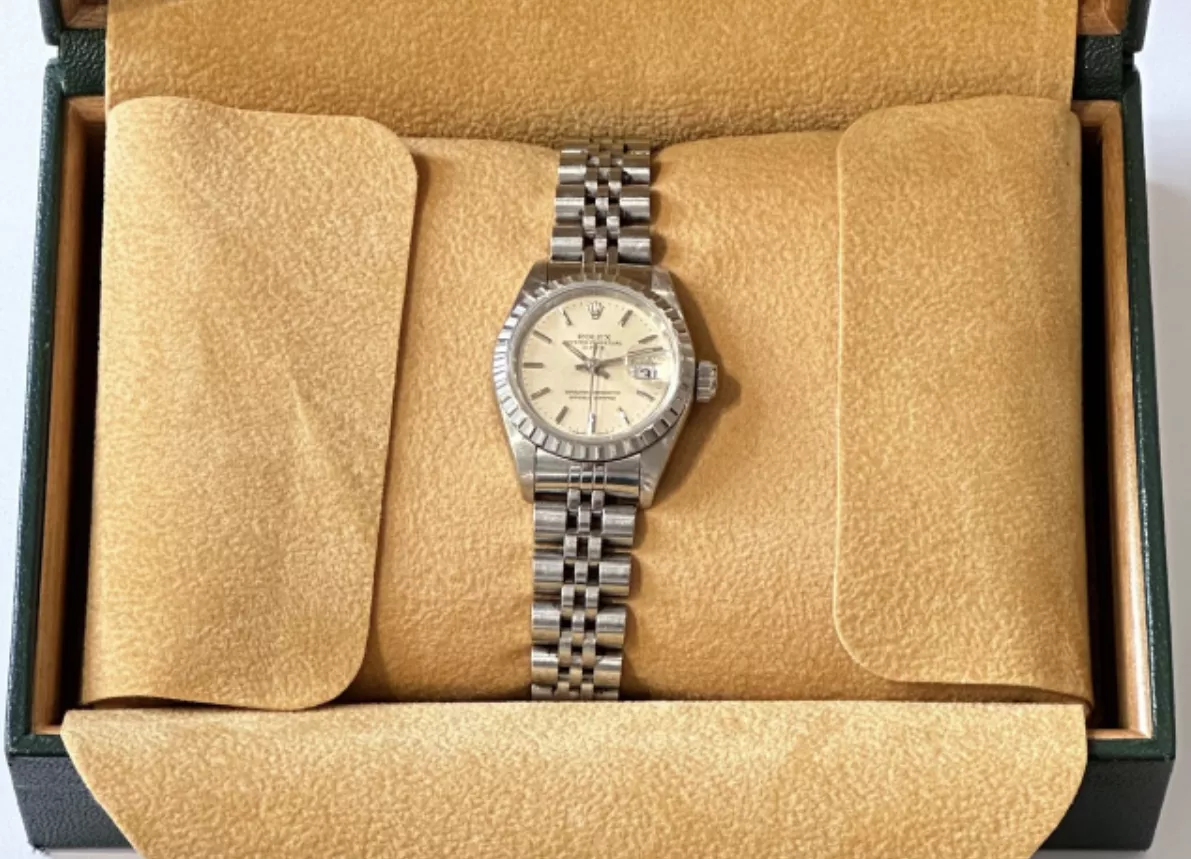
Chronometer certification: the hallmark of Rolex precision
“Superlative Chronometer Officially Certified”: The Brand’s Dual Certification
Every Rolex watch must meet the requirements of the COSC, the independent Swiss chronometer certification body, before undergoing additional in-house testing at the manufacture. This dual level of certification, which exceeds current regulatory requirements, guarantees every buyer a level of accuracy that surpasses industry standards.
The Crown, a registered emblem synonymous with watchmaking excellence
The Rolex five-pronged crown—an instantly recognizable logo engraved or printed on every dial and visible on every winding crown—is the most distinctive authentication feature across the entire range of the Manufacture’s timepieces.
A close examination of this crown—both on the dial and on the winding crown—is the first step an expert takes when authenticating a Rolex watch.
A five-year warranty on every new watch
Rolex offers a five-year warranty on every new watch—one of the longest in the Swiss watch industry—demonstrating the manufacturer’s confidence in the quality and durability of its products. This extended warranty indirectly contributes to the value of recent models on the secondary market.
The Iconic Collections That Make Rolex So Popular
Datejust and Day-Date: Dress Watches That Have Become Timeless Classics
The Datejust, launched in 1945, was the first automatic wristwatch to display the date through a window on the dial. Available in a wide variety of materials and sizes, it is the brand’s most versatile and best-selling collection.
The Day-Date, available exclusively in precious metals, represents the pinnacle of the dress watch lineup and was, for decades, the watch of choice for heads of state and the world’s most influential figures.
Submariner, Explorer, and Sea-Dweller: The Spirit of Adventure and Diving
The Submariner, launched in 1953 as a professional diving watch, has become one of the most iconic and most counterfeited watches in the history of watchmaking.
Its unidirectional bezel, underwater-readable dial, and sturdy Oyster bracelet have made it the archetype of the luxury sports watch. The Explorer, designed for mountaineers, and the Sea-Dweller, the extreme-diving version of the Submariner, round out this sports segment of the collection.
Cosmograph Daytona and GMT-Master: From Auto Racing to Aviation
The Cosmograph Daytona, launched in 1963 and named after the American racetrack, has become over the decades the most sought-after and highly valued chronograph watch on the collector’s market. The GMT-Master, designed in collaboration with Pan Am for transatlantic pilots, allows the simultaneous display of the time in two time zones.
Collection | Year of Creation | Distinctive Features |
Datejust | 1945 | First watch with a Cyclops date window; very extensive lineup |
Submariner | 1953 | Iconic diving watch, unidirectional bezel |
Cosmograph Daytona | 1963 | Chronograph, the world’s most valuable model |
GMT-Master | 1955 | Dual time zone, two-tone bezel |
Day-Date | 1956 | Solid gold, day display in full words |
How to Identify and Authenticate a Rolex Watch
Serial Number, Engravings, and Crown: The Authenticity Marks to Check
Every Rolex watch bears a unique serial number engraved on the side of the case between the lugs, allowing the watch to be precisely dated and the authenticity of the entire timepiece to be verified. The five-pronged crown engraved on the dial and featured on the winding crown is the most visible authentication feature; a careful examination of it can eliminate the vast majority of counterfeits.
Original Case, Movement, and Dial: The Elements That Determine Value
The consistency between the case, movement, and dial of a Rolex watch is the most decisive criterion for its technical valuation. Any replacement of a component—particularly the dial—can significantly affect the value of a vintage piece compared to a fully original example.
Certificate of Origin, Case, and Purchase Documents: To Be Carefully Preserved
Preserving the certificate of origin (known as “papers”), the original case, and the purchase documents constitutes a valuable set of documentation; having all of these items can significantly increase the estimated value of a Rolex watch, particularly for more recent models.
Authentication element | Where to Find It | What it proves |
Serial number | Side of the case, between the lugs | Exact date of the piece |
Five-pronged crown | Dial and winding crown | Rolex origin |
Model reference | Case back | Precise model identification |
Original papers | Proof of Purchase | Traceability and authenticity |
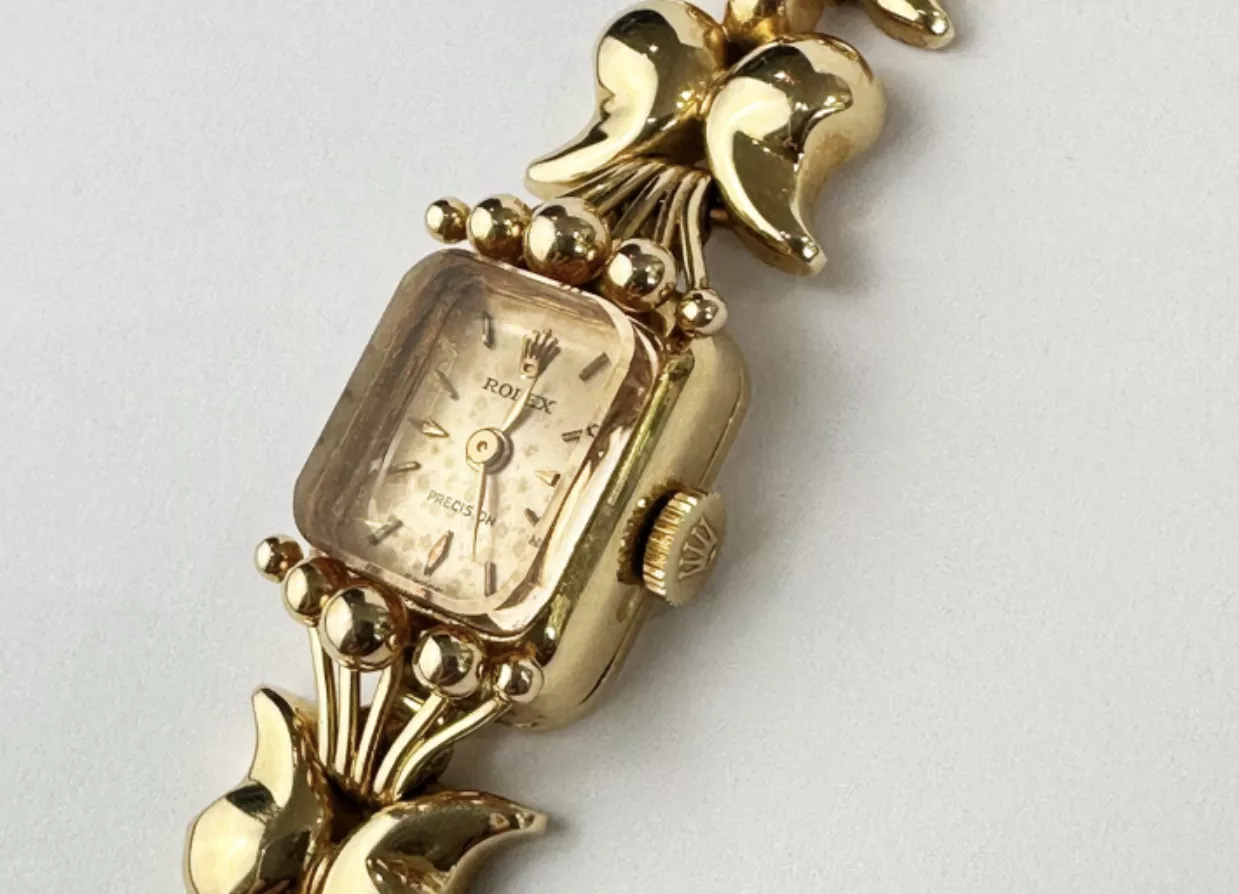
What Determines the Value of a Rolex Watch
Model, reference number, and rarity: A steel Submariner and a gold Daytona do not have the same value
The model and specific reference number are the primary factors determining a watch’s value, with significant differences between the various collections.
A stainless steel Submariner can sell for two or three times its retail price on the secondary market due to the scarcity of new supply, while a gold Daytona reaches even higher prices for the most sought-after reference numbers.
Case material, dial, and complications: the factors that drive up value
The case material—steel, yellow gold, white gold, rose gold, or platinum—the type of dial (with or without diamonds), and the nature of the watch complications are additional valuation criteria that can multiply a watch’s value compared to a base version of the same model.
Condition, provenance, and presence of original documentation
The overall condition—particularly the absence of deep scratches on the case and bezel, the certified proper functioning of the movement, and the presence of original documentation—are additional determining factors, especially for newer watches.
Category | Approximate price range |
Recent stainless steel Submariner | 15,000 to 35,000 euros |
Gold Daytona | 25,000 to 80,000 euros |
Classic Datejust | 4,000 to 12,000 euros |
Vintage Paul Newman Daytona | 100,000 euros and up |
Vintage Watches, Rare Editions, and Common Models: What’s Their Value?
Vintage Rolex: “Paul Newman” Daytonas and rare dials are highly sought after
The so-called “Paul Newman” Daytonas—a nickname given to the first generations of this model after the American actor was photographed wearing one—are the most highly valued pieces on the vintage Rolex market. Some examples in perfect condition with their original papers have fetched several million euros at specialized auctions, illustrating the exceptional heritage value of these timepieces.
Limited Editions and Discontinued Models: High Demand at Auctions
Limited editions produced by Rolex and discontinued models command a significant premium for their rarity on the secondary market, with their value generally rising as the number of available pieces in good condition decreases.
Recent models and the Oyster Perpetual: an active and liquid pre-owned market
Recent models from the Datejust and Oyster Perpetual collections fuel an active and relatively liquid pre-owned market, offering sellers a satisfactory return and buyers an entry point into the Rolex universe at prices below the new market.
Category | Features | Price Range | Market demand |
Vintage Paul Newman Daytona | Historic exotic dial | 100,000 euros and up | Very high |
Recent steel Submariner | Ref. 126610 or similar | 15,000 to 35,000 euros | Very high |
Classic Datejust | Standard model | 4,000 to 12,000 euros | Steady |
Recent Oyster Perpetual | Entry-level Rolex | 5,000 to 12,000 euros | Stable |
Get a Free Appraisal of Your Rolex Watch
Auctie's offers all Rolex watch owners a free appraisal service, conducted by a state-certified auctioneer, within twenty-four hours.
A free, certified appraisal by a licensed auctioneer within 24 hours
This appraisal is based on a review of detailed photographs of the watch, including the serial number, model number, and the overall condition of the case and dial.
Free appraisal in less than 24 hours Let Auctie’s appraise your Rolex watch: a certified response within 24 hours, with no obligation and complete confidentiality. |
Information and photos needed for a reliable online appraisal
To help the expert provide an accurate estimate:
Clear photos of the watch from multiple angles, including the dial and case back
A photo of the serial number between the case lugs
The exact model reference, if known
The original paperwork and case, if available
Remote Appraisal or In-Person Appointment: The Process
The appraisal can be conducted entirely remotely, based on the information provided, or may require an in-person appointment when the complexity of the piece warrants it.
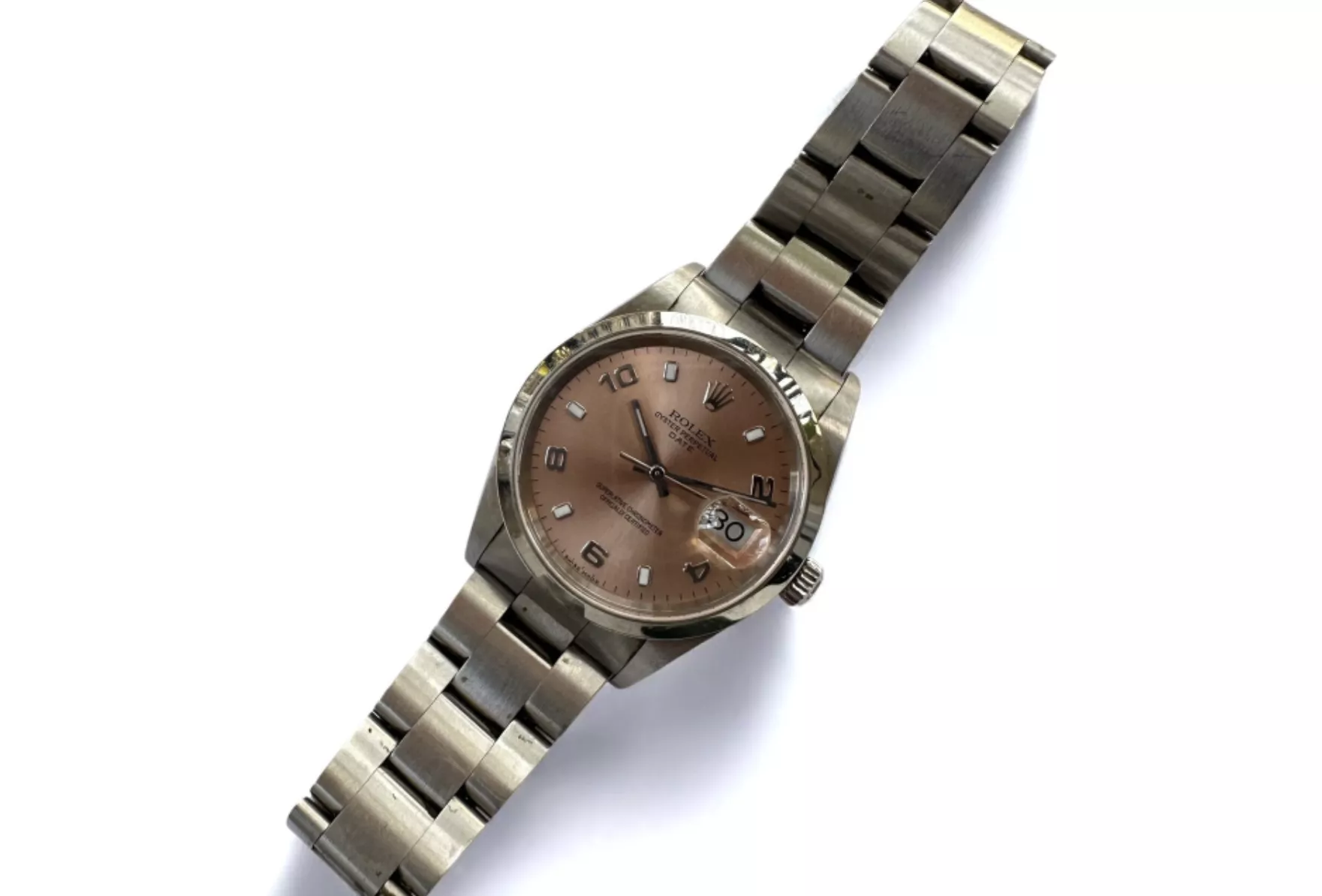
Selling Your Rolex Watch at Auction
From the reserve price to the final bid: achieving the best price
The auction begins with the setting of a reserve price consistent with the initial estimate. Bidders then place successive bids until the lot is sold, a transparent process that guarantees the seller the best price possible given market conditions.
Hôtel Drouot and Online Auctions: Reaching Qualified, International Bidders
The reputation of Hôtel Drouot, combined with the growth of online auctions, allows us to reach an international audience of collectors with a particular interest in vintage Rolex watches and the most sought-after models on the contemporary market.
“Auctie’s appraised and then sold my vintage Submariner with a very precise assessment of the reference number and the condition of the original dial. The sale price far exceeded my initial expectations.”
Customer testimonial, sale conducted by Auctie’s.
Inheritance, moving, life changes: What should you do with an inherited watch?
Inventory of a Watch Collection and Estate Distribution
In the context of an estate, taking inventory of an inherited watch collection is an essential preliminary step before dividing the estate among the heirs. Engaging a certified auctioneer helps establish an objective value for each piece, particularly for Rolex watches, whose market value can vary significantly from one model to another.
Sell, Keep, or Pass On: Options After an Inheritance
Once the inventory is complete, several options are available to the heirs: keeping the watch, passing it on to the next generation, or selling it at auction. Auctie’s guides this decision-making process without ever pressuring the heirs into a hasty decision.
Confidentiality of the process and seller anonymity are preserved
Auctie’s guarantees every owner absolute confidentiality throughout the appraisal process, with anonymity maintained until the decision—if any—to proceed with a sale is made.
Glossary of Watchmaking and the House of Rolex
Term | Definition |
Oyster | Water-resistant watch case patented by Rolex in 1926 |
Perpetual | A 360-degree automatic winding rotor, patented in 1931 |
Rolex Crown | Five-pointed logo, featured on the dial and the winding crown |
Chronometer | Watch certified to meet COSC precision standards |
Caliber | Technical designation of a watch movement |
Reference | Number identifying a specific model in the manufacturer’s catalog |
Serial number | A unique engraving used to date and authenticate each watch |
Auction | Final award of the item to the highest bidder |
Reserve price | Starting price set for the opening of the auction |
Estimate in less than 24h
Let Auctie's appraise your Rolex watch
Free appraisal in less than 24 hours Auctie's, a licensed auctioneer, will appraise your Rolex watches for free in less than 24 hours, with complete confidentiality. |
Discover in the same theme

Auctioneer, Centre-Val de Loire: Valuation – Aucties
Have your artwork, jewelry, and collectibles appraised in the Centre-Val de Loire region by Aucties experts. 100% free online appraisal
Learn more >

Auctioneer Nanterre: Valuation – Aucties
Have your artwork, jewelry, and collectibles appraised in Nanterre by the experts at Aucties. 100% free online appraisal within 24 hours. ✅
Learn more >

Auctioneer Rennes: Art Valuation | Aucties
Have your artwork, jewelry, and collectibles appraised in Rennes by the experts at Aucties. 100% free online appraisal within 24 hours. ✅
Learn more >

Secure site, anonymity preserved

Auctioneer approved by the State

Free and certified estimates
Frequently asked questions
-
What factors determine the value of a Rolex watch?The value of a Rolex watch depends primarily on the model and its specific reference number (Submariner, Daytona, Datejust, etc.), the case material (steel, gold, platinum), the type of dial, the overall condition, and whether it comes with the original paperwork. The consistency between the case, movement, and original dial is also a key factor, as is the rarity of the model in the new market.
-
How do you authenticate a Rolex watch before selling it?To authenticate a Rolex, first check the serial number engraved between the lugs of the case and carefully examine the five-pronged crown on the dial and the winding crown. Also check the model reference engraved on the case back. However, for a complete and reliable authentication, we recommend requesting a free appraisal from our certified auctioneers, who possess the necessary technical expertise.
-
When is the best time to sell a Rolex watch?Now is an excellent time to sell a Rolex watch, especially collectible models. Stainless steel Submariners and Daytonas remain highly sought after on the secondary market, with valuations significantly higher than retail prices due to the scarcity of allocations. Vintage watches and rare editions are also in high demand.
-
How does the appraisal of a Rolex watch work at Auctie's?Appraisals at Auctie's are free and non-binding. You submit photos and a description of your watch, and our expert auctioneers conduct a thorough analysis, including verification of authenticity, condition, and the consistency of the components. You’ll receive a detailed response within 48 hours with a realistic price range based on the latest market prices.
-
What information should I keep to increase the value of my Rolex?Keep the certificate of origin (“papers”), the original case, the purchase receipts, and all traceability documents in a safe place. For newer watches, having all of this documentation can significantly increase the estimated value. Also, avoid replacing any major components, such as the dial, as this would significantly affect the watch’s value.
