



Baccarat: History of Crystal Glassware, Craftsmanship, and Appraisal

Key takeaways
- Baccarat, founded in 1764 by royal charter from Louis XV in Lorraine, became a luxury crystal manufacturer following the introduction of lead crystal in 1816.
- The Harcourt glass, created in 1841 with its faceted hexagonal base, has remained the brand’s iconic symbol for nearly two centuries.
- The value of pieces varies greatly depending on the series, age, and condition; 13 “Meilleurs Ouvriers de France” guarantee the excellence of the craftsmanship.
Cut crystal, stemware, and exceptional chandeliers: the value of Baccarat pieces varies greatly depending on the series, age, and condition.
Below you’ll find all our valuation guides dedicated to Baccarat—stemware, vases, chandeliers, and Baccarat crystal sculptures. Each guide details the price ranges observed at auction and the factors that determine a piece’s value before you entrust it to our state-certified auctioneers.
Guides on this brand
See all guides >Baccarat, a Lorraine-based manufacturer founded by Louis XV in 1764
1764: The Bishop of Montmorency-Laval receives royal authorization
It was in 1764 that Louis XV granted the Bishop of Montmorency-Laval permission to establish a glassworks on land within his diocese, in the small Lorraine village that would give its name to the factory. This royal authorization, motivated by a desire to boost economic activity in a rural region, marked the official birth of what would become one of the world’s most prestigious crystal glassworks.
From the Sainte-Anne Glassworks to the Compagnie des Cristalleries de Baccarat
The original glassworks, dedicated to the production of everyday glassware and stained-glass windows, took the name Sainte-Anne Glassworks before undergoing several legal and commercial transformations during the 19th century.
It was only through these successive changes that the company gradually evolved into the Compagnie des Cristalleries de Baccarat, a name that would definitively establish its identity as a crystal manufacturer.
1816: The Turning Point for Lead Crystal with Aimé-Gabriel d’Artigues
The year 1816 marked a decisive turning point in the factory’s history: Aimé-Gabriel d’Artigues introduced the production of lead crystal, a technique previously mastered mainly by English glassmakers.
This technical innovation, which gives crystal its characteristic brilliance and resonance, enabled Baccarat to compete with the finest European producers and laid the foundation for its international reputation.
Date | Key Event |
1764 | Founding of the glassworks by authorization of Louis XV |
1816 | Introduction of lead crystal by Aimé-Gabriel d'Artigues |
1823 | Order for King Charles X’s tableware set |
1841 | Creation of the Harcourt model |
1855–1900 | Awards at World’s Fairs |
1993 | Opening of the Crystal Museum in Paris |
Today | A world-renowned manufacturer of luxury crystal |
The decision to establish the company in Lorraine—a region then rich in firewood, essential for glass furnaces, and high-quality silica sand—was driven by both economic and political considerations, as the crown sought to reduce the kingdom’s dependence on imports of glass and crystal from Bohemia and England. This founding context partly explains the company’s enduring attachment to its roots in the Vosges region.
Estimate in less than 24h
A crystal manufacturer serving royal and imperial courts
Charles X and the crystal tableware set commissioned for the Palais-Bourbon
As early as 1823, King Charles X commissioned the factory to produce a crystal table service for the Palais-Bourbon, marking Baccarat’s entry into the very exclusive circle of official suppliers to the French monarchy.
This prestigious commission paved the way for a long tradition of collaborations with the royal and imperial courts of Europe, which would play a lasting role in cementing the house’s reputation for excellence.
Tsars, maharajas, and royalty: a prestigious clientele
Throughout the 19th century, Baccarat’s clientele expanded to include all the European courts and beyond, with Russian tsars, Indian maharajas, and crowned heads from around the world placing orders for crystal tableware sets and ceremonial pieces.
This particularly discerning international clientele spurred the manufactory to develop ever more sophisticated pieces, some of which are still preserved today in royal and imperial collections around the world.
World’s Fairs: A Springboard to International Fame
The World’s Fairs, which became increasingly frequent starting in the mid-19th century, provided Baccarat with an exceptional showcase to demonstrate its craftsmanship to the entire world.
The numerous awards won at these international events definitively established the manufacturer as a global leader in the art of glassmaking—a recognition that continues to positively influence the perceptions of contemporary collectors.
The Craftsmanship of the Meilleurs Ouvriers de France
The Baccarat factory, an industrial cathedral in the Vosges
The Baccarat production site, located in the Vosges since its inception, is a veritable industrial cathedral where, with the exception of a few technical innovations, the ancestral techniques of crystal craftsmanship are kept alive.
This geographical continuity—rare for a manufacturer of such long standing—contributes to the authenticity and historical consistency of today’s production.
Lead crystal, cutting, and engraving: techniques passed down since 1764
The production of lead crystal, combined with the cutting and engraving techniques that enhance each piece, draws on skills passed down from generation to generation within the factory. The glassblower, cutter, and engraver work closely together to bring the creations to life, in a process that, despite some technical advancements, remains largely faithful to 18th-century methods.
13 “Meilleurs Ouvriers de France” dedicated to exceptional craftsmanship
The Baccarat workshop counts among its staff an exceptional number of “Meilleurs Ouvriers de France,” a distinction recognizing the rarest forms of artisanal excellence in France. This concentration of talent recognized at the highest national level attests to the company’s unwavering commitment to quality craftsmanship, with every stage of production entrusted to highly skilled artisans.
Period | Technique | Artistic Evolution |
1764–1815 | Everyday glass and early experiments with crystal | Modest production of utilitarian and decorative glass |
1816–1860 | Lead crystal, classical cut | Rise of the Charles X and Louis-Philippe styles |
1860–1914 | Sophisticated engraving, gold gilding | The height of the Belle Époque style |
Since 1920 | Contemporary design, artistic collaborations | Constant renewal of the creative repertoire |
Training a glassblower or crystal cutter at the factory requires several years of apprenticeship before a craftsman is deemed capable of working independently on the most demanding pieces.
This lengthy process, which is difficult to reconcile with the pace of standard industrial production, explains the relative rarity of certain highly intricate pieces, the creation of which can involve several artisans working for weeks on end.
Baccarat's Iconic Collections
Harcourt, the stemmed glass that has been an icon since 1841
Created in 1841, the Harcourt glass—recognizable by its faceted hexagonal stem—is undoubtedly the manufacturer’s most iconic creation. Featured on the most prestigious tables for nearly two centuries, this model has achieved iconic status that extends far beyond the realm of tableware, establishing itself as a symbol of French craftsmanship throughout the world.
Zénith, Tastevin, Massena: Tableware Collections
Beyond the Harcourt model, the house has developed a variety of iconic tableware sets over the decades—Zénith, Tastevin, and Massena among the most sought-after—each offering a distinct interpretation of the art of crystal tableware. This diversity of collections offers collectors a wide range of styles, from the most classic lines to the most contemporary designs.
Crystal candelabras, chandeliers, and candleholders: a luminous signature
Crystal candelabras, chandeliers, and candleholders constitute another essential aspect of Baccarat’s production, where mastery of cutting and engraving is combined with a deep understanding of how light is diffused through crystal.
These pieces, often monumental in scale, are among the most sought-after creations by the most discerning collectors and interior designers.
Harcourt glass owes part of its fame to its recurring presence on official French tables—from state dinners to major diplomatic receptions—where it has been an almost automatic choice for decades.
This institutional ubiquity has helped firmly anchor the brand in the French collective imagination, to the point where it has become synonymous with prestige crystal for many non-specialist collectors.
Baccarat: A Blend of Tableware, Decor, and Collectibles
Decorative Vases and Crystal Sculptures
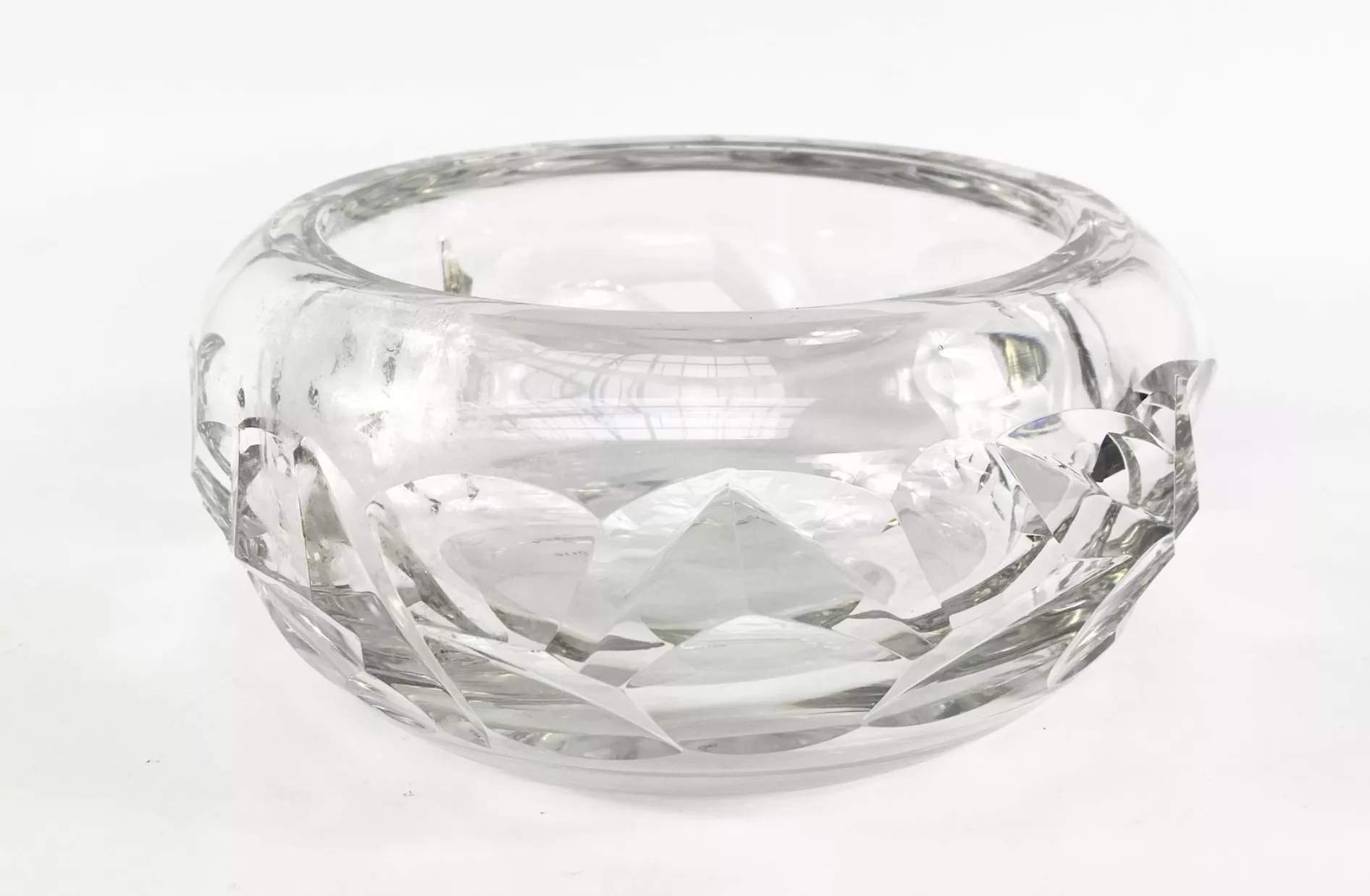
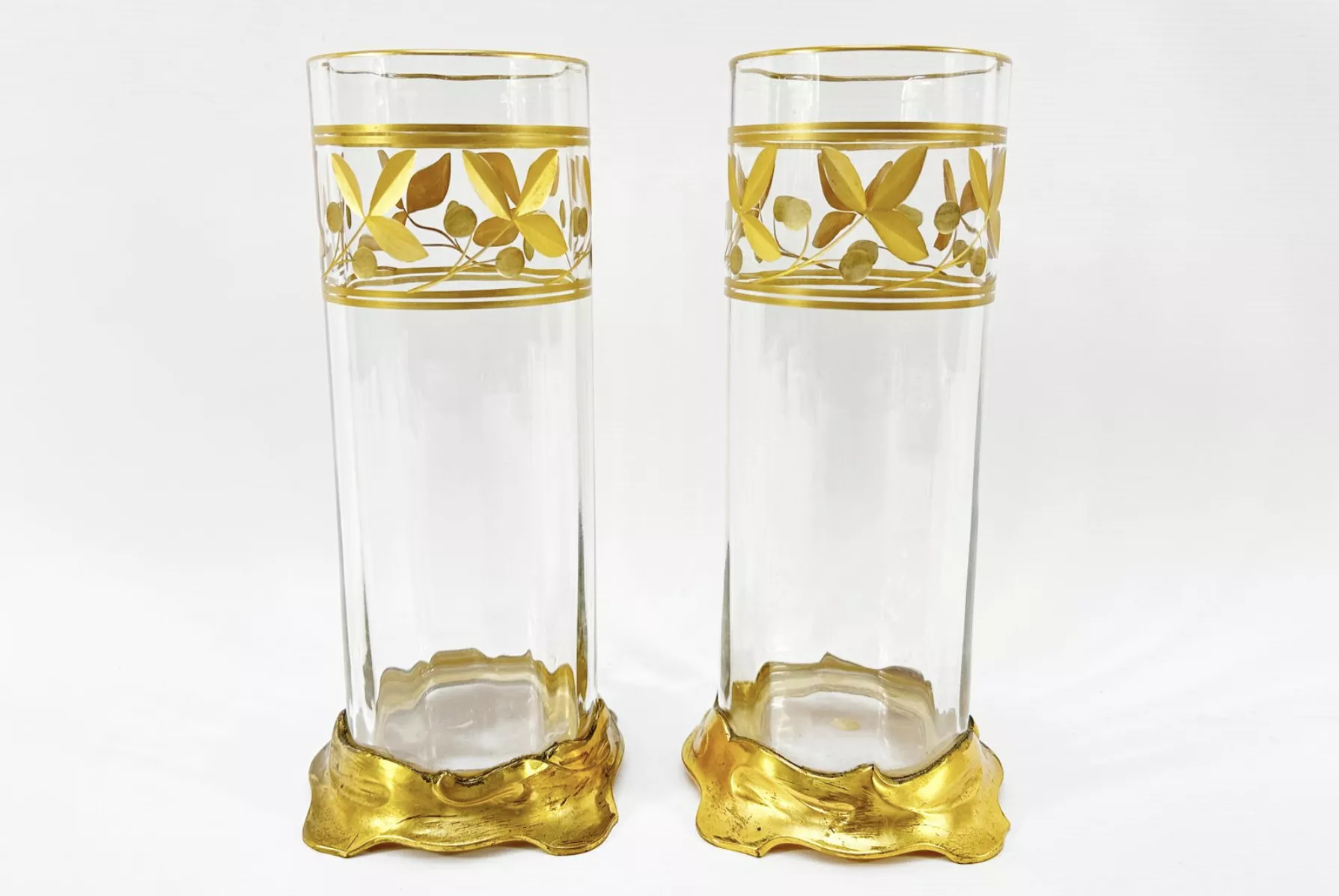
The decorative crystal vases and sculptures produced by the manufactory demonstrate Baccarat’s ability to combine practical function with purely artistic ambition.
Some pieces, produced in limited editions or in collaboration with contemporary artists, reach dimensions and a level of technical complexity that bring them closer to sculpture than to traditional decorative art.
High-end perfume bottles and display pieces
The perfume bottles created by Baccarat—often in collaboration with the world’s leading perfume houses—are a highly sought-after category among collectors, particularly the historic editions that are no longer available on the market. These display pieces, which straddle the line between industrial bottle design and decorative art, command a specific value due to their dual status.
Baccarat crystal jewelry and luxury gifts
The manufacturer also applies its crystal-making expertise to a range of jewelry and luxury gifts, where the cut of the crystal rivals the brilliance of precious stones. These creations, more accessible than major collector’s items, offer a first glimpse into Baccarat’s craftsmanship for younger or novice collectors.
Object Category | Material | Use |
Harcourt stemmed glass | Cut crystal | Tableware |
Chandelier or candelabra | Cut and engraved crystal | Decor and lighting |
Vase or sculpture | Blown or Molded Crystal | Decorative or collectible item |
Perfume bottle | Cast crystal, gold finishes | Luxury perfume bottles |
For several decades, the manufacturer has also been expanding its collaborations with contemporary designers and artists, thereby extending its creative legacy beyond its historical repertoire.
These editions, often produced in limited series and co-signed by the house and the guest artist, represent a particularly dynamic market segment, prized by collectors seeking pieces that blend artisanal heritage with contemporary design.
The Maison Baccarat in Paris: A Blend of Museum and Lifestyle
The Crystal Museum, a showcase for the company’s historic pieces
The Crystal Museum, located in Paris, showcases to the public the most historic and exceptional pieces produced by the manufacturer since its founding. This museum setting allows visitors and collectors alike to appreciate the breadth of the creative heritage accumulated by the House over nearly two and a half centuries of continuous production.
The Cristal Room, a gourmet restaurant by Alain Ducasse
Within this same Parisian mansion, the Cristal Room—a gourmet restaurant designed in collaboration with Alain Ducasse—offers a culinary experience entirely centered around Baccarat crystal. This iconic venue exemplifies the company’s strategy of bringing its heritage to life beyond the confines of a traditional museum setting.
Private Room Rentals and Crystal-Themed Events
The company also offers the option to reserve its Parisian venues for exceptional events, blending the art of living with a celebration of crystal-making expertise. This events-focused approach helps maintain, among a new audience, the aura of prestige that has surrounded the brand since its inception.
How to Identify and Authenticate a Baccarat Piece
The signature and the "Baccarat, France" label
Depending on its age, each Baccarat piece bears either an acid-etched signature or an affixed label bearing the words “Baccarat, France.” By examining this mark—as well as how its design has evolved over the decades—an expert can roughly determine the period of manufacture for a piece that is not otherwise dated.
Numbered Models, Limited Editions, and Collector’s Editions
Numbered models and collector’s editions, produced in limited quantities and often accompanied by a certificate, command a significantly higher value than standard production pieces. Consistency between the number engraved on the piece and the one listed on the accompanying documents is a key indicator of authenticity for the expert.
Provenance, condition, and original documentation
The preservation of the original papers—the box, certificate, and purchase invoice—significantly enhances the estimated value of a Baccarat piece, offering the potential buyer a complete guarantee of traceability. The condition of the piece—particularly the absence of chips or cracks in the crystal—remains, of course, a fundamental technical criterion.
Type of piece | Approximate price range |
Harcourt glass, per piece | 40 to 150 euros |
Complete set of antique Harcourt glassware | 500 to 5,000 euros |
Signed decorative vase | 300 to 8,000 euros |
Cut crystal chandelier | 3,000 to 50,000 euros |
It should be noted that the “Baccarat, France” mark was not always systematically applied; during certain production periods—particularly the earliest ones—some pieces were produced without any visible signature. In such cases, the expert must rely on a stylistic analysis of the design, the quality of the cut, and a comparison with models documented in the manufacturer’s archives to establish a reliable attribution.
What Determines the Value of a Baccarat Piece
Age, rarity of the model, and original collection
A piece’s age—particularly if it predates World War I—as well as its inclusion in a historic collection that is no longer part of the current catalog, significantly influence its value. The rarest models, produced in limited quantities or for a specific clientele, regularly fetch high auction prices.
Condition of the crystal, quality of the cut and engraving
The condition of the crystal—the absence of chips, cracks, or deep scratches—is a fundamental criterion for valuation, as crystal is a relatively fragile material despite its density. The quality of the cut and engraving—assessed based on the precision of the facets and the clarity of the engraved design—complements this technical evaluation.
Complete Sets Versus Individual Pieces
A complete set, comprising all original pieces—including water glasses, wine glasses, and champagne flutes—generally commands a higher value than the simple sum of the individual values of each piece. This premium for completeness reflects the increasing difficulty of reconstructing antique sets on the secondhand market.
Ultimately, the value of a Baccarat piece is always determined by three factors: the authenticity of the signature or stylistic attribution, the physical integrity of the crystal, and the coherence of any set or complete service. Auctie’s is committed to reflecting this expert assessment in every estimate provided to owners.
Get a Free Appraisal of Your Baccarat Pieces
Auctie's offers all owners of Baccarat crystal pieces a free appraisal service, conducted by a state-certified auctioneer, within twenty-four hours.
A valuation certified by a licensed auctioneer within 24 hours
This appraisal is based on a review of detailed photographs of each piece, including the signature and the overall condition of the crystal, to allow the expert to assess all the valuation criteria outlined above.
Free appraisal in less than 24 hours Trust Auctie’s to appraise your Baccarat crystal: a certified response within 24 hours, with no obligation and complete confidentiality. |
Information and photos needed for a reliable online appraisal
To enable the expert to provide an accurate estimate, we recommend submitting the following:
Clear photographs of each piece from multiple angles
A photo of the signature or the “Baccarat, France” label
The number of pieces in a set, as well as their overall condition
Any available provenance documents: invoice, certificate, original box
Estimate in less than 24h
Sell Your Baccarat Crystal at Auction with Auctie's
From the reserve price to the final bid: aiming for the best price
The auction of a Baccarat piece begins with setting a reserve price consistent with the initial estimate. Bidders then place successive bids until the item is sold, a transparent process that guarantees the seller the best price possible given market conditions.
Hôtel Drouot and online auctions: reaching crystal collectors
The reputation of Hôtel Drouot, combined with the growth of online auctions, allows us to reach an international audience of collectors who particularly value comprehensive services and the manufacturer’s historically documented pieces.
“Auctie’s appraised and then sold the complete Harcourt service inherited from our grandmother, with great attention to the condition of each piece. The sale price exceeded our initial estimate.” Testimonial from a client, sale conducted by Auctie’s.
This international exposure is particularly beneficial for the oldest pieces and fully documented sets, for which demand comes from both French collectors attached to their national heritage and foreign enthusiasts drawn to the manufacturer’s universally recognized prestige.
Inheritance, Moving: What to Do with an Inherited Baccarat Collection?
Inventory of a Crystal Collection and Estate Distribution
In the context of an estate, taking inventory of an inherited Baccarat crystal collection is an essential preliminary step before dividing the estate among the heirs. Engaging a certified auctioneer allows for the establishment of an objective value for each piece, including even the largest sets.
Selling, Keeping, or Passing On an Inherited Collection
Once the inventory is complete, several options are available to the heirs: keeping the collection for personal use, passing it on to the next generation, or selling it at auction. Auctie’s guides this decision-making process without ever pressuring the heirs into a hasty decision.
Confidentiality of the process and seller anonymity are preserved
Auctie’s guarantees every owner absolute confidentiality throughout the appraisal process, with anonymity maintained until the decision—if any—is made to proceed with a sale.
Beyond mere market value, having a crystal collection appraised by a certified professional also helps plan for future inheritance or appropriate insurance coverage—two situations in which a certified appraisal serves as an indisputable reference document for both heirs and insurers.
Glossary of Baccarat Crystal and the Art of Glassmaking
Term | Definition |
Lead crystal | Glass enriched with lead oxide, which imparts brilliance and resonance |
Cutting | A technique involving the cutting of facets into the crystal |
Engraving | Decoration incised into the surface of the crystal |
Crystal paste | A technique for molding molten crystal powder |
Reserve price | Starting price set for the opening of the auction |
Award | Final award of the item to the highest bidder |
Provenance | Documented history of a piece’s successive owners |
Estimate in less than 24h
Let Auctie's appraise your Baccarat crystal
Free appraisal in less than 24 hours Auctie's, a licensed auctioneer, will appraise your Baccarat crystal glasses, vases, and other pieces for free in less than 24 hours, with complete confidentiality. |

Secure site, anonymity preserved

Auctioneer approved by the State

Free and certified estimates
Frequently asked questions
-
What factors determine the value of a Baccarat piece?The value of a Baccarat piece depends primarily on the series or model (Harcourt, Zénith, Tastevin, etc.), its age, and its condition. Historic pieces commissioned by royal courts, limited editions created in collaboration with contemporary artists, and large-scale objects such as chandeliers and candelabras are among the most sought-after items. Authenticity, the artist’s signature, and provenance are also key factors in determining value.
-
How do I have a Baccarat piece authenticated and appraised?Auctie's offers a free, no-obligation appraisal of your Baccarat piece. You can consult our state-certified auctioneers and specialized experts, who will examine your item in detail to determine its authenticity, period, technique, and market value. You will receive a response within 48 hours.
-
Is this the right time to sell a Baccarat piece?Yes, the market for Baccarat crystal remains vibrant, particularly for historic pieces and iconic models such as the Harcourt, as well as for contemporary limited-edition collaborations. The rarity of certain vintage pieces, combined with the consistent interest of international collectors in French craftsmanship, keeps demand strong. An Auctie’s expert can assess the resale potential of your specific piece.
-
What is the sales process at Auctie's for a Baccarat piece?Auctie's guides you from the free appraisal all the way through to the auction. After our experts have examined your item, we provide a valuation estimate and discuss the terms of the sale with you. Your item is then included in our catalog and offered at auction, reaching an audience of specialized collectors and interior designers. We handle all administrative, photographic, and promotional aspects of the sale.
-
What information do I need to provide for a Baccarat estimate?To help us provide an estimate, please let us know the model if you know it (Harcourt, Zénith, Tastevin...), the approximate date of acquisition or manufacture, the dimensions, the condition (presence of chips, scratches, restorations), and the provenance, if you have it. Photographs taken in good lighting (showing details and markings) are very helpful. However, our experts can also appraise an item without this preliminary information.
