



Rating and value of jewels and pin by Georges Fouquet

Key takeaways
- Fouquet jewelry sells for between €50 and €152,000, with Art Nouveau pendants and brooches commanding the highest prices.
- Georges Fouquet (1862–1957), a leading figure of the Art Nouveau movement, collaborated with Alphonse Mucha beginning in 1899 and revolutionized jewelry design through his drawings and plique-à-jour enamel work.
- Value depends on a legible signature, the condition of the original enamels, the 1895–1905 period (peak demand), and the presence of authentic French hallmarks.
If you own a piece of Fouquet jewelry, and would like to know its value, our state-approved experts and auctioneers will offer you their appraisal services.
Our specialists will carry out a free appraisal of your jewel, and provide you with a precise estimate of its value on the current market.
Then, if you wish to sell your jewel, we will direct you to the best possible device to obtain the optimum price. The price of a piece of jewelry can vary depending on the year, the artist behind its creation, and the material from which it was fashioned.
Rating and value of a Fouquet jewel
Jewels are emblematic pieces of the Fouquet house, and must-haves of the women's wardrobe ; their success is no longer to be boasted. The price at which they sell on the art and auction markets ranges from €50 to €152,000, a considerable delta but one that speaks volumes about the value that can be attributed to your jewelry.
In 2021, a " Ailes " pendant in 750‰ gold sold for €152,000, while it was estimated at between €150,000 and €200,000.
Order of value ranging from a classic jewel to the rarest and most sought-after
Technique used | Result |
|---|---|
Cup or vase | From 50 to 200€ |
Service | From 120 to 8 200€ |
Ring | From 800 to 13 750€ |
Earring | From €10,000 to €24,000 |
Bracelet | From €22,500 to €51,250 |
Brooch | From €1,350 to €82,000 |
Pendant | From €17,000 to €152,000 |
Estimate in less than 24h
Style and technique of Georges Fouquet
Georges Fouquet was a major French jeweler of the late 19th and early 20th centuries. He was a central figure in Art Nouveau jewelry, then a key player in the transition to Art Deco.
Fouquet's jewelry was conceived as a total art form, in dialogue with architecture, the decorative arts and the graphic arts. He rejects the strictly gemmological jewel inherited from the 19th century. He gives primacy to drawing, line, formal invention and overall decorative sense.
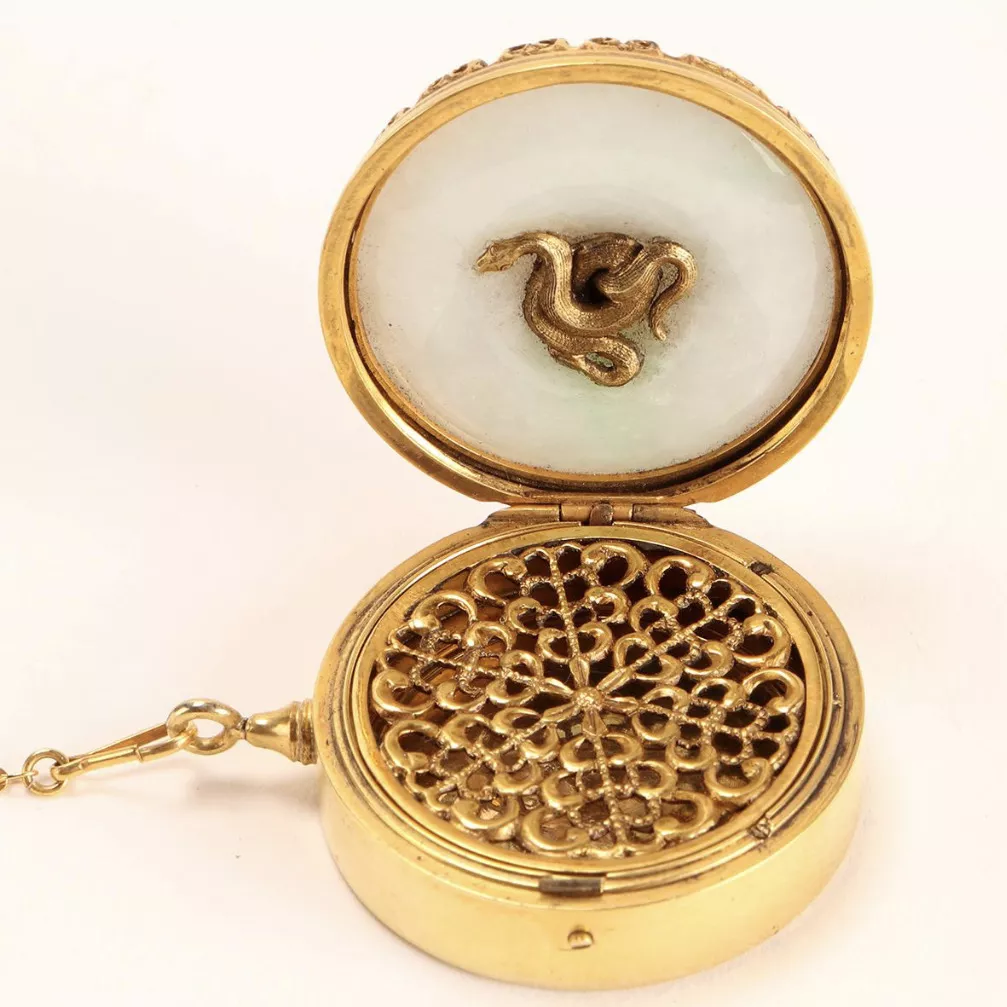
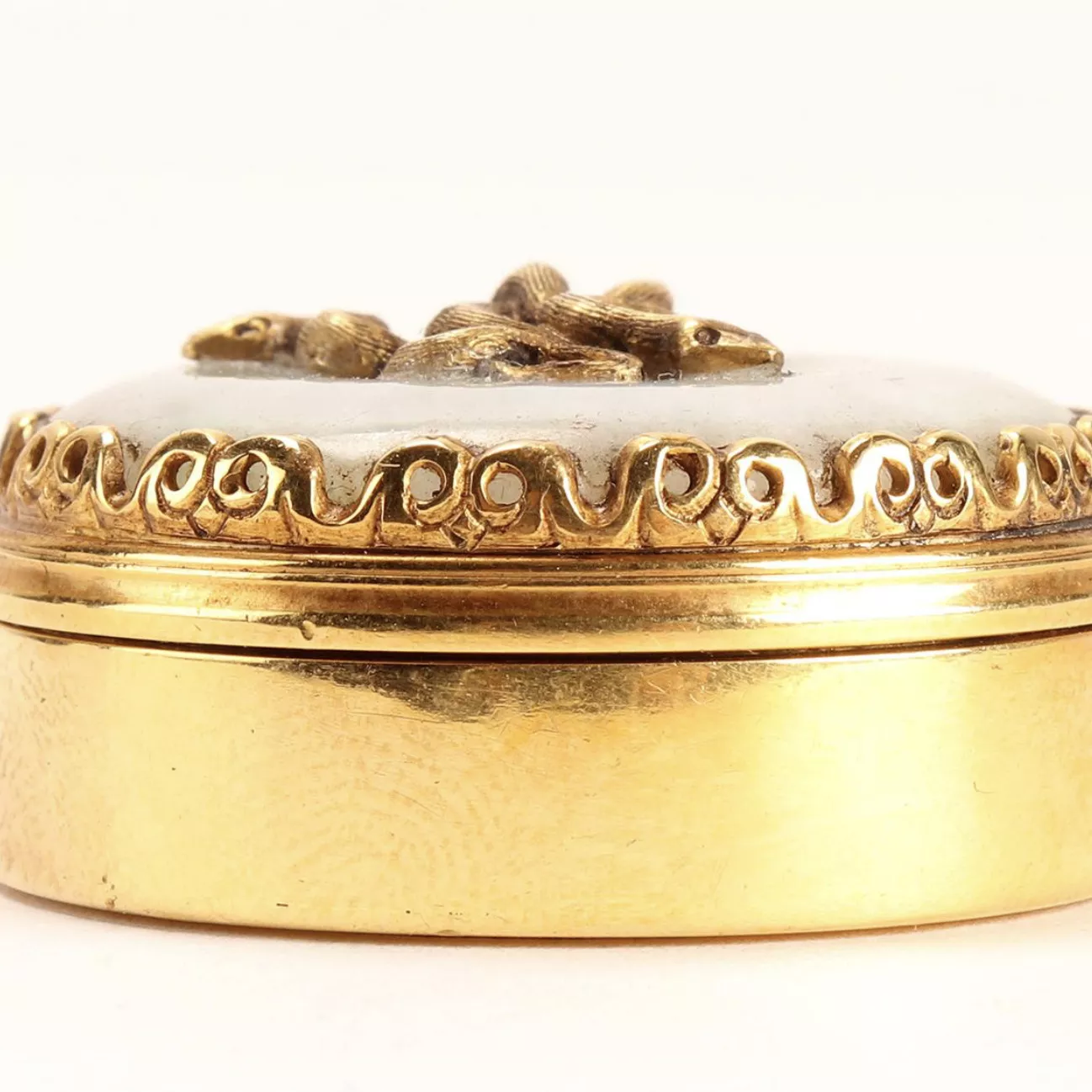
Jewelry thus becomes an autonomous plastic work. It draws direct inspiration from the living world with flora (irises, orchids, wisteria), fauna (dragonflies, insects, snakes), and stylized female figures. The shapes are undulating, the lines curved and arabesque.
His collaboration with Alphonse Mucha from 1899 onwards was decisive. He translated Mucha's graphic aesthetic into jewelry, with sinuous lines, idealized female figures and highly decorative compositions.
The dialogue between preparatory drawing and jewelry execution is close. His compositions are asymmetrical and fluid, with a rejection of rigid symmetry and jewelry conceived as animated surfaces, often close to bas-relief.
The jewelry is thought to accompany natural movement, with supple necklaces, articulated pendants and brooches balanced despite the complexity of the design. He seeks harmony between ornament and portability.
He makes innovative and expressive use of materials, often with yellow gold, fine and semi-precious stones and opals. Stones are chosen for their color and symbolism, not for their intrinsic value alone.
Enameling is a major technique in his work, which he uses in plique-à-jour enamel, translucent enamel and gradient and light effects. Fine chasing is used to emphasize organic lines. The setting is discreet, often integrated into the overall design.
The metal is worked as a graphic surface, with moderate relief and emphasized contours. It serves as a structure to the design rather than a demonstration of richness.
The life of Georges Fouquet
Georges Fouquet (1862 - 1957) was heir to a dynasty of Parisian jewelers : the House of Fouquet was founded by his father, Alphonse Fouquet, in 1860. He trained in the family workshop, rigorously learning traditional skills.
He mastered design, goldsmithing and gem-setting. He showed a precocious sensitivity to the decorative arts and contemporary design, and took over the management of the Fouquet house in 1895, with an assertive determination to break with the dominant historicizing jewelry of the 19th century.
Beginning in the late 1890s, he became one of the leading exponents of Art Nouveau jewelry in Paris, pursuing a new aesthetic based on line, symbolism and naturalistic inspiration.
His collaboration with Alphonse Mucha from 1899 onwards was decisive, as he conceived jewelry designs, interior decorations and the house's window displays. In 1901, the rue Royale boutique was opened, conceived as an Art Nouveau manifesto.
He participated in numerous world and international exhibitions, winning awards and medals for his jewelry creations. His clientele was international, aristocratic and artistic.
His presence was noticed at the 1900 Universal Exhibition, and his creations were hailed for their modernity and bold decoration. From 1910 onwards, he gradually adapted to new tastes, with formal simplification and a transition to a more geometric language.
The 1920s marked a period of transition to Art Deco. He maintains a high quality of execution and a keen sense of design. He gradually withdrew from active management of the company, selling it in the 1930s.
Market segmentation and rating of Fouquet creations
The Fouquet market is specialized and heritage-based, focusing on late 19th - early 20th century French jewelry. The offer is limited and highly hierarchical according to brand authenticity, period (Art Nouveau/pre-Art-Deco), signature and documentation.
Art Nouveau brooches are the most emblematic and sought-after segment, with naturalistic motifs such as flowers, dragonflies and organic figures.
These necklaces and necklace-torques are remarkable pieces when confirmed as signed and dated, with characteristic coloration and enamels. For pendants and ornaments, the market is sensitive to enamel and the quality of the design.
Rings, bracelets and clips constitute a broader and more accessible segment, but variable according to execution.
As far as materials are concerned, yellow or rose gold with plique-à-jour enamel constitutes a premium segment of classic Art Nouveau pieces. Fine and semi-precious stones (opals, pearls) are valued according to their integration and condition.
Mixed materials and enamels belong to an intermediate-high segment, depending on the decorative effect.
As for periods, the years 1895 - 1905 represent a peak in demand. The years 1910-1920 (transition to Art Deco) are part of an active market, but less iconic than Art Nouveau. Post-1920 pieces are rare, with a value linked to formal innovation and condition.
The decisive valuation criteria are a clearly legible Fouquet signature, the state of conservation of the enamels and the absence of visible restorations, a documented provenance, stylistic coherence (recognized Art Nouveau motifs) as well as French hallmarks and original markings.
The market is stable and heritage-driven, with strong demand for iconic Art Nouveau brooches, especially if the enamels are original and unrestored. Jewelry values are also buoyed by the presence of big names like Vever or Chaumet in high jewelry sales.
Recognizing a Georges Fouquet creation
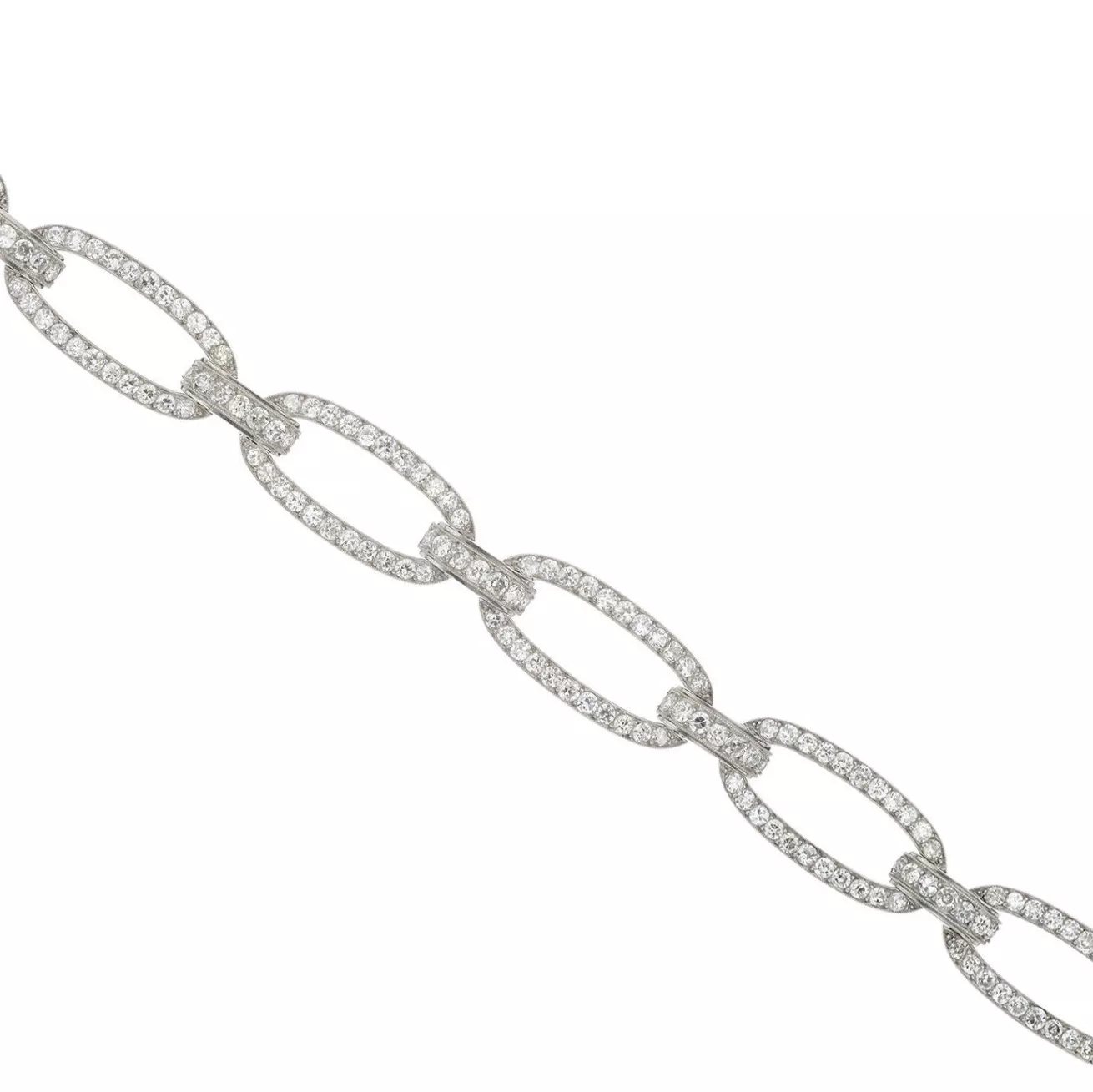
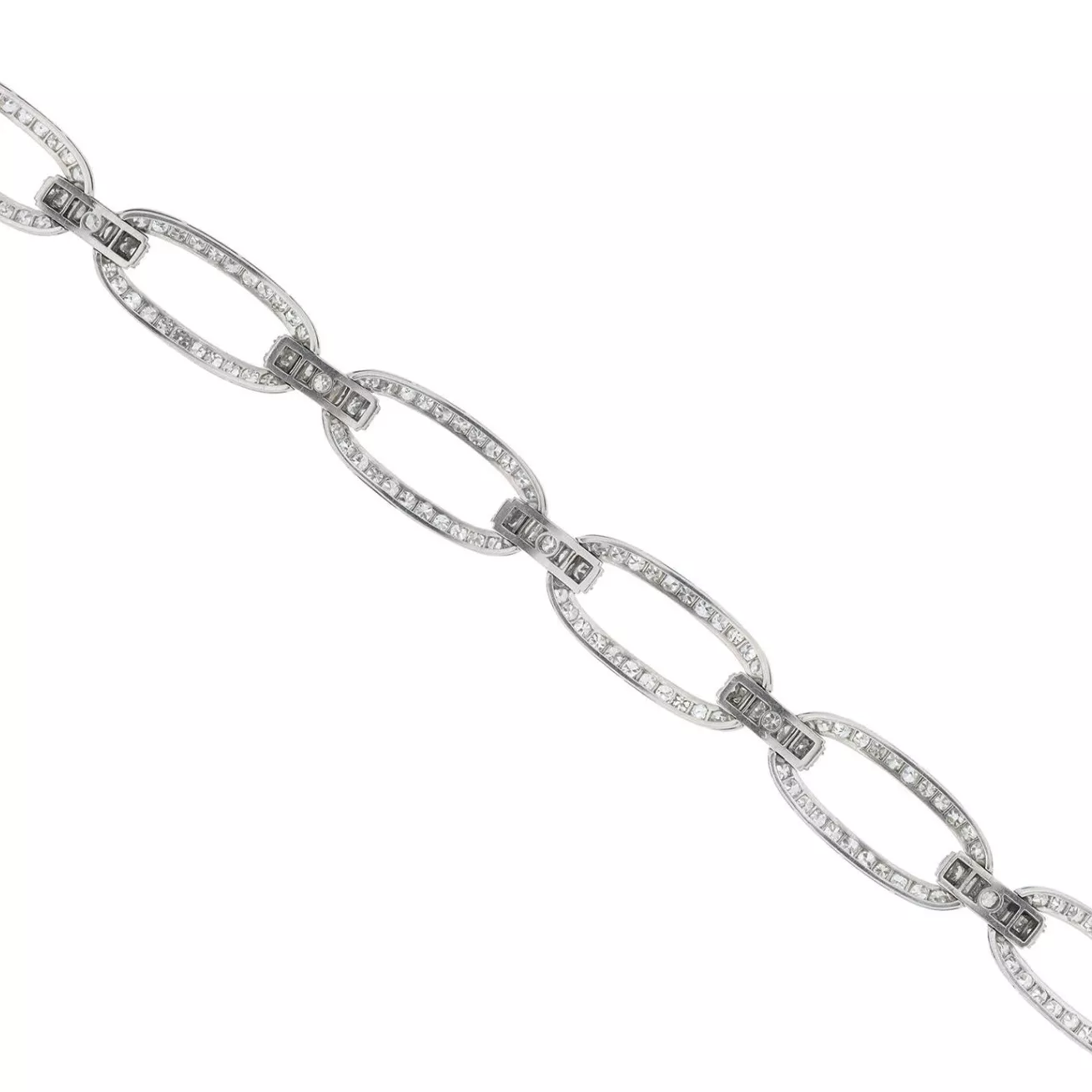
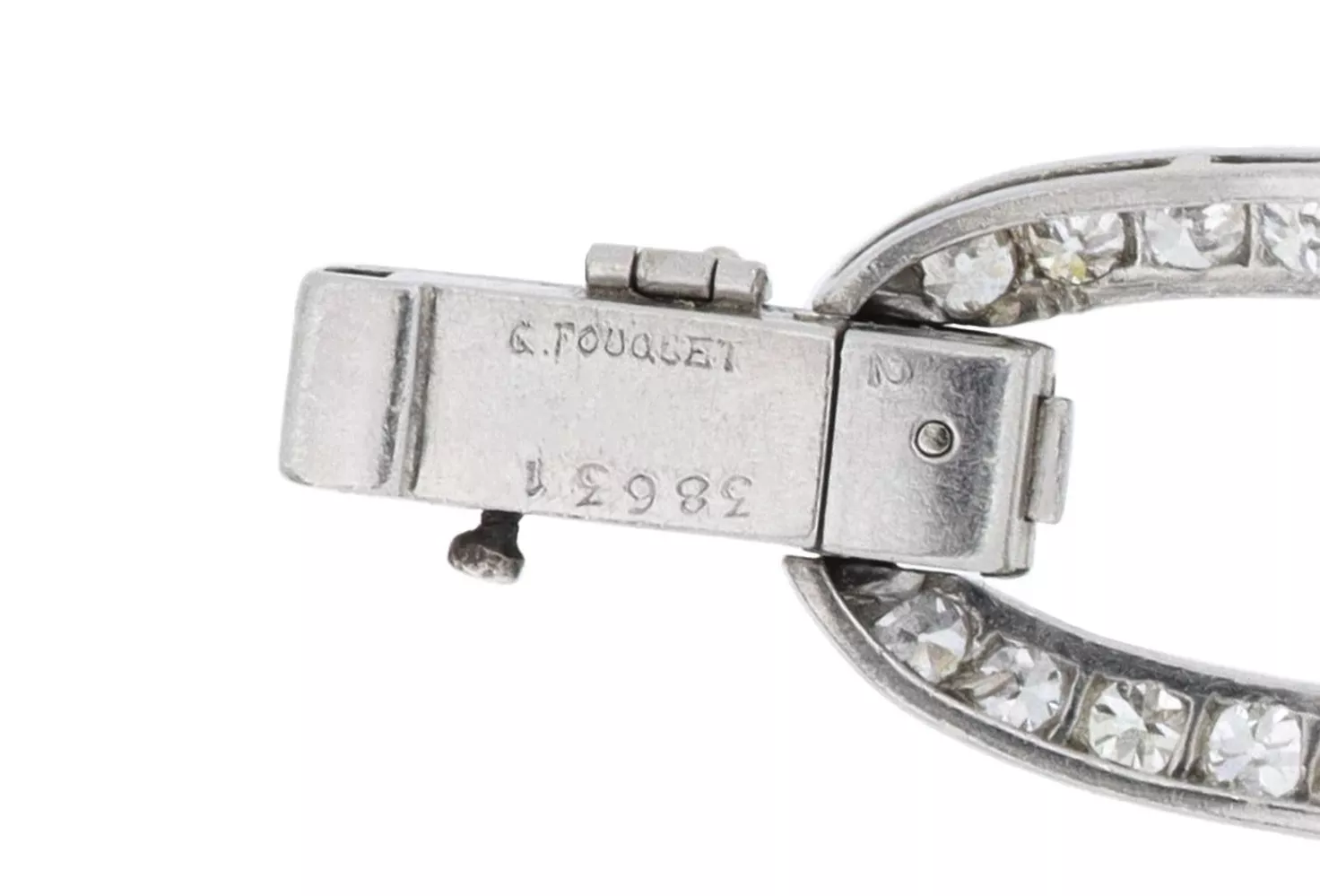
Fouquet jewelry is signed, and hallmarked according to the metal. However, there are many copies, which is why the expertise of your jewel remains very important.
Know the certain value of your jewel
If you happen to own a Fouquet jewel or think you might, don't hesitate to request a free appraisal using our form on our website.
A member of our team of experts and licensed auctioneers will contact you promptly to provide you with an estimate of the market value of your jewel, as well as any relevant information about it.
If you wish to sell your property, you will also be accompanied by our specialists in order to benefit from alternatives for selling it at the best possible price, taking into account the inclinations of the market.
.Estimate in less than 24h
Discover in the same theme

Rating and value of Rolex watches
Rolex watches have established themselves as treasures of Swiss watchmaking. Whatever the model, these objects are highly sought-after at auction.
Learn more >

Quotation and value of Alhambra long necklaces, bracelets, e...
A guide to selling and appraising jewelry, brooches, necklaces, earrings, rings and bracelets from Place Vendôme Van Cleef and Arpels.
Learn more >

Rating and value of Cartier jewelry by Jeanne Toussaint
Jeanne Toussaint was artistic director of Cartier from the 1930s onwards. Her influence on the company is crucial. 24h estimate.
Learn more >
D'autres pièces de haute joaillerie vendues aux enchères

Estimated 10.000 - 15.000 €
BOUCHERON - "Ava" - White gold necklace set with a brilliant-cut diamond (1.56 cts)

Estimated 2.000 - 4.000
CARTIER, 18K (750 e) gold opening bangle bracelet

Estimated 1.500 - 3.000
CARTIER PARIS, Trinity, 2-tone 18k (750e) gold clip brooch

Estimated 3.000 - 5.000
CARTIER, Love, Wedding band in 18k white gold (750e)

Estimated 2.000 - 4.000
CARTIER Love model Pendant necklace in 18K (750e) white gold

Estimated 1.500 - 2.000
CHAUMET, Ring in platinum (850th), set with an oval faceted ruby

Secure site, anonymity preserved

Auctioneer approved by the State

Free and certified estimates
Frequently asked questions
-
Who is Georges Fouquet, and what is his role in the history of jewelry?Georges Fouquet (1862–1957) was a leading French jeweler and a central figure in Art Nouveau jewelry, who later played a key role in the transition to Art Deco. As the heir to the Fouquet house, founded by his father in 1860, he revolutionized jewelry design by emphasizing design, line, and formal innovation rather than the intrinsic value of the gemstones. His pivotal collaboration with Alphonse Mucha, beginning in 1899, produced exceptional jewelry, and his boutique on Rue Royale (1901) became a manifesto of Art Nouveau.
-
What are the price ranges for Georges Fouquet jewelry based on type?Fouquet jewelry ranges from €50 for simple pieces to €152,000 for exceptional creations. Brooches range from €1,350 to €82,000, pendants from €17,000 to €152,000, earrings from €10,000 to €24,000, and bracelets from €22,500 to €51,250. These price ranges depend on the period (Art Nouveau from 1895 to 1905 being the most sought-after), the maker’s mark, the condition of the enamel, and documented provenance.
-
How can you authenticate a piece of Georges Fouquet jewelry and determine its true value?Authentic Fouquet jewelry is signed and hallmarked according to the metal, but there are many counterfeits. To accurately appraise your piece, we recommend requesting a free, no-obligation appraisal from Auctie's. Our team of auctioneers and certified experts will analyze your piece and provide you with an accurate estimate of its market value within 48 hours.
-
What are the distinctive techniques and characteristics of Fouquet jewelry?Fouquet jewelry stands out for its innovative use of enamel (openwork enamel, translucent enamel, and light gradients), fine engraving that highlights organic lines, and discreet stone settings integrated into the design. The shapes are undulating and asymmetrical, inspired by nature (flowers, insects, stylized female figures). Yellow or rose gold is crafted into graphic surfaces, and gemstones and semi-precious stones are chosen for their color and symbolism rather than their intrinsic value alone.
-
Is this the right time to sell a piece of Fouquet jewelry, and how should I go about it?Yes, the market for Fouquet jewelry remains stable and rooted in heritage, with strong demand for high-quality Art Nouveau brooches. If you’d like to sell your jewelry, Auctie’s will guide you every step of the way: a free appraisal by our experts, advice on the best sales options, and an auction to get the best possible price based on current market trends.
