



Rating and value of jewelry and necklaces by Lalaounis

Key takeaways
- Lalaounis jewelry sells for between €60 and €16,000, depending on the type, with necklaces commanding the highest prices in the segment.
- The brand favors high-purity gold (22 karats) and uses traditional techniques such as granulation, filigree, and hand-hammering inspired by Greek archaeology.
- Vintage pieces from the 1970s–1990s bearing the original Lalaounis hallmark command a significant premium on the secondary market.
If you own a piece of Lalaounis jewelry, and would like to know its value, our state-approved experts and auctioneers will offer you their appraisal services.
Our specialists will carry out a free appraisal of your jewel, and provide you with an accurate estimate of its value on the current market.
Then, if you wish to sell your jewel, we will direct you to the best possible device to obtain the optimum price. The price of a piece of jewelry can vary depending on the year, the artist behind its creation, and the material from which it was fashioned.
Rating and value of a Lalaounis jewel
Jewels are emblematic pieces of the Lalaounis house, and must-haves of the women's wardrobe ; their success is no longer to be boasted. The price at which they sell on the art and auction markets ranges from €60 to €16,000, a considerable delta but one that speaks volumes about the value that can be attributed to your jewelry.
In 2018, a 22K yellow gold necklace, in a set including a pair of ear clips sold for €16,600, while it was estimated at between €11,000 and €13,000.
Order of value ranging from a classic piece of jewelry to the rarest and most sought-after
Type of jewel | Result |
|---|---|
Box | From 50 to 1,000€ |
Pendant | From 60 to 3,400€ |
Earrings | From 70 to 4 600€ |
Bracelet | From 180 to 8 500€ |
Brooch | From 100 to 10,000€ |
Ring | From €100 to €12,000 |
Necklace | From €150 to €16,000 |
Estimate in less than 24h
Lalaounis
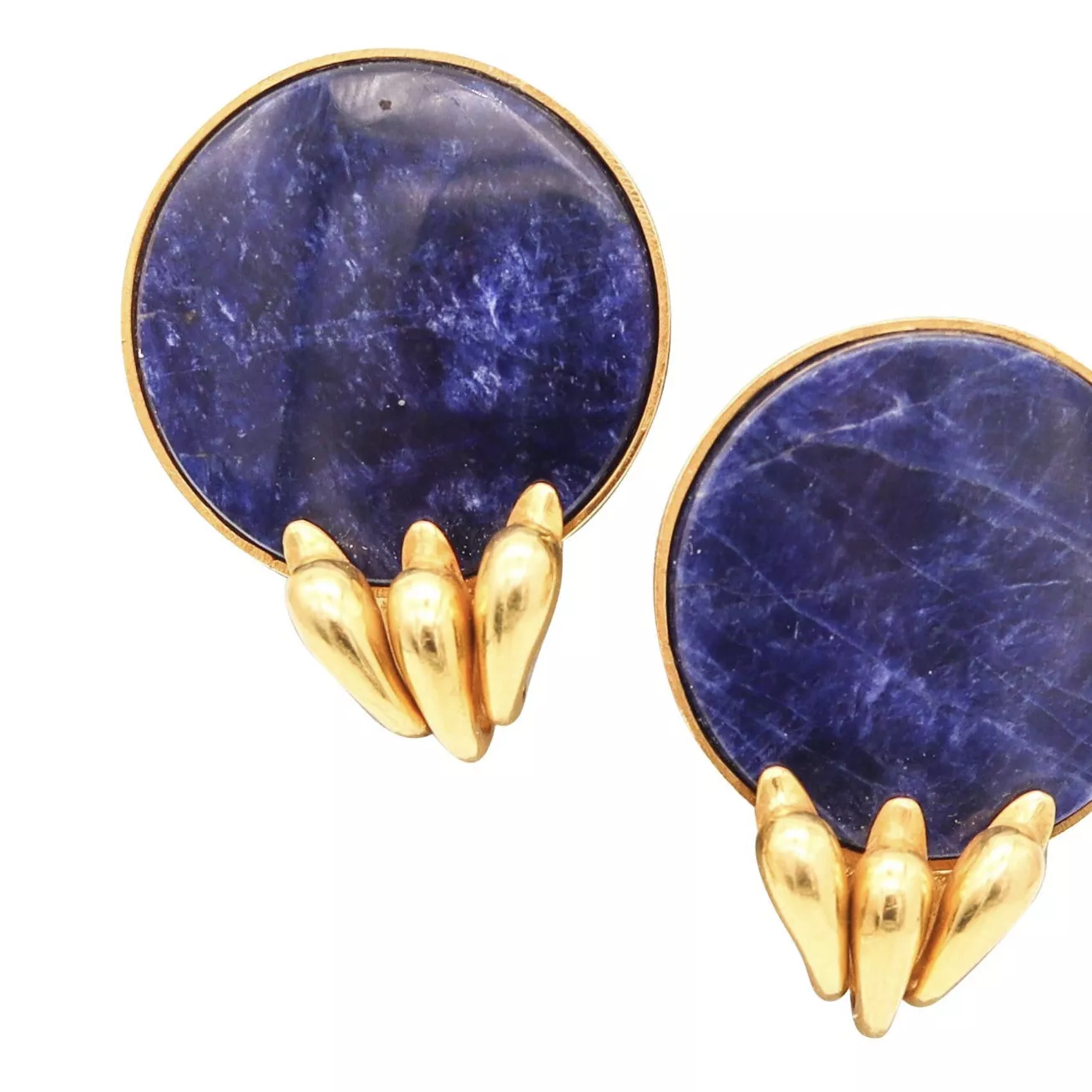
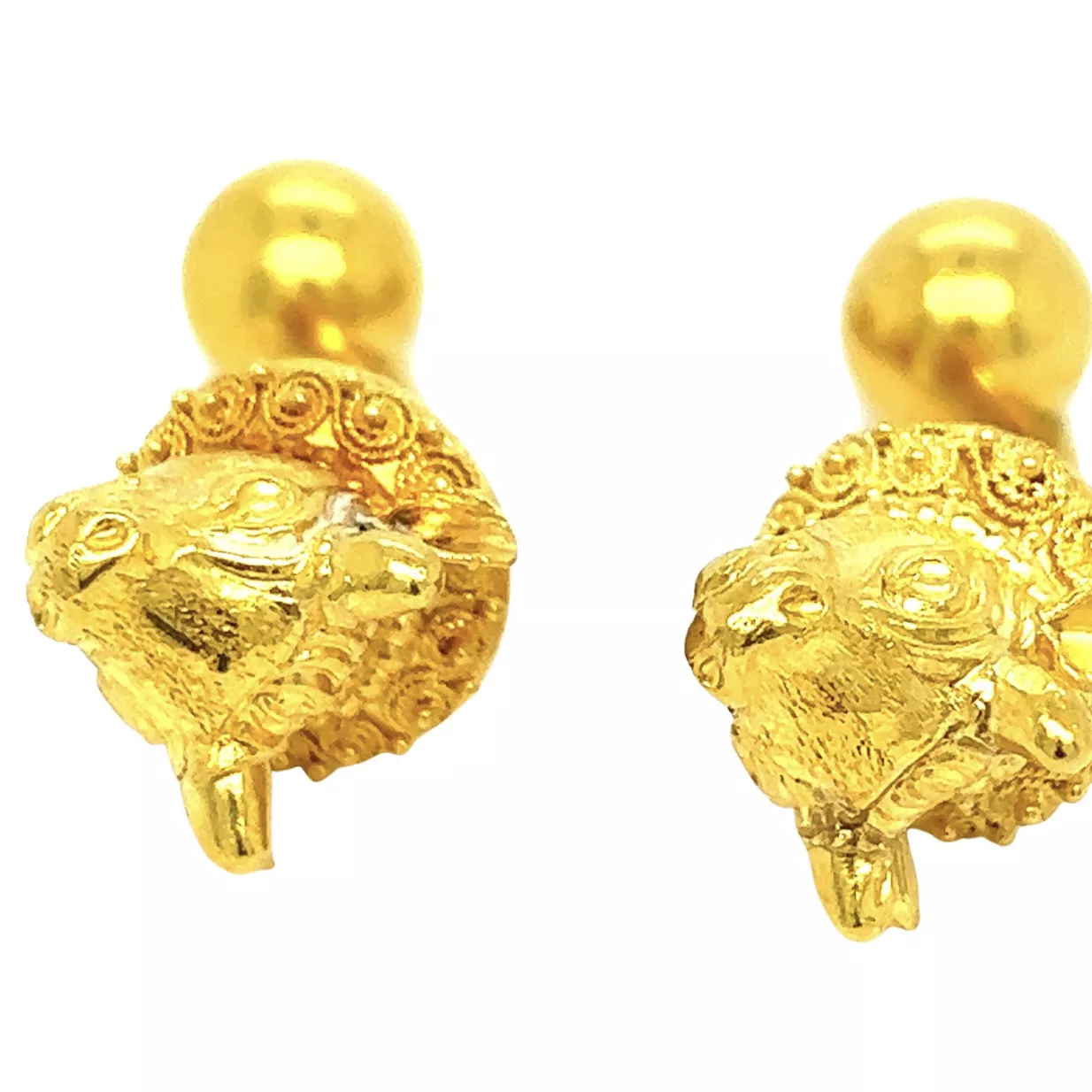
Lalaounis uses an ornamental language structured by an archaeological repertoire (Greek antiquity, Hellenistic and Byzantine periods in particular) reinterpreted in contemporary jewelry.
The house uses the aesthetic of " matière-or " thus pieces that are often all gold and favor volume, texture and relief over systematic gemmological ostentation.
Lalaounis makes characteristic use of high-grade gold, notably 22-character (91.6% fine gold), sought after for its more intense color and malleability. The company also uses 18-carat gold for specific collections and applications.
The company's goldsmithing techniques include granulation, in which microspheres of gold are fused onto a surface to create decorative rhythms, a technique claimed to have been inherited from ancient goldsmithing.
She also uses filigree, a composition of motifs in twisted or braided gold wire, producing metallic lace effects, and repoussé or chasing to create reliefs by working the metal (shaping from the reverse and then reworking the details).
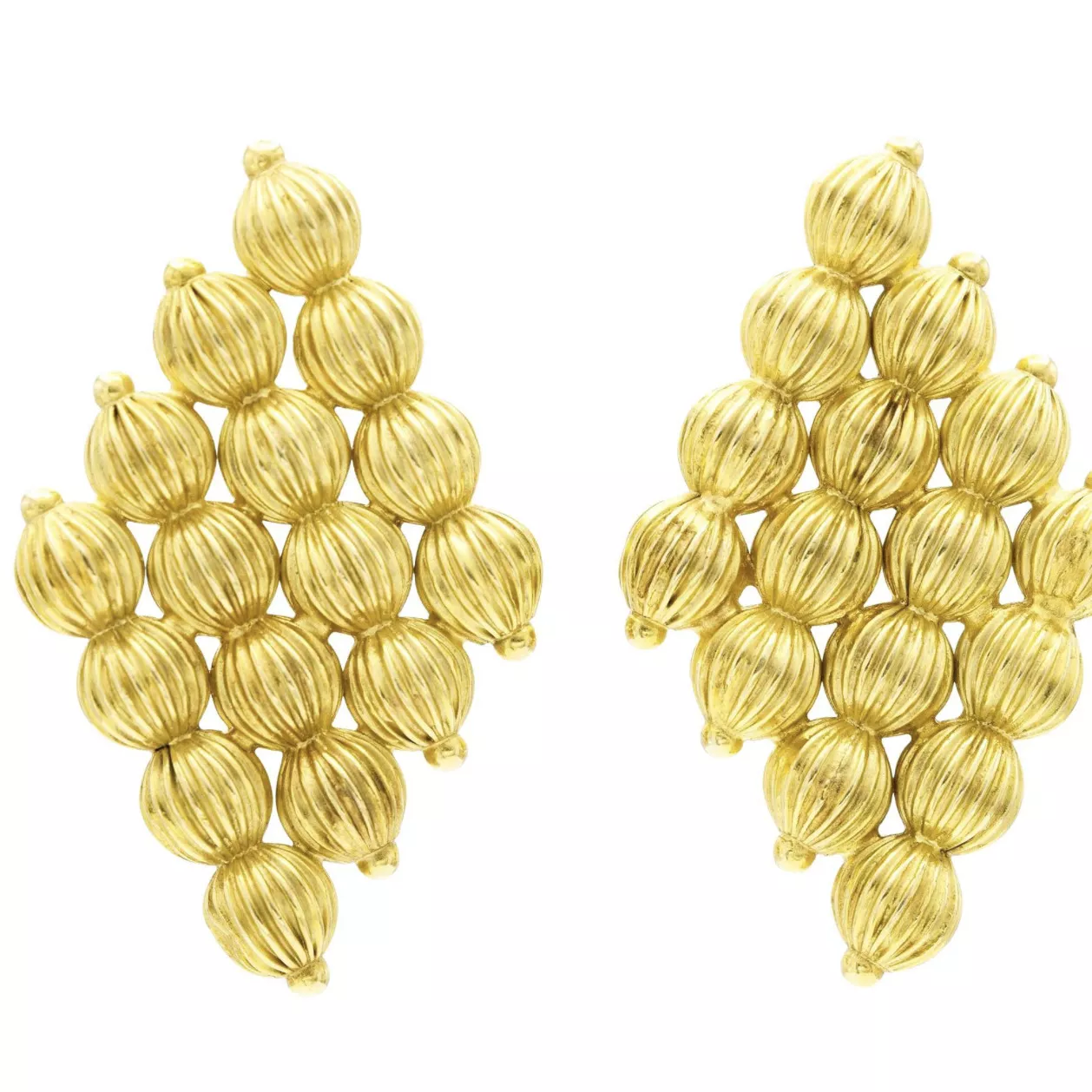
Lalaounis also uses hand hammering to obtain vibrant, matt or satin textures, with a recurring tactile signature, as well as braiding with an interlacing construction of chains and wefts, a technique cited as constitutive of the house's vocabulary.
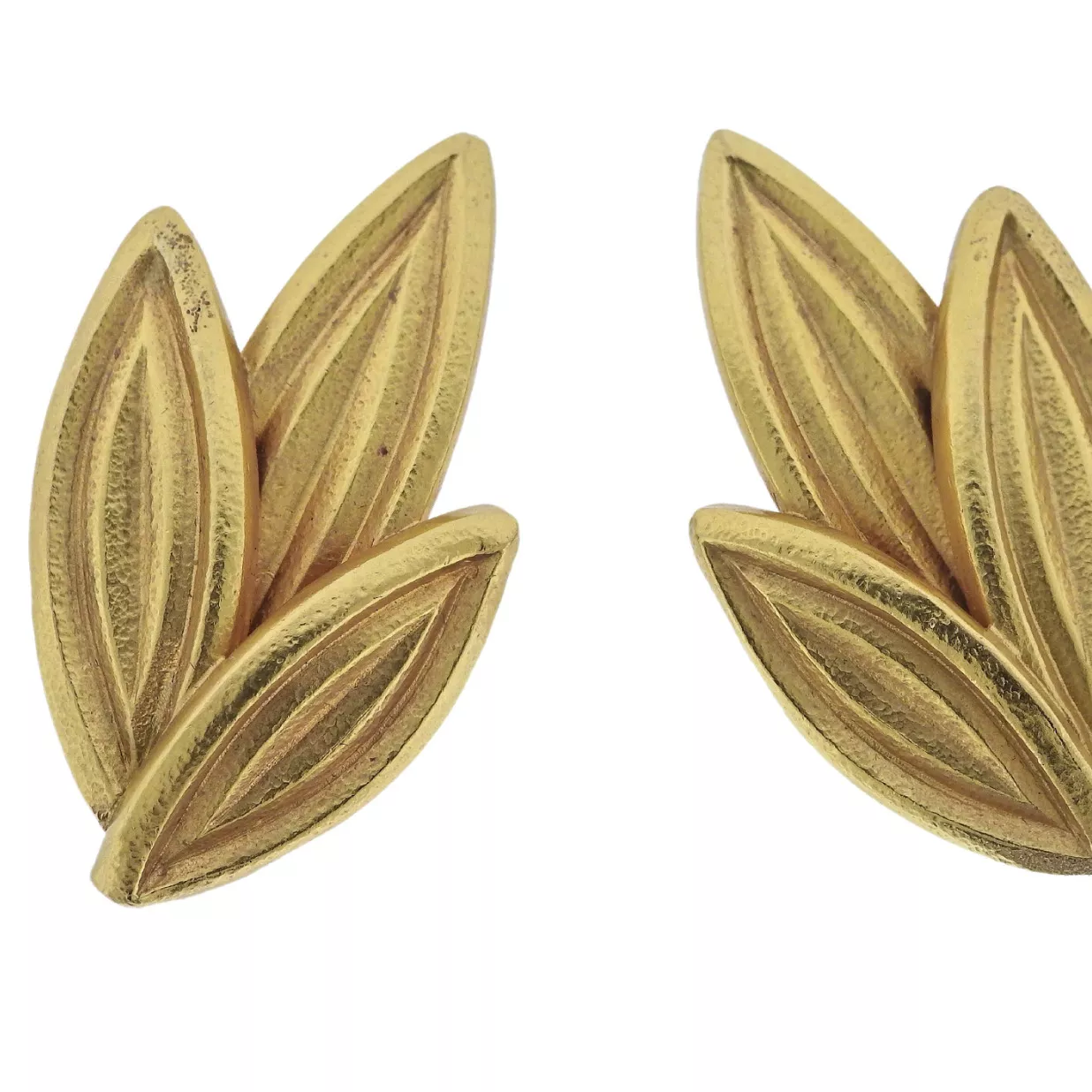
The company's taste for textured surfaces (hammered, brushed, corded, pearled) aims for a diffuse luminous reading and a strong material presence. The jewelry design discreetly integrates articulations and hinges to reconcile sculptural volume and wearability.
The design method follows a logic of skilful reinterpretation, with a transposition of archetypes (motifs, volumes, friezes, twists) into wearable objects, maintaining " historical " legibility and contemporary effectiveness.
The house is also backed by an explicit heritage scheme via the Ilias Lalaounis Jewerly Museum, whose permanent core showcases 50 collections designed by Ilias Lalaounis between 1940 and 2002 (a frame of reference for style and techniques).
The history of the House of Lalaounis
Ilias Lalaounis was born in 1920 in Athens. His uncle founded Zolotas, a major reference in 20th-century Greek goldsmithing.
He initially trained in economics and management, not academic jewelry. He gradually learned goldsmithing through practice, in contact with family workshops, and early on developed an interest in Greek archaeology and the history of civilizations.
He joined Zolotas in the 1940s, and quickly distinguished himself with a more experimental and historicizing approach to jewelry. In 1969, he left Zolotas to set up his own company, with the firm intention of creating an intellectual, archaeological jewelry that would not be subject to the dominant Parisian trends.
He defines himself above all as a goldsmith-creator, and considers jewelry to be a cultural object, conveying memory and meaning, and rejecting industrial standardization. In the 1970s - 1990s, he gained worldwide recognition, and exhibited in numerous international museums.
He was an active defender of goldsmithing as a major art form. He died in 2002 in Athens, leaving a body of work that was structured, documented and museumized during his lifetime.
When it was founded in 1969, the House of Lalaounis immediately positioned itself as a house of cultural haute joaillerie, distinct from decorative luxury. Each collection is based on a civilization or historical period (Ancient Greece, Hellenistic period, Byzantium, Hittite, Mycenaean, Scythian, Egyptian, Pre-Columbian civilizations), with a logic of reinterpretation rather than archaeological copying.
He systematically uses ancient goldsmithing techniques and opens boutiques in cultural capitals.
Market segmentation and Lalaounis
The secondary market is fueled by a high volume of items coming up for sale, with 1,107 lots sold recorded in the aggregator database. Necklaces (torques, necklaces with antique motifs and sautoirs) are the most buoyant segment, with recurrent results of several thousand euros.
Bracelets (cuff, articulated bracelets) belong to a high segment, sensitive to gold weight, design and patina condition. Pairs (earrings, clips) belong to an intermediate segment, with strong liquidity and more accessible prices.
Rings belong to an entry to intermediate segment, highly dependent on weight, condition and possible stones.
18k (750) gold is very common in sales, being the international standard for signed lots. 22k (916) gold is more distinctive and sought-after when clearly hallmarked, but value remains dominated by design, weight and provenance (example : torque 16‰n 99.8g).
The premium is frequent for pieces documented as " vintage " (1970s - 1990s) and for identifiable motifs (Heracles knot, antique references) as they crystallize the house DNA.
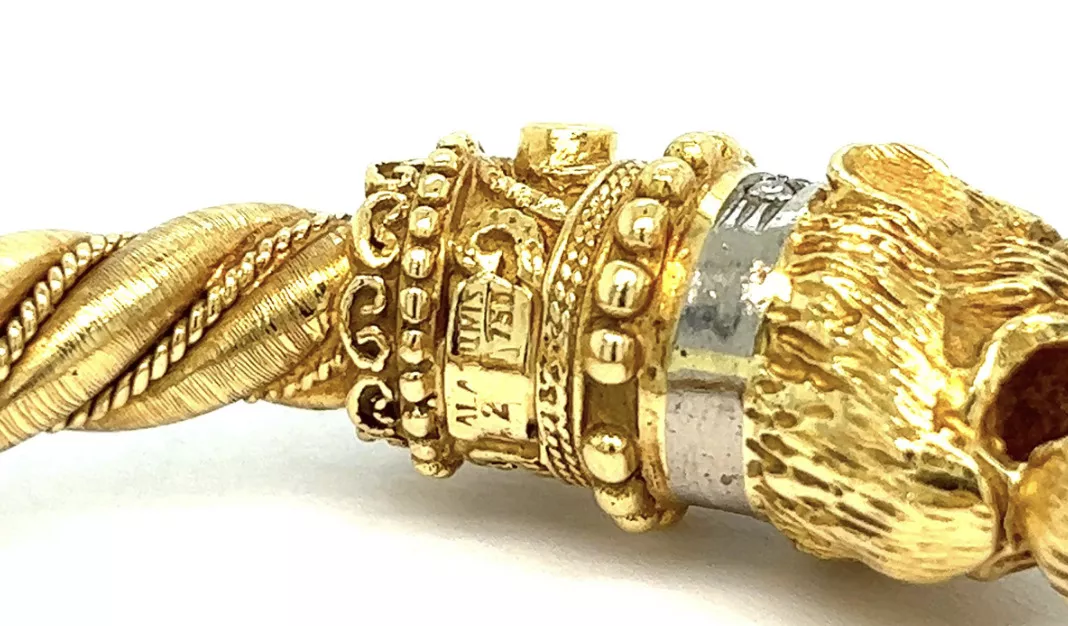
The premium is clear for signed and hallmarked jewelry (Lalaounis mark, A21, Greece, and the title). Weak attributions, even if the object is decorative, are heavily discounted. On the French market, these creations are achieving good results, carried in jewelry sales by big names in the sector such as Boucheron or Van Cleef & Arpels.
Recognizing a Lalaounis creation
Lalaounis jewelry is signed, and hallmarked according to the metal. However, there are many copies, which is why the expertise of your jewelry remains very important.
Know the certain value of your jewelry
If you happen to own a piece of Lalaounis jewelry or think you might, don't hesitate to request a free appraisal using our form on our website.
A member of our team of experts and certified auctioneers will contact you promptly to provide you with an estimate of the market value of your jewel, as well as any relevant information.
If you wish to sell your property, our specialists will also be on hand to offer you alternatives for selling it at the best possible price, taking into account market inclinations.
Estimate in less than 24h
Discover in the same theme

Quotation and value of Alhambra long necklaces, bracelets, e...
A guide to selling and appraising jewelry, brooches, necklaces, earrings, rings and bracelets from Place Vendôme Van Cleef and Arpels.
Learn more >

Rating and value of René Boivin's jewels, brooches and brace...
René Boivin is a 19th-century master goldsmith and jeweler whose creations are highly prized at auction.
Learn more >

Rating and value of jewels and pin by Georges Fouquet
Georges Fouquet was an Art Nouveau and Art Deco jeweler of the late 19th century who produced jewelry with a high rating and value.
Learn more >
D'autres pièces de haute joaillerie vendues aux enchères

Estimated 10.000 - 15.000 €
BOUCHERON - "Ava" - White gold necklace set with a brilliant-cut diamond (1.56 cts)

Estimated 2.000 - 4.000
CARTIER, 18K (750 e) gold opening bangle bracelet

Estimated 1.500 - 3.000
CARTIER PARIS, Trinity, 2-tone 18k (750e) gold clip brooch

Estimated 3.000 - 5.000
CARTIER, Love, Wedding band in 18k white gold (750e)

Estimated 2.000 - 4.000
CARTIER Love model Pendant necklace in 18K (750e) white gold

Estimated 1.500 - 2.000
CHAUMET, Ring in platinum (850th), set with an oval faceted ruby

Secure site, anonymity preserved

Auctioneer approved by the State

Free and certified estimates
Frequently asked questions
-
Who is Ilias Lalaounis, and what is his legacy in jewelry design?Ilias Lalaounis (1920–2002) was a Greek goldsmith who founded the Lalaounis jewelry house in 1969. Trained in the craft at his family’s workshops and passionate about Greek archaeology, he created an intellectual style of jewelry based on the reinterpretation of historical archetypes (Ancient Greece, Byzantium, pre-Columbian civilizations, etc.). Recognized worldwide, he is considered a leading advocate for goldsmithing as an art form, with his body of work preserved at the Ilias Lalaounis Jewelry Museum.
-
What is the price range for Lalaounis jewelry?Lalaounis jewelry sells for between €60 and €16,000, depending on the type and rarity. Necklaces are in the highest price range (€150 to €16,000), followed by bracelets (€180 to €8,500) and brooches (€100 to €10,000). Vintage pieces from the 1970s–1990s, which are documented and hallmarked as 22-karat gold, as well as those featuring recognizable motifs (the Heracles knot, ancient references), command a significant premium.
-
How can you authenticate a piece of Lalaounis jewelry and verify its value?Authentic Lalaounis jewelry must be signed and hallmarked (Lalaounis mark, A21, Greece, and the metal fineness). To confirm the authenticity and determine the exact value of your jewelry, we recommend requesting a free appraisal from Auctie’s via our online form: a certified auctioneer will contact you within 48 hours to provide a reliable, no-obligation appraisal.
-
When is the best time to sell a piece of Lalaounis jewelry?Now is an excellent time to sell: the secondary market for Lalaounis jewelry is enjoying strong demand, particularly for vintage pieces (from the 1970s to the 1990s) and necklaces, which are the fastest-growing segment. The brand’s global recognition and its positioning as a cultural fine jewelry house are supporting prices, especially for pieces that are signed, hallmarked, and feature historically identifiable motifs.
-
How does the sale of a piece of Lalaounis jewelry work at Auctie's?At Auctie's, we support sellers every step of the way, from appraisal to auction. After a free, no-obligation appraisal conducted by our expert auctioneers, we advise you on the best options for selling your jewelry at the best possible price based on current market trends. Our specialists optimize every step of the process to maximize the value of your item.
