



Rating and value of rapier swords

Key takeaways
- Rapier swords sell for between €340 and €9,200, depending on the model, condition, and historical provenance of the piece.
- First appearing in Spain in the 15th century, these weapons are characterized by a long thrusting blade and evolved from models with protective guards to the skeleton-style design.
- In 2020, an 18th-century German rapier measuring 1.20 meters exceeded its initial estimate of €3,000–€3,500, selling for €9,200.
If you own a rapier sword, and would like to know its value, and if you don't know, the period and model of the weapon, our state-approved experts and auctioneers will offer you their appraisal services. Our specialists will carry out a free appraisal of your weapon, and provide you with a precise estimate of its value on today's market. Thereafter, if you wish to sell your item, we will direct you to the best possible device to obtain the optimum price.
Rating and value of rapier swords
Rapier swords are among the most sought-after military collectibles on the auction market. However, price differences can be considerable, depending on the model, engraving, plate, state of preservation, the person to whom it belonged, and other criteria. Nowadays, prices for these weapons can rise considerably under the auctioneer's hammer. Buyers from all over the world are interested in the sale of certain rare pieces. The price at which they sell on the art market currently ranges from €340 to €9,200 - a considerable difference, but one that says a lot about the value that can be attributed to rapier swords. In 2020, an 18th-century German straight-bladed rapier sword measuring 1.20 meters sold for €9,200. It was originally estimated at between €3,000 and €3,500. A look back at past auctions and more details on these weapons.
Order of value from a simple weapon to the most prestigious
Type of rapier | Result |
|---|---|
Production of rapier swords | From 120 to 250€ |
Taza rapier swords | From 350 to 2 820€ |
Rapier sword with long quillons | From 600 to 9 200€ |
Estimate in less than 24h
Rapier swords, prestigious weapons
Rapier swords are highly prized antique weapons on the auction market. They had both civilian and military uses, and were used, unlikeépées cinquedea, for fighting. It appeared in Spain in the 15th century, and was then calledespada ropera. The weapon is very light and has long been an invaluable tool in Spanish war strategy. These weapons were imported to Italy, where fencing schools developed.
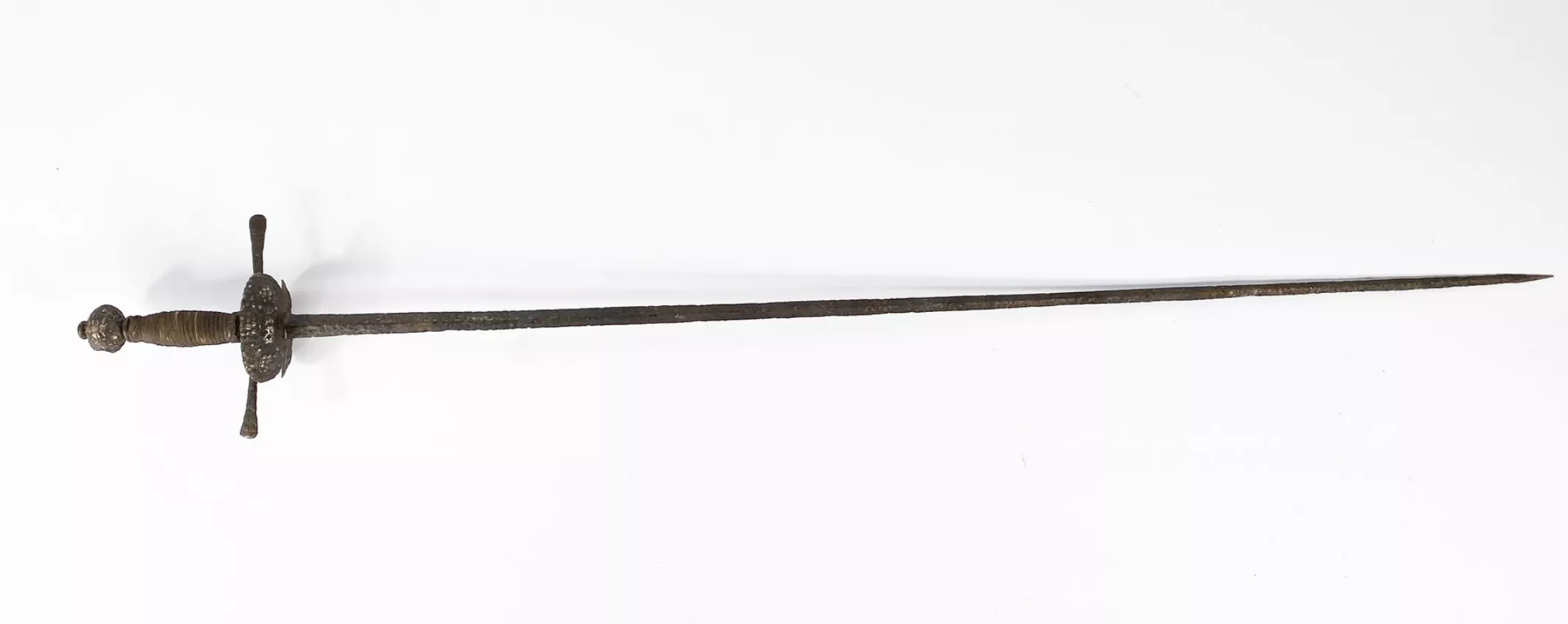
Technique and characteristics of rapier swords
Rapier swords are mainly characterized by their long blade, designed for estoc strikes. In the 15th and 16th centuries, blades were therefore sharpened and designed to strike directly with the point and edge of the blade.
Directly derived from the cutlass and estoc swords, made for the same purpose.
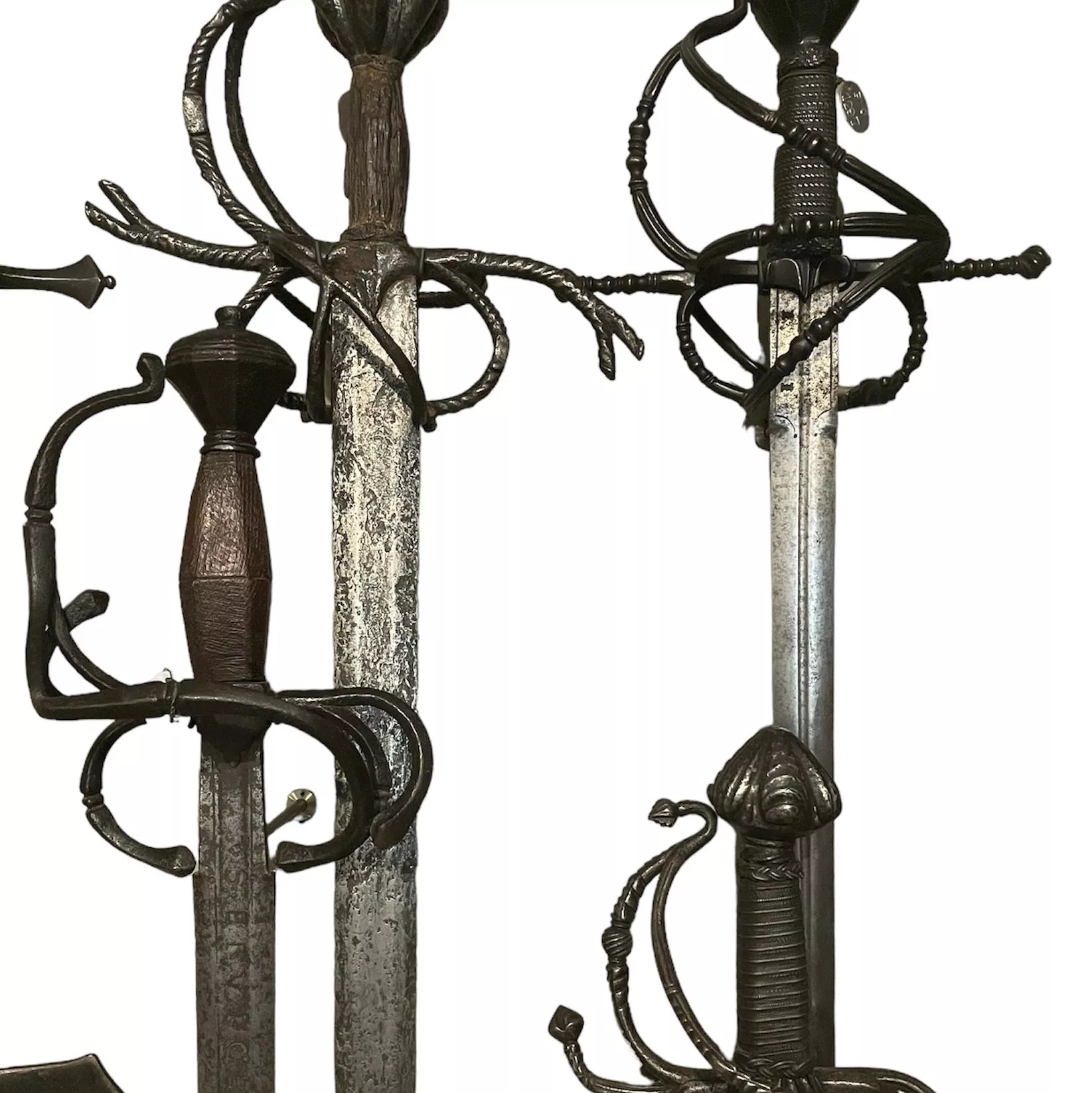
Rapier swords were initially presented in a classic form, with wide quillons. However, there was no element to hold the hand, which posed a problem vis-à-vis fencing where gloves were not allowed. Weapons manufacturers therefore innovated and produced rapiers with a basket, composed of thin metal blades attached to the ricasso. The weapon was also improved in terms of grip, with a ring placed on the ricasso to protect the index finger and ensure greater stability. The guards are also improved over time. Bolognese masters of arms such as Antonio Manciolino and Achille Marozzo contributed a great deal to this, also drawing inspiration from medieval combat systems.
Then came the taza sword, a name due to the shape of the basket, which was no longer composed of thin metal blades but a fine wrought-iron cut.
They do, however, share common attributes despite stylistic evolutions, such as the presence of inlaid iron, silver, copper, flower decorations and long guillons. They often feature silver plates that may depict a cavalry clash or a battle scene, as on the rapier sold by Auctie's (see photo opposite).
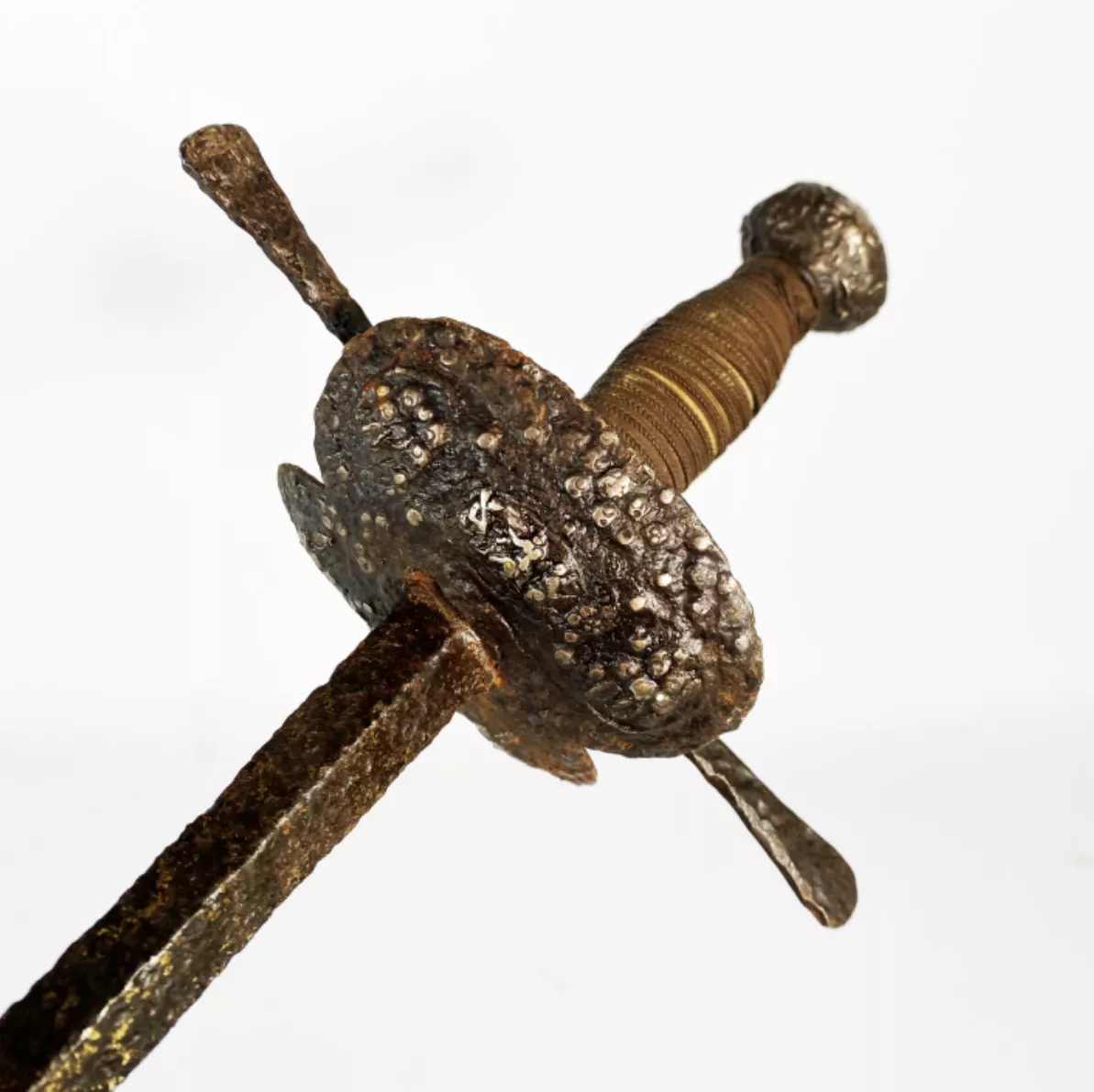
Historical background and success of Caravaggio's sword
Rapiers were originally swords made for utilitarian purposes, and were to be successful in this respect. They are a true strategic innovation for combat. Their use also developed in a more private sphere. Caravaggio, the great Italian painter of the late Renaissance, preceded by his reputation, is also famous for having used this model of sword when fighting.
At the end of the 16th century, the left-hand dagger was favored in the manufacture of these swords, and new branches were added to the basket to obtain a more aesthetic weapon. This was known as the skeleton rapier, the most characteristic model of the rapier sword.
These weapons gradually became court weapons, used as symbols of power and might. In France, under the reign of Louis XIII, the military function of these weapons was completely abandoned. The blade is lighter and the basket has disappeared, the quillons are even more worked.
Reasons to sell a rapier sword at auction
If you own a rapier sword and don't know how to sell it, auctions are a solution. Indeed, collectors use this medium to find models that correspond to a particular battle or that belonged to their ancestors. Prices can reach unprecedented heights.
A rapier obviously has a financial value on the art market, but it also has a historical value. These weapons bear witness to the various conflicts of their time and the power wielded by those who owned them. They also show how weapon design has evolved scientifically.
Knowing the value of a rapier sword
If you happen to own a rapier of any period and would like to know its value, don't hesitate to request a free appraisal using our form on our website. A member of our team of experts and certified auctioneers will contact you promptly to provide you with an estimate of the market value of your piece, as well as any relevant information about it. If you wish to sell your property, you will also be accompanied by our specialists in order to benefit from alternatives for selling it at the best possible price, taking into account market inclinations.
Estimate in less than 24h
More vintage weapons at auction

Estimated 3000 € - 5000 €
Flintlock general's or admiral's pistol, Vendémiaire an XII model

Estimated 300 - 500 €
Luxurious Russian bear hunting knife. Green nephrite handle.

Estimated 100 - 150 €
Corsican stylus. Dite de Vendetta. Faceted ebony handle enriched with chased mother-of-pearl blades and metal purfling.

Estimated 600 - 800 €
Russian Shashka saber. Mounted in nielloed silver with chased plant decoration and strings of pearls.

Estimated 20.000 - 30.000 €
Present or ceremonial sword of the Cinquedea type. Northern Italy circa 1490-1510.

Estimated 5.000 - 7.000 €
Ear dagger in the style of Diego Caias. Mounted in damascened iron, ivory and silver.
Discover in the same theme

Rating and value of Empire rifles, model 1777, infantry
Model 1777 rifles appeared during the Ancien Régime and were the main weapons of the wars of the Empire. They were extremely valuable.
Learn more >

Rating and value of the Savage Navy Civil War revolver
Savage Navy revolvers are highly sought-after collector's items at auction. Their value is on the rise. Estimate in 24h.
Learn more >

Rating and value of Colt rifles
Colt rifles are among the most sought-after weapons on the auction market. Sometimes selling for over €15,000, they attract collectors.
Learn more >

Secure site, anonymity preserved

Auctioneer approved by the State

Free and certified estimates
Frequently asked questions
-
What is a rapier, and what is its history?The rapier is an ancient weapon that first appeared in Spain in the 15th century (then known as the “espada ropera”), characterized by a long blade designed for thrusting. Originally designed for both military and civilian use, it gradually evolved into a court weapon symbolizing power and prestige. This weapon gained particular fame through historical figures such as Caravaggio, and it reflects the technical evolution of combat strategies from the Renaissance to the modern era.
-
What is the price range for rapier swords at auction?Rapier swords sell for between €340 and €9,200, depending on their type and condition. Replicas cost between €120 and €250, "taza" rapiers between €350 and €2,820, and rapiers with long quillons between €600 and €9,200. These considerable price differences depend on factors such as the period, provenance, condition, the quality of the engravings, and the precious metal ornamentation.
-
How do I have a rapier authenticated and appraised?Auctie's offers a free, no-obligation appraisal of your rapier. Simply fill out a form on our website: a certified expert or auctioneer will contact you shortly to appraise your item, provide you with a precise estimate, and inform you of its historical and technical characteristics.
-
What factors influence the value of a rapier?The value of a rapier depends on the model, the period of manufacture, the quality of the blade and its ornamentation (engravings, silver plates, iron and copper inlays), its condition, the style of the guard (basket hilt, quillons, taza), and its historical provenance. Pieces crafted by prestigious master swordsmiths or those that once belonged to notable figures can fetch exceptional prices.
-
How do I sell a rapier at auction with Auctie's?After requesting a free appraisal from our experts, Auctie's guides you every step of the way—from appraisal to auction. Our certified auctioneers will advise you on the best sales strategy to achieve the highest possible price, taking into account art market trends and the interest of collectors worldwide in your piece.
